North Cascades National Park: American Alps

In almost every national park we’ve visited, you will find old photos and stories, telling the tale of the discovery, exploitation, and protection of the land. I usually leave these displays trying to imagine what it would be like to visit the park without traffic, campgrounds, and visitor centers. What makes North Cascades National Park unique is that 99% of the park is still wilderness. Only along highway 20 will you see three hydroelectric dams along the Skagit River forming Gorge, Diablo, and Ross Lake owned by Seattle City and Light. At first, this brought to mind the infamous Hetch Hetchy impoundment that riled John Muir. However the teal color of these lakes against these hanging glaciers on Alp-like peaks create an impressive landscape. We were joined in Colonial Campground on the shore of Diablo Lake by my sister Amber, brother-in-law Jon, their daughter Katie, and son Josh. The weather was much warmer than expected, so we were thankful for the ample shade in the campground. We hiked the 4 mile round trip Thunder Knob trail which gave stunning overlooks of Diablo Lake and Colonial Peak. Unfortunately, Eli, who is very allergic to dairy products, accidentally ate a granola bar with milk in it when we were about 2 miles from camp. When he was younger, any ingestion of milk meant he broke out in hives all over his body, became lethargic, and needed injection from an Epi-pen. We prayed, and watched him closely as we hiked back toward the campground. Thankfully, he only got a few hives on his chin, and managed to push through with no major reaction. He was a real trooper! With temperatures peaking around 90 F, we decided to swim in Diablo Lake. Diablo is formed by the tail waters of Ross Lake, so it is very cold (~45-50 F). It was an exercise in extremes; jump in the lake for as long as you could still feel your limbs, then bake on the hot shoreline. Repeat until dinner time. After a while, the kids got into an epic mud fight which passed the warm afternoon. Their only complaint is that they needed to spend some serious time in the chilly lake getting the mud out of their hair! After the hike, swimming, and dinner, the boys went fishing for a bit, but quickly returned to the campfire where we were treated to S’mores, and a wonderful variety show orchestrated by the kids. All in all it was a great visit to North Cascades, and we hope to return one day to explore more.

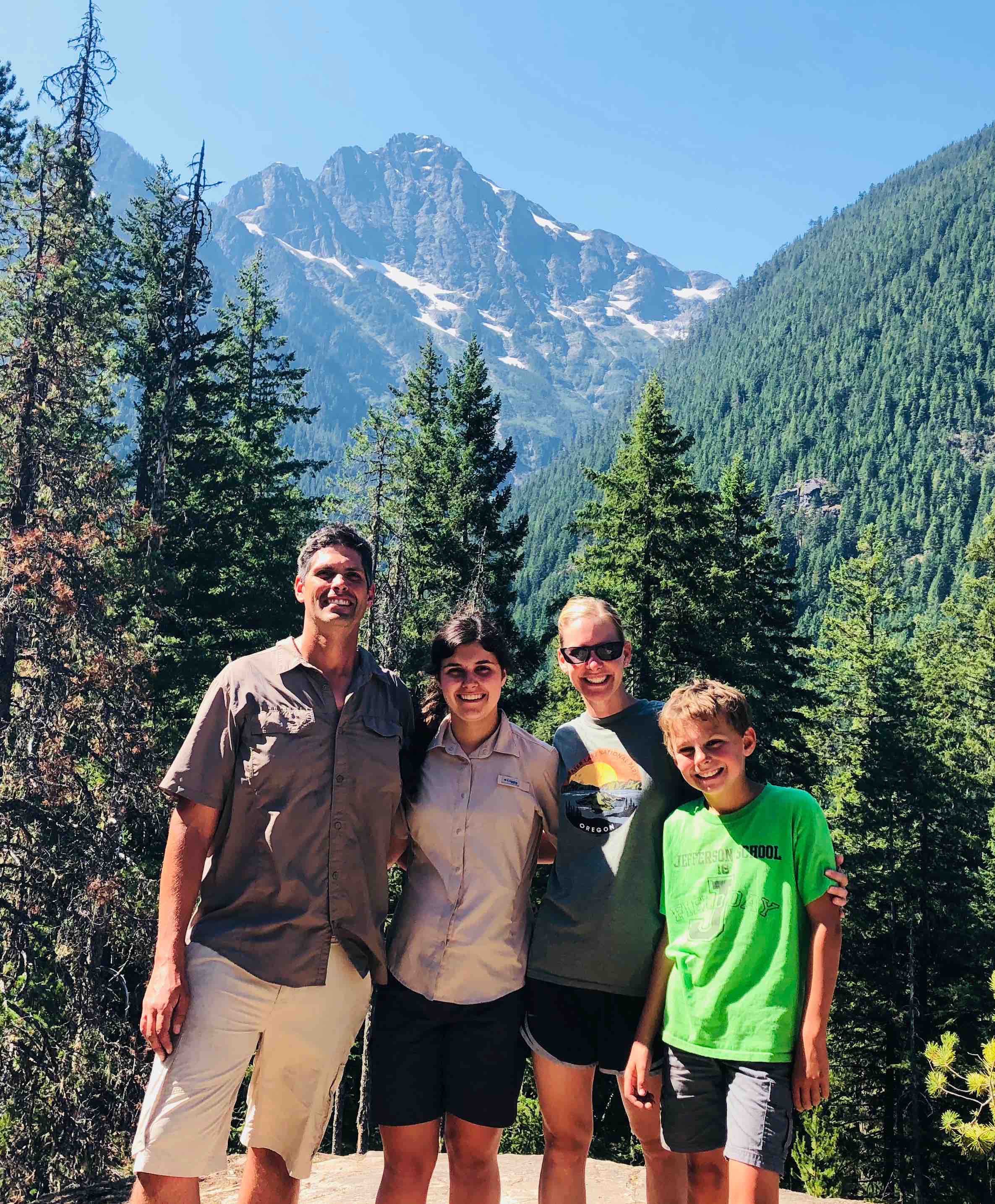
Braving the Thunder Knob!!
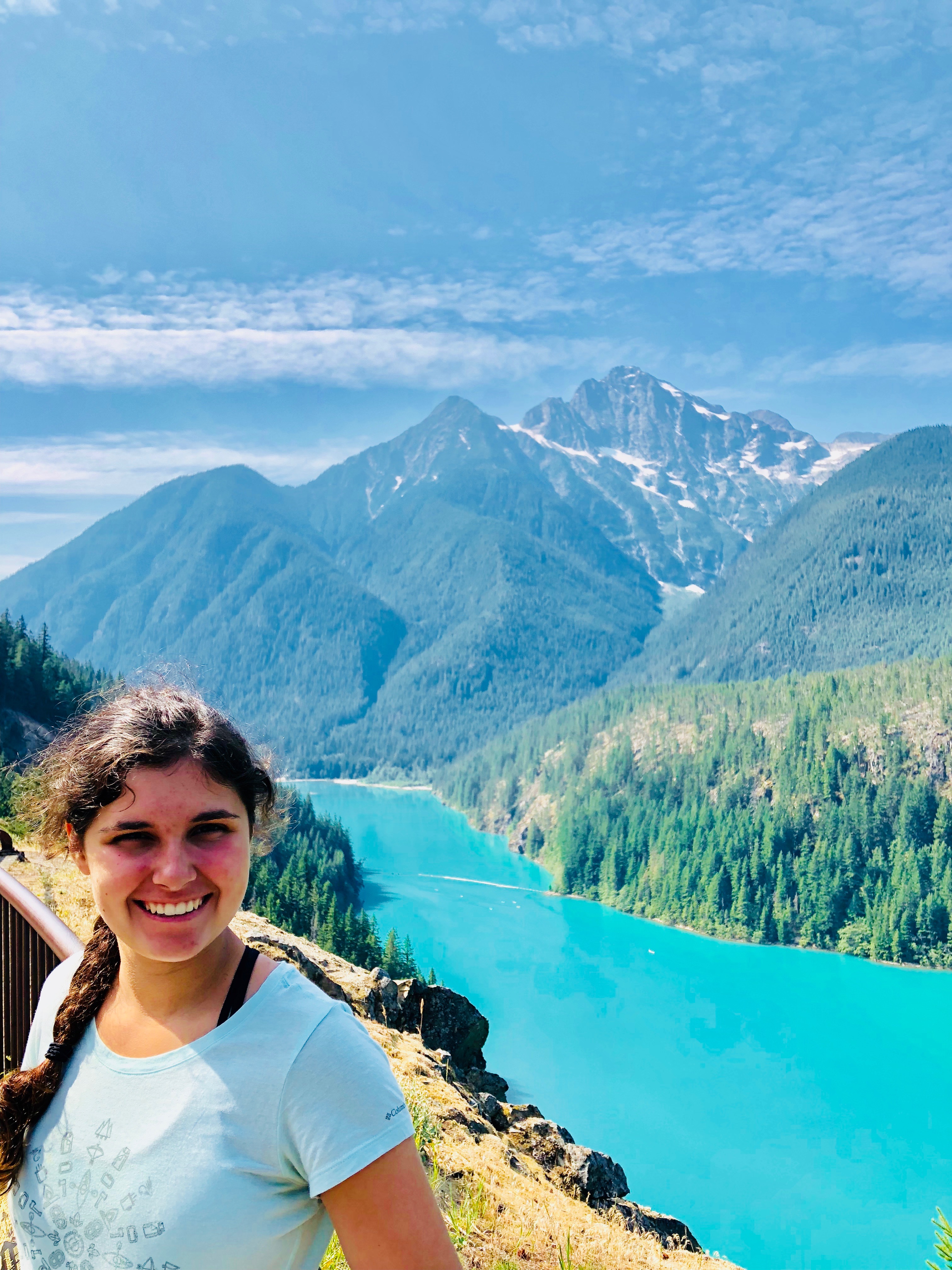
View of Colonial Peak with hanging glaciers along the Thunder Knob Trail
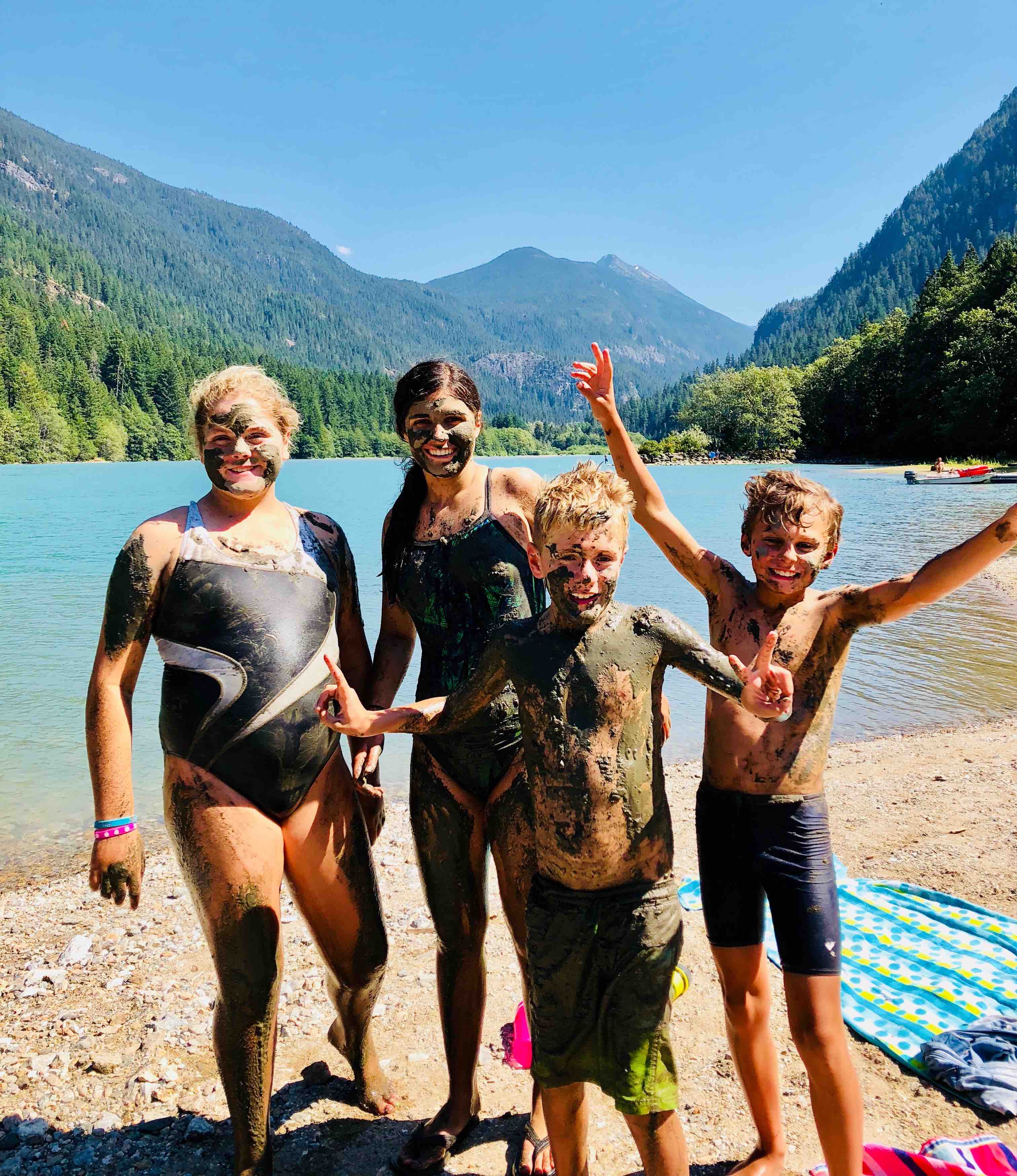
Kids go full blown mud fight on the shores of Diablo Lake.
The combination of Diablo Lake and Colonial Peak is almost as beautiful as my daughter.
Jon and Josh take in the beauty of Sourdough Mountain along Diablo Lake.

Olympic National Park

Have you ever had the experience of eating so many appetizers, that you don’t enjoy your main dish as much as you thought you would? The dish is great, but it should have come out earlier in the evening. That was our experience at Olympic National Park. When you have been surrounded by beauty in every national park, after a while it isn’t as impressive anymore. Our first campsite was in the Hoh River Rainforest. We hiked the Hall of Mosses and Hoh River Trail. We were blessed with crystal blue skies, so we didn’t need our rain jackets. The forest was gorgeous, but after just visiting the Redwoods and Crater Lake, it was tough to get the kids motivated. There was plenty of wildlife; deer, elk, bald eagles, however, the children preferred to relax at the campground, and playing along the banks of the Hoh River. We needed a change of scenery. Luckily, and Olympic NP had just the thing; Rialto Beach. Our sunny skies gave way to a thick marine layer, which made its prominent rock promontories all the more imposing. A 1.5-mile hike north from Rialto Beach brought us to some very impressive tide pools. We timed our visit with low tide and were not disappointed. Our attention turned away from the utopian Hoh River rainforest toward the cranky and cramped sub-tidal fauna of the Pacific. Life in tide pools can be tough, predators abound, and food is scarce. One tide pool held our attention for more than an hour. There were hermit crabs on one side, finger sized cabezon fish on the other, separated by a row of hungry sea anemones. The stage was set for a tide pool tantrum. I cracked open one of the abundant California mussels and dropped it into the pool. The tide pool sprang to life in a miniature game of “steal the bacon”. It was a hurricane of activity as each creature viciously fought the others for food. It was fish vs fish, then crab vs fish as all the creatures shredded the mussel to bits. At one point, two hermit crabs were fighting over a piece of mussel, when one of them accidentally backed into the tentacles of a waiting sea anemone. The kids shrieked with satisfaction as the crab was rapidly engulfed by its turquoise tentacles. More! More!, the children cried, enthralled by their newfound mini version of the Hunger Games. It was only when we cracked enough mussels that the crabs and fish were not hungry anymore, that the kids decided that it was time to go. We looked out over the acres of other pools, each one now seeming to us as its own Coliseum, each struggling to survive the rhythm of the Pacific tides.

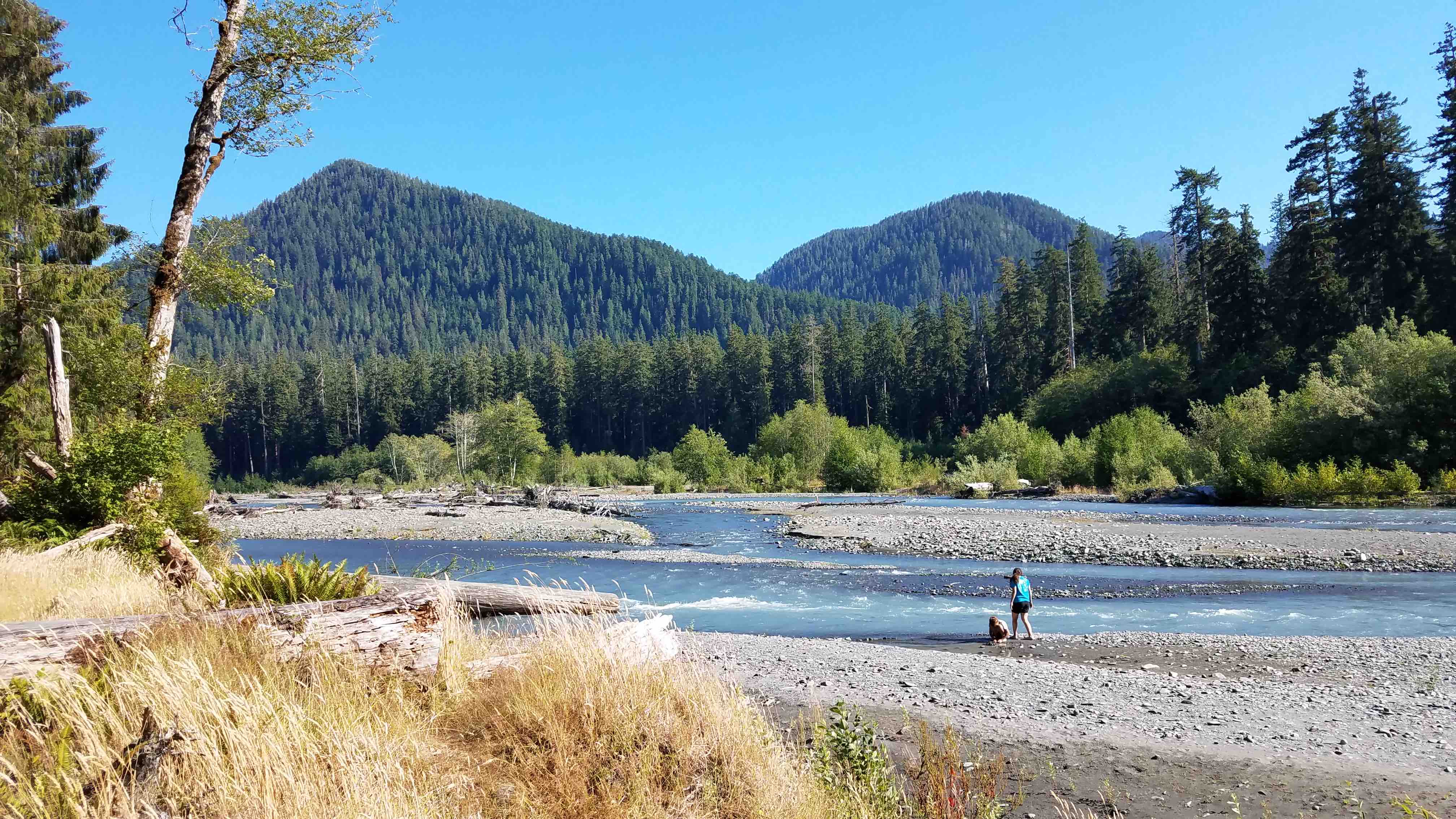
Kids playing in the Ho River next to our campsite
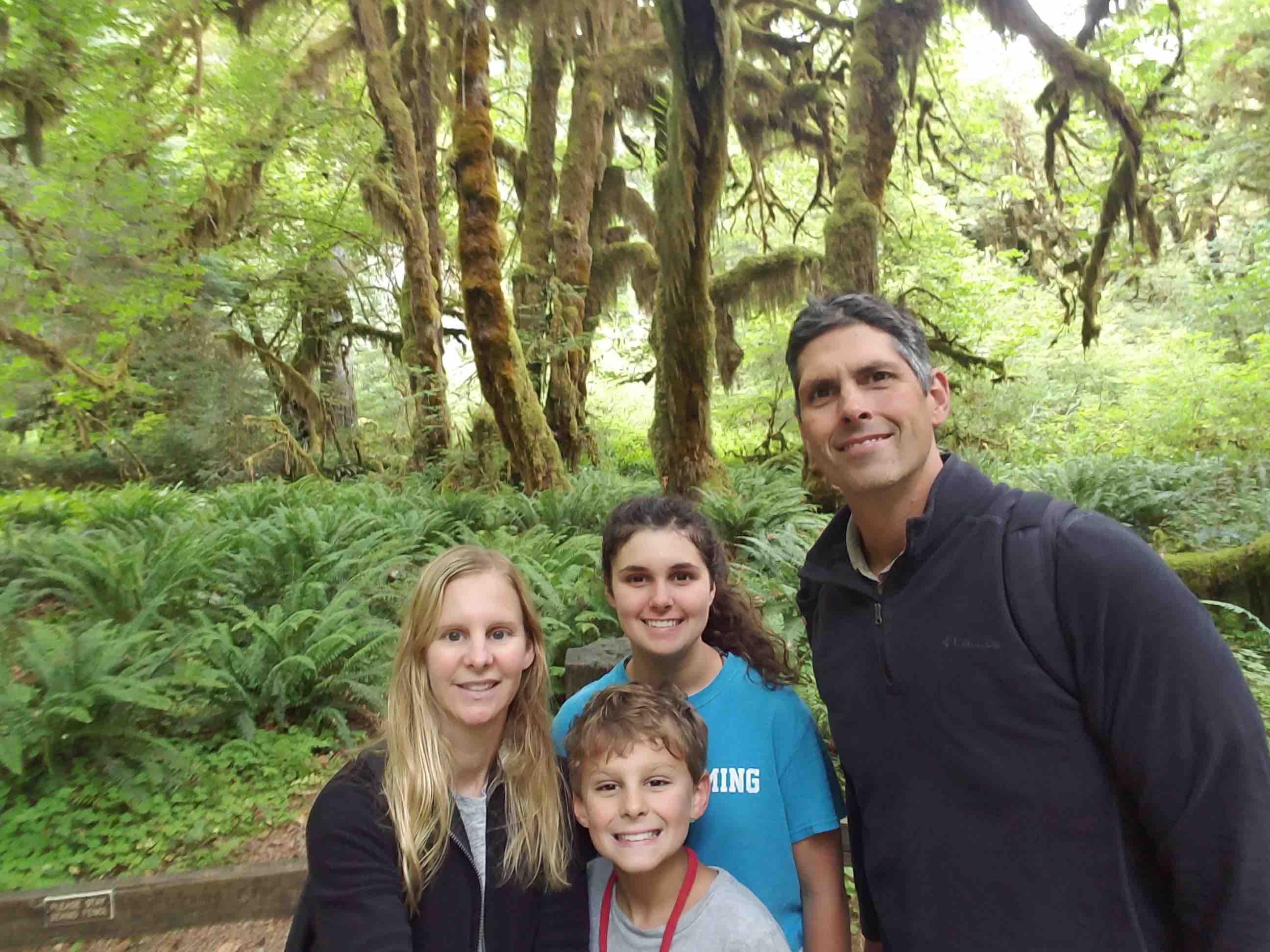
Gawk at the mosses
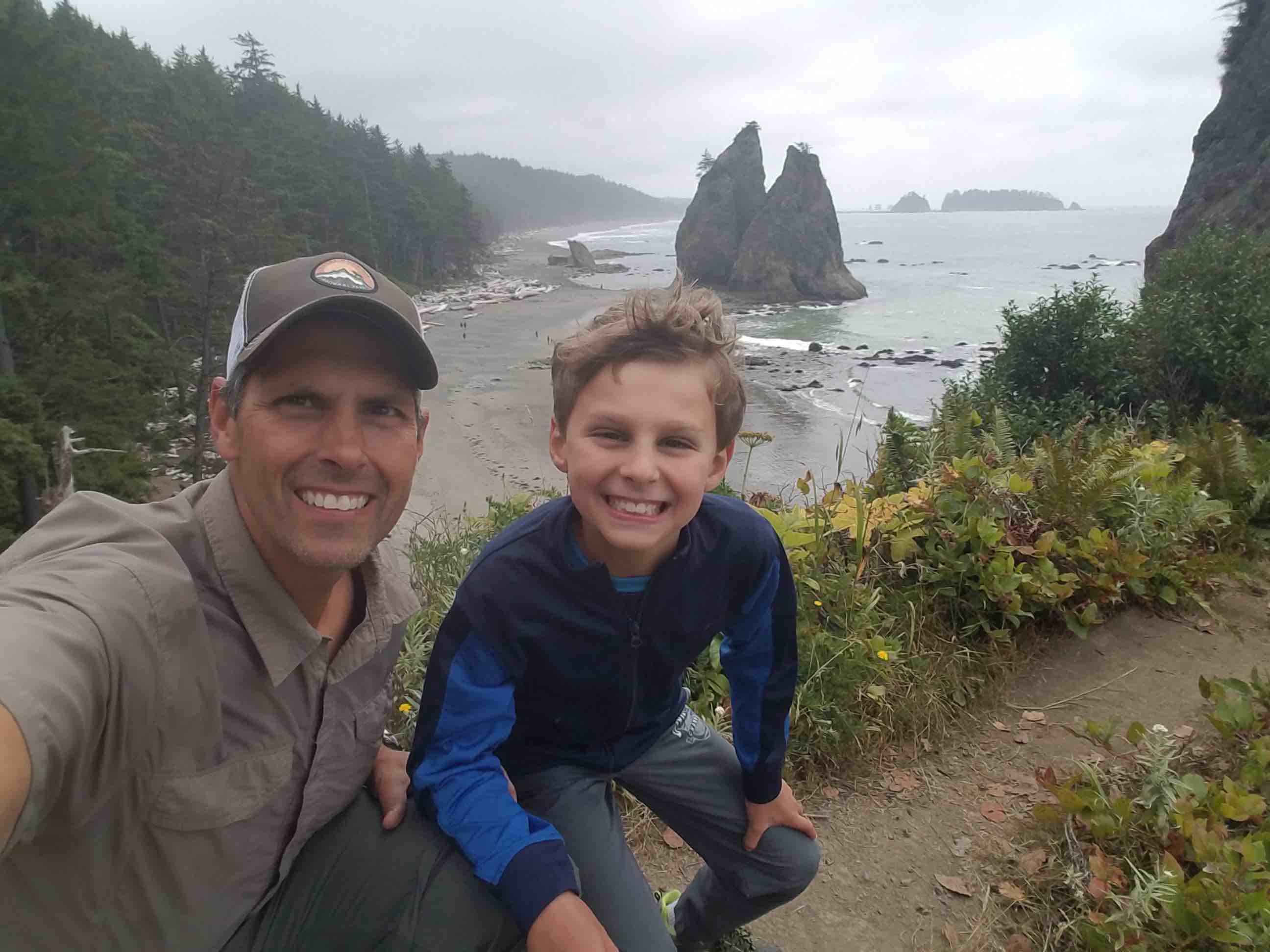
Rialto Beach
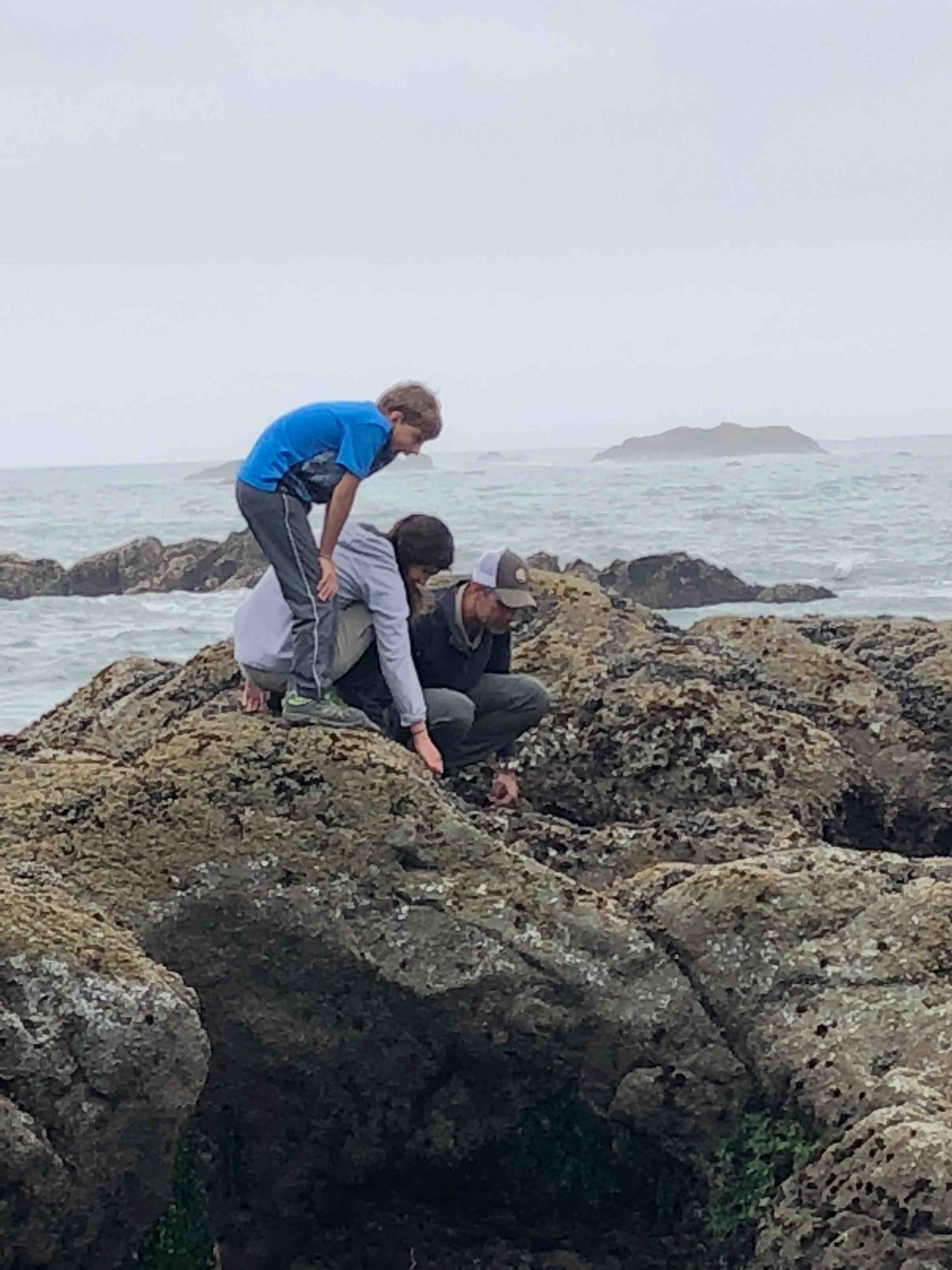
Tide pool watching

Redwoods National Park

By Samantha

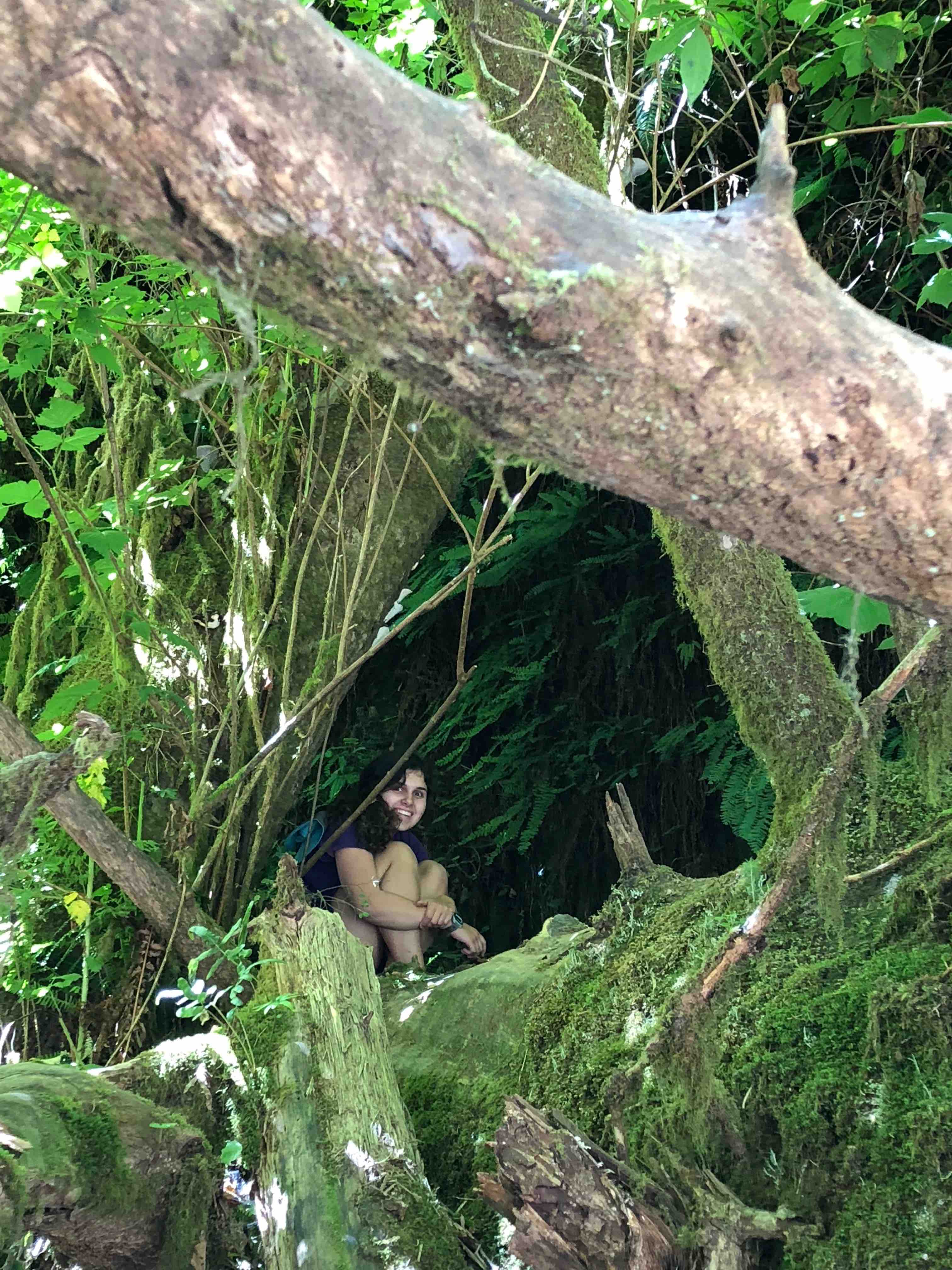
At first glance, it was an ordinary forest that just had really tall trees. At second glance, it was an alien world with bizarre flotsam hanging off the trunks of ancient slumbering trees. This unique landscape has not been overlooked by filmmakers and has an impressive repertoire of movies grace its natural wonders.  Over the years, Redwoods National Park has become a variety of movie sets, most notably becoming the Forest of Endor in The Return of the Jedi, and a canyon in Jurassic Park 2. So, when I arrived in Redwoods I naturally did the only thing a Lord of the Rings fan could do in a place that is the spitting image of Fangorn Forest. I flipped out. When we arrived in Fern Canyon, I would be lying if I said that I didn’t start choking back tears. The stone passages of the canyon were covered by a mass of quivering green fans, and dusty beams of sunlight filtered in through the gnarled trees up above. Waterfalls poured from the heavens and into the canyon, turning into babbling brooks of undiluted joy. The floor was a mosaic of swiftly moving streams, smoothly molded pebbles and fallen mossy trees. Except for the sound of rolling water, it was quiet. It was undoubtedly the most beautiful sight I had ever seen. It was all I could do stop myself from hysterically bursting into tears. When I found a hidden nook in a fallen tree, high above the rivers and tourists, I seriously considered abandoning my family and living there forever. I will always remember Fern Canyon, a place with a vivid green heartbeat and the place of my dreams. To me, Redwoods will always be much more than tall trees.

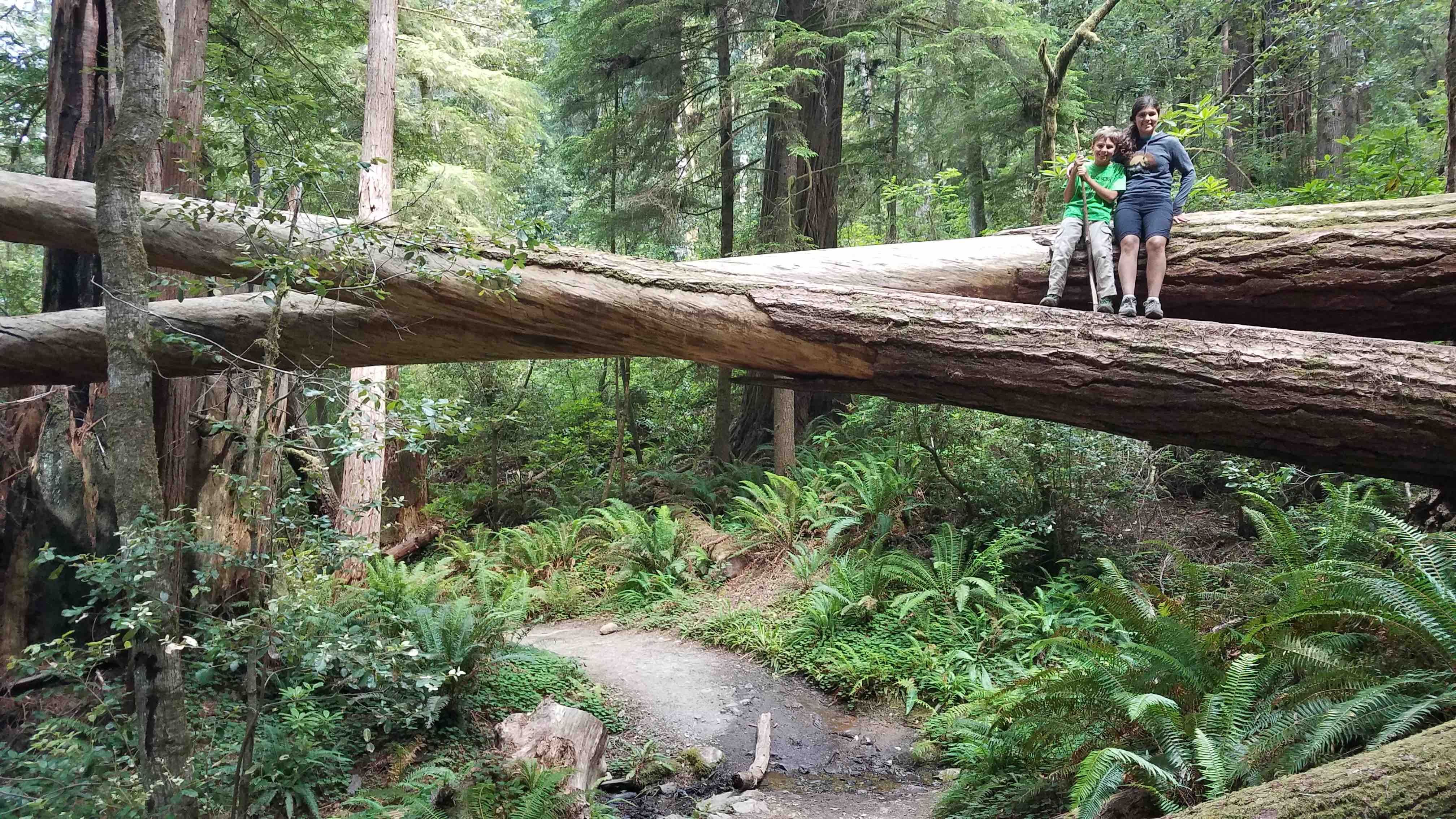
Hike in the Redwoods


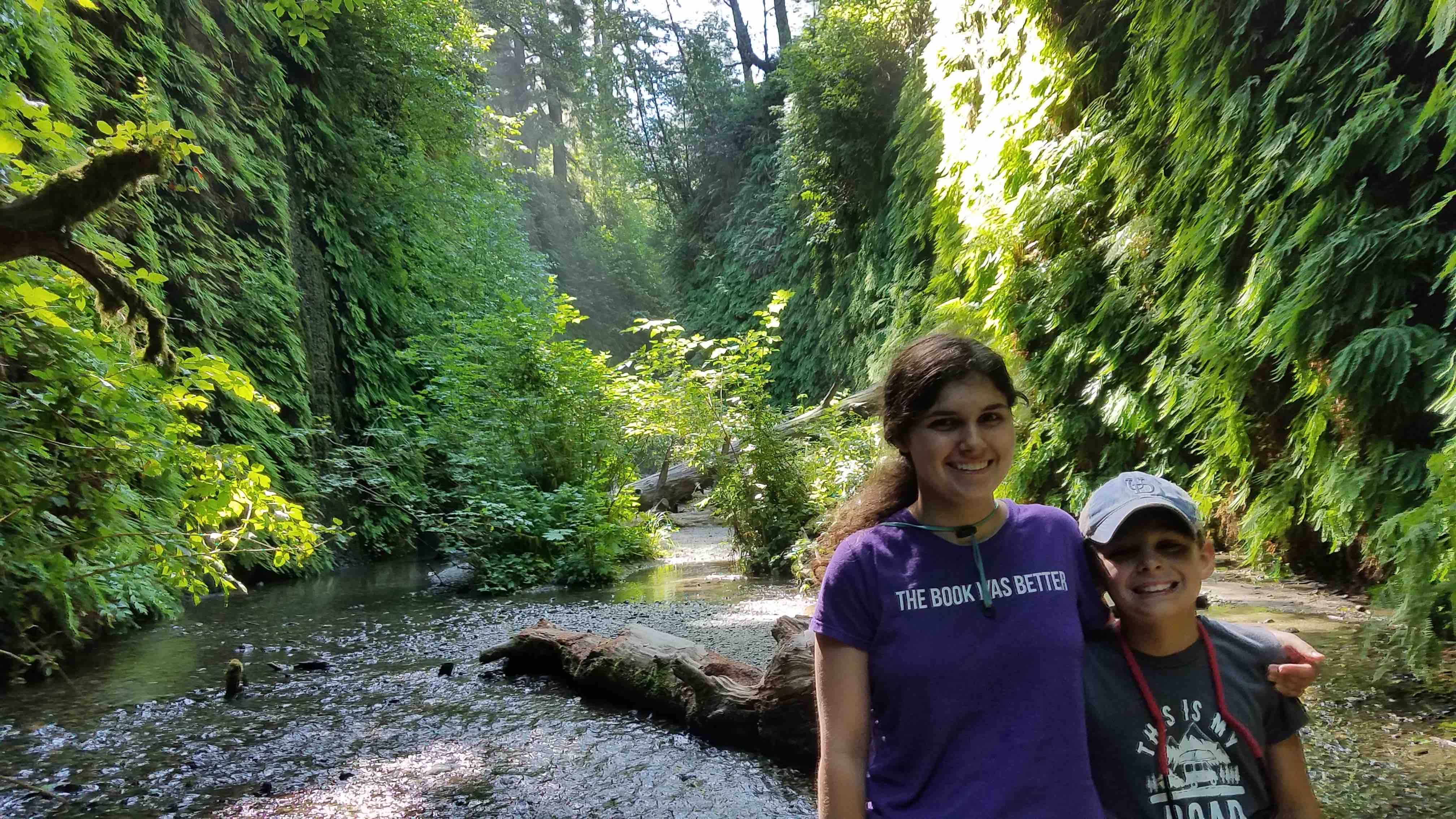
Fern Canyon


The nook


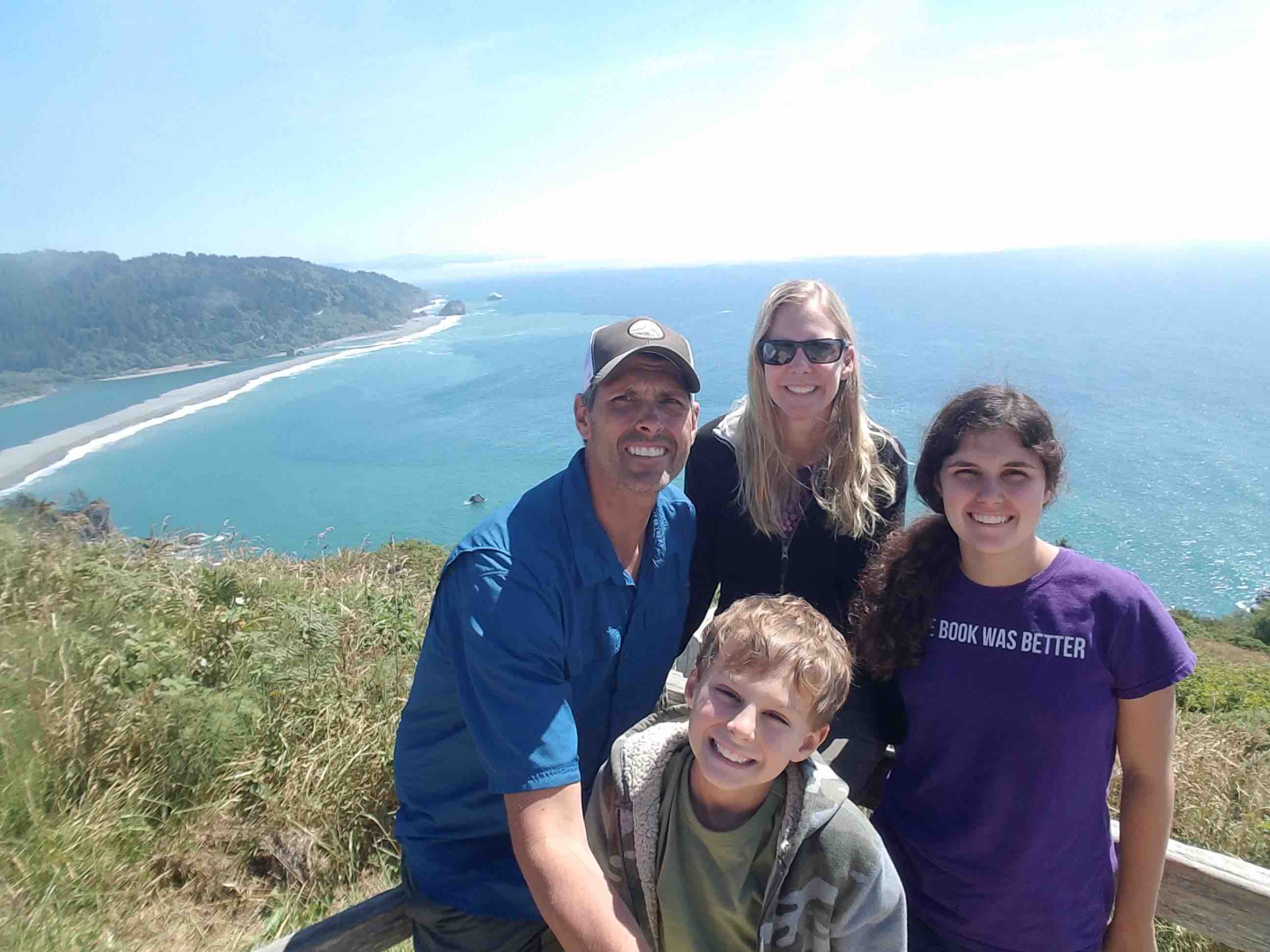
Mouth of the Kalmath River with coastaly trapped river plume
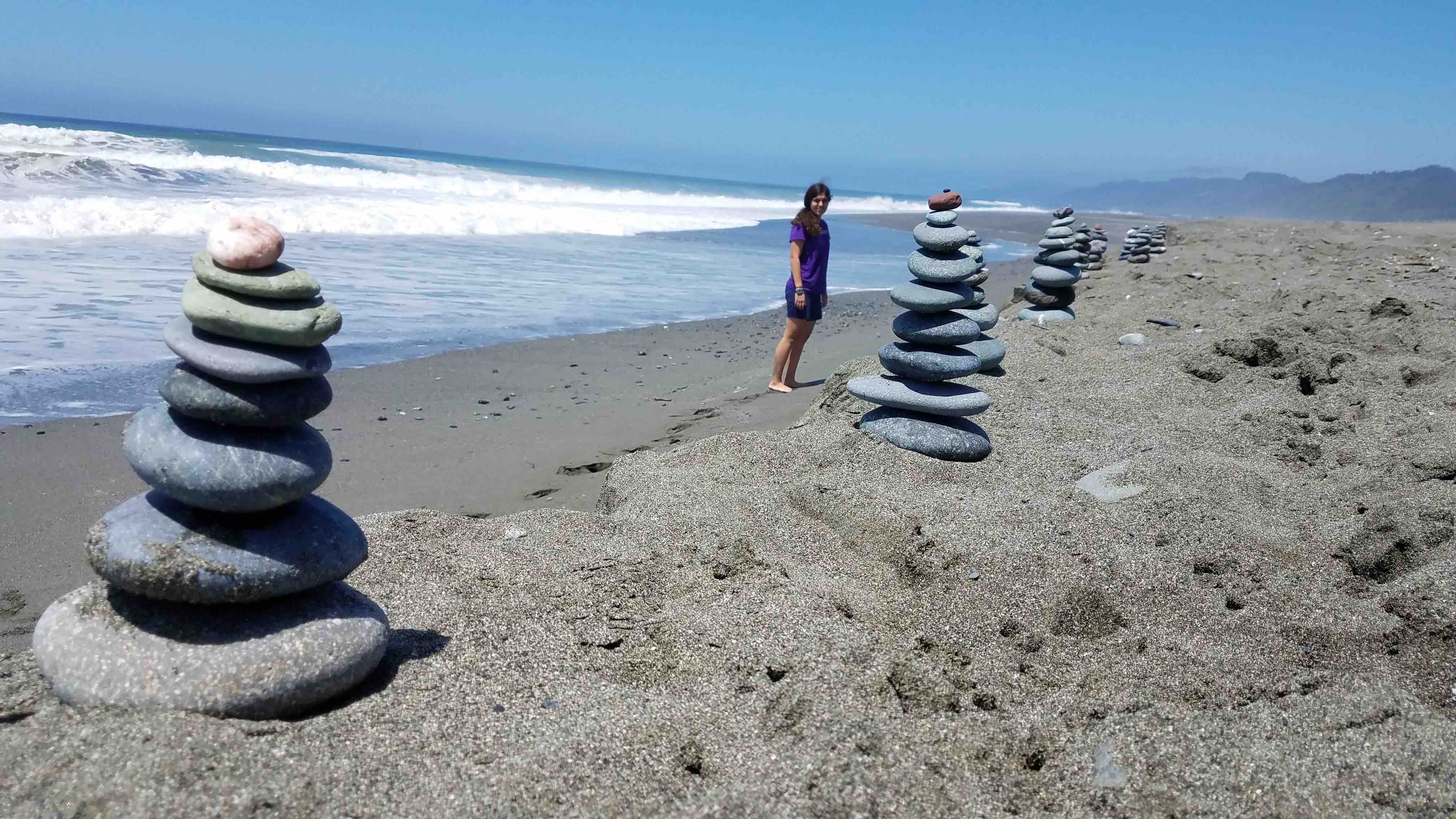
Golds Bluff Beach

Bryce Canyon: Kids hit the wall

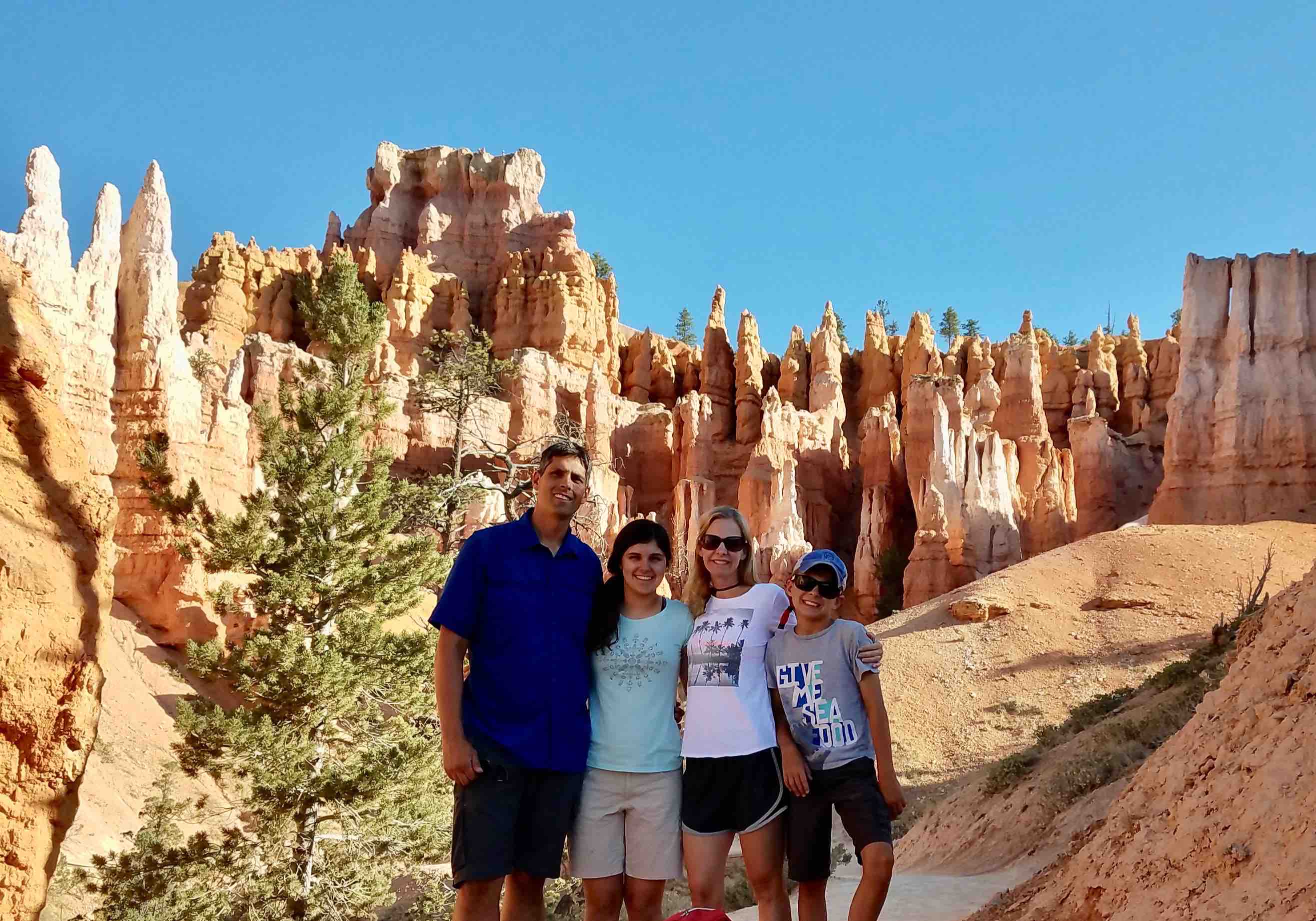
We’ve been pushing the kids pretty hard; 9 National Parks/Monuments in two weeks. At some point, I was waiting for the first breakdown, and it came on our first day at Bryce Canyon. We got on the Queen’s Garden Trail early to beat the heat and the crowds. The blue-bird day accentuated the contrast between the pink Hoodoos and the deep green trees. Personally, I was high on nature, virtually skipping along the winding trail, mouth gaping at the beauty. We were only about 1.5 miles into our hike, when Korin and I noticed that the kids weren’t hiking, but shuffling along, staring mostly at their shoes. We knew this was the day. At some point, tired kid legs just won’t go anymore. We wrapped up our planned hike early, hiked back to our truck through Wall Street (which is amazing) and spent the rest of the day driving through the park. At one point, we tricked the kids into doing an extra 1 mile loop with us through the Bristlecone Pine trail (which was amazing). After that, they were on to us, and started their revolt. We were back at the campsite by noon, and spent the rest of the day at the campground pool. Eli found some kids that also had RC cars, but it wasn’t too long before he wrecked his car pretty badly. We need new parts to continue. Total bummer!

That evening, I noticed that the inside of the front tires of our pick-up were nearly bald. This was bad news, so I called around to try and find tires, and a place that would do a much needed alignment. Thankfully a nearby tire repair shop had my size, and were willing to do an alignment on a Saturday morning (Thank the Lord!). I spent the next morning at the repair shop. Somehow the bolt on the front tie rod had come loose. The kids were happy about our truck situation because that meant I couldn’t put them back on a trail somewhere. They got to spend the day in the pop-up resting, playing board games, and watching movies. We even got to experience a short hail storm in the pop-up! That evening, we did a 0.8 mile trail to Mossy Cave, and enjoyed part of the Fairyland Loop. We are looking forward to our next trip to Bryce Canyon!

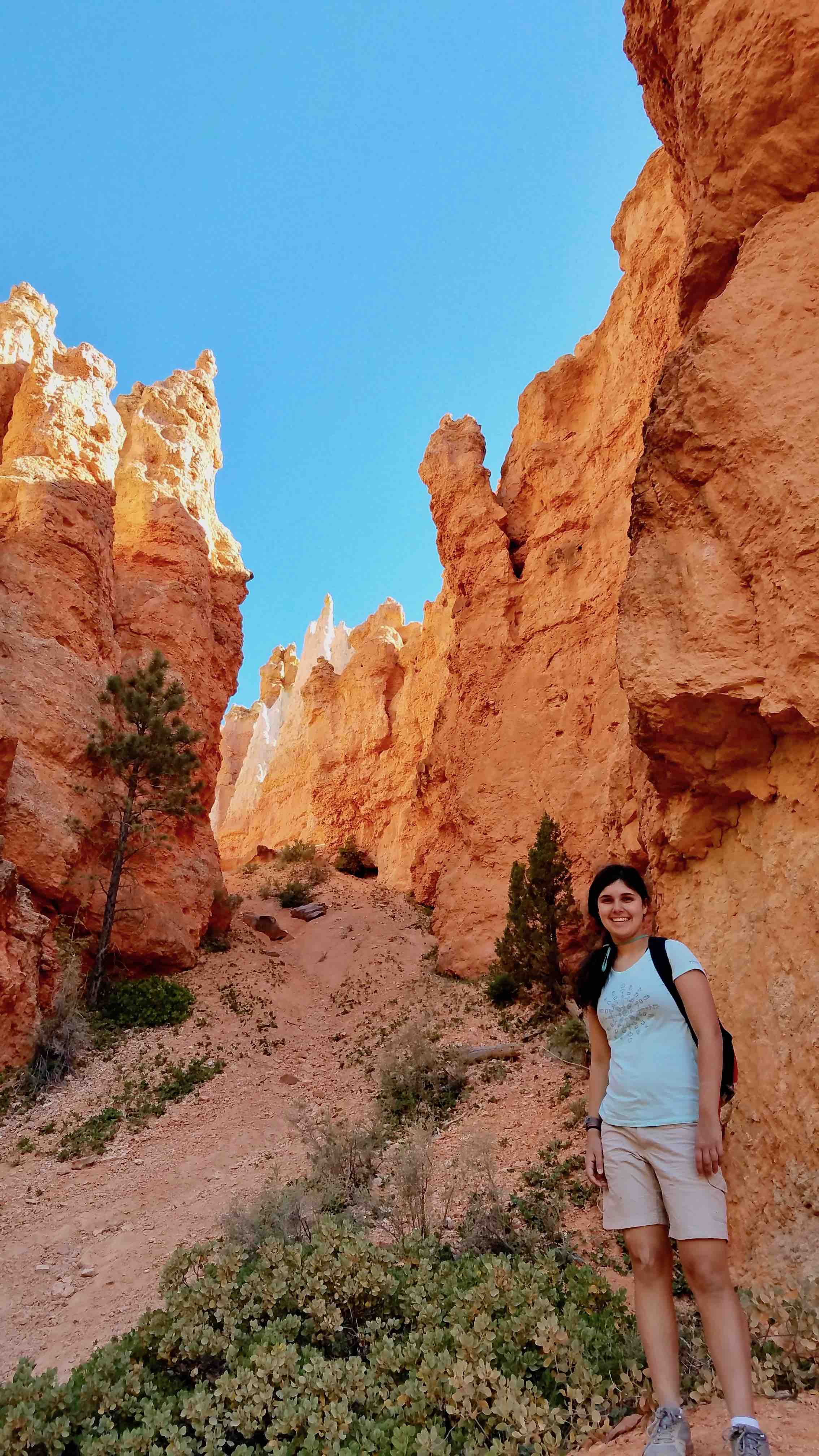
Hiking on the Queens Garden Trail
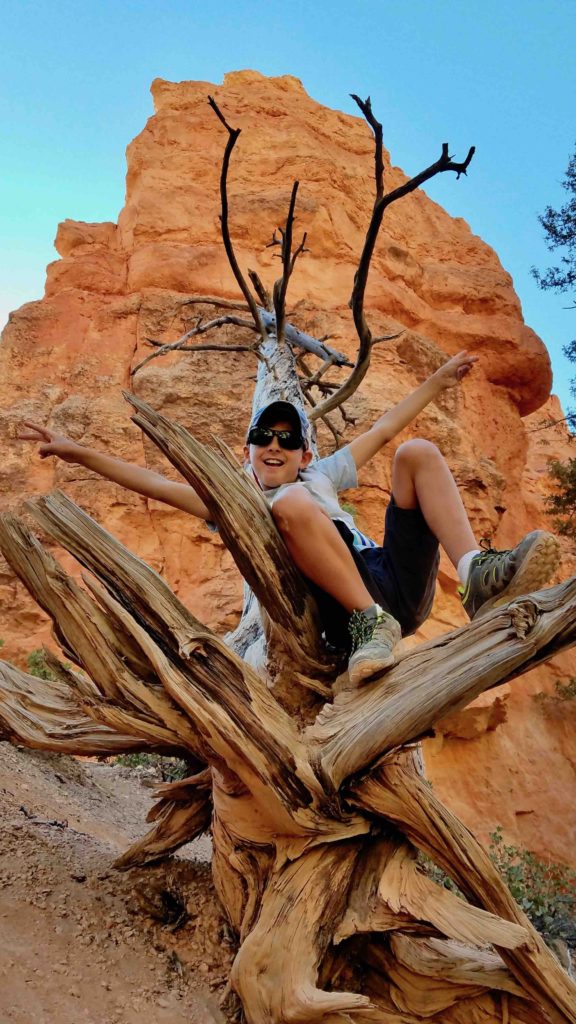
Eli before the revolt
Samantha planning the revolt

Capitol Reef: The oddly named national park

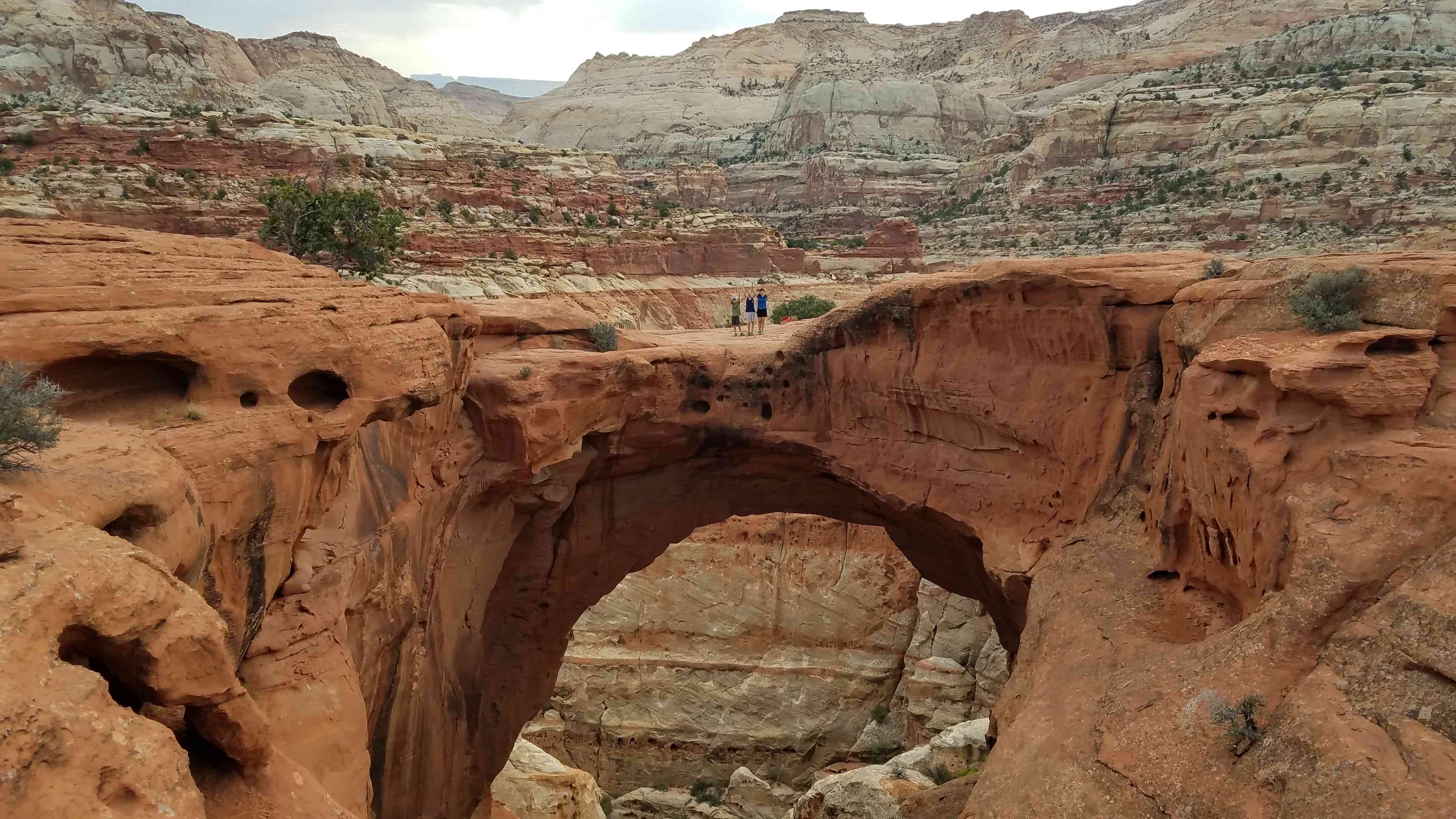
Highway 95 through Glen Canyon is the most scenic drive I have ever done. The road meanders between high red cliffs that give you the feeling of driving through the Grand Canyon. I didn’t know how Capitol Reef would be able to top this scenery. Capitol Reef is a 100 mile water pocket fold, that inhibited east-west travel for early pioneers. Early sailors, turned land lubbers, were the ones that thought it should be called a “reef” since it would grind down your gear as you attempted to cross it. “Capitol” was added because one of them thought one of the prominent domes looked like the US Capitol. For whatever reason, the name stuck. We arrived at the Fruita Campground in the evening  just in time to cook some pizzas over the open fire, while the kids picked ripe fruit from the onsite orchards. In the morning, I was awakened by the rustling of cotton wood leaves and saw several large bucks in our campground. It was much cooler because a layer of clouds had moved in overnight and dampened the heat of the sun. We decided to take advantage of this blessing and hike the Cassidy Arch Trail which is a 3.4 mile round trip with 1,000 feet of elevation gain. The sunlight passing through the moving clouds made the color of the rocks dance like a living rainbow. The occasional rain shower cooled us off as we approached Cassidy Arch. We hiked on top of Cassidy Arch and were rewarded with breathtaking views of the Grand Wash Canyon below. We could see that our cloud cover was leaving us so we double- timed it back to camp where we stopped at the Gifford House, a preserved homestead of early Mormon settlers where they still bake old fashioned pies. To our surprise, many of the pies were dairy free! Time to order 1000 of them (or 2). They were a fitting reward for a good hike in a magnificent place. Reflecting on our short trip to Capitol Reef, I am thankful for the safe travels through desolate but beautiful country, the morning clouds that gave us relief from the heat and the wonderful dairy free pies that our whole family enjoyed.

Our Fruita Campsite inside Capitol Reef NP. The campground is nestled in a preserved grove of fruit and cottonwood trees next to the Fremont River.
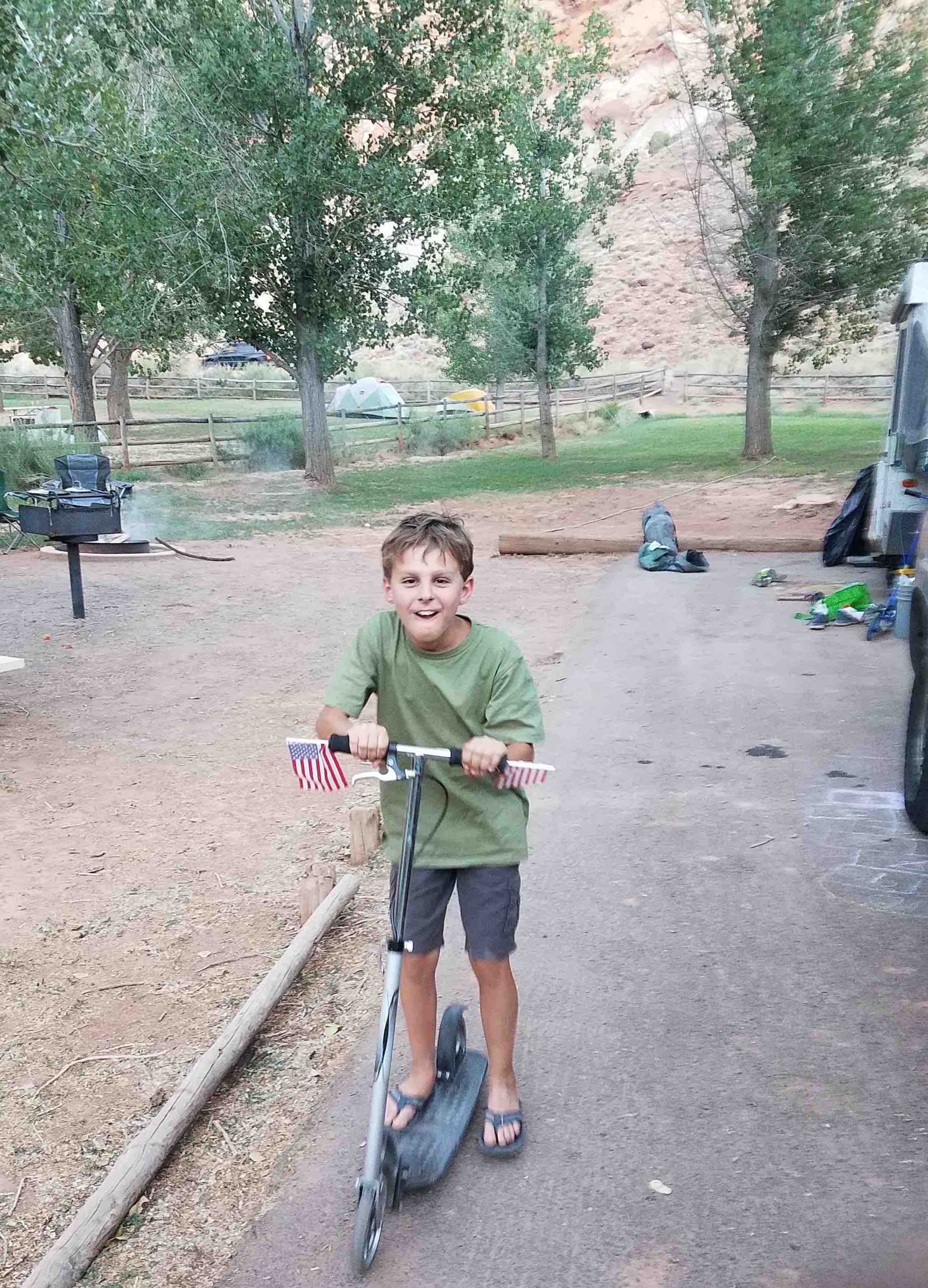
Eli celebrating the 4th of July in the Fruita Campground
Korin, Samantha and Eli on top of Cassidy Arch


Part of the HWY 95 drive through Glen Canyon

Natural Bridges National Monument: Hiking Redemption

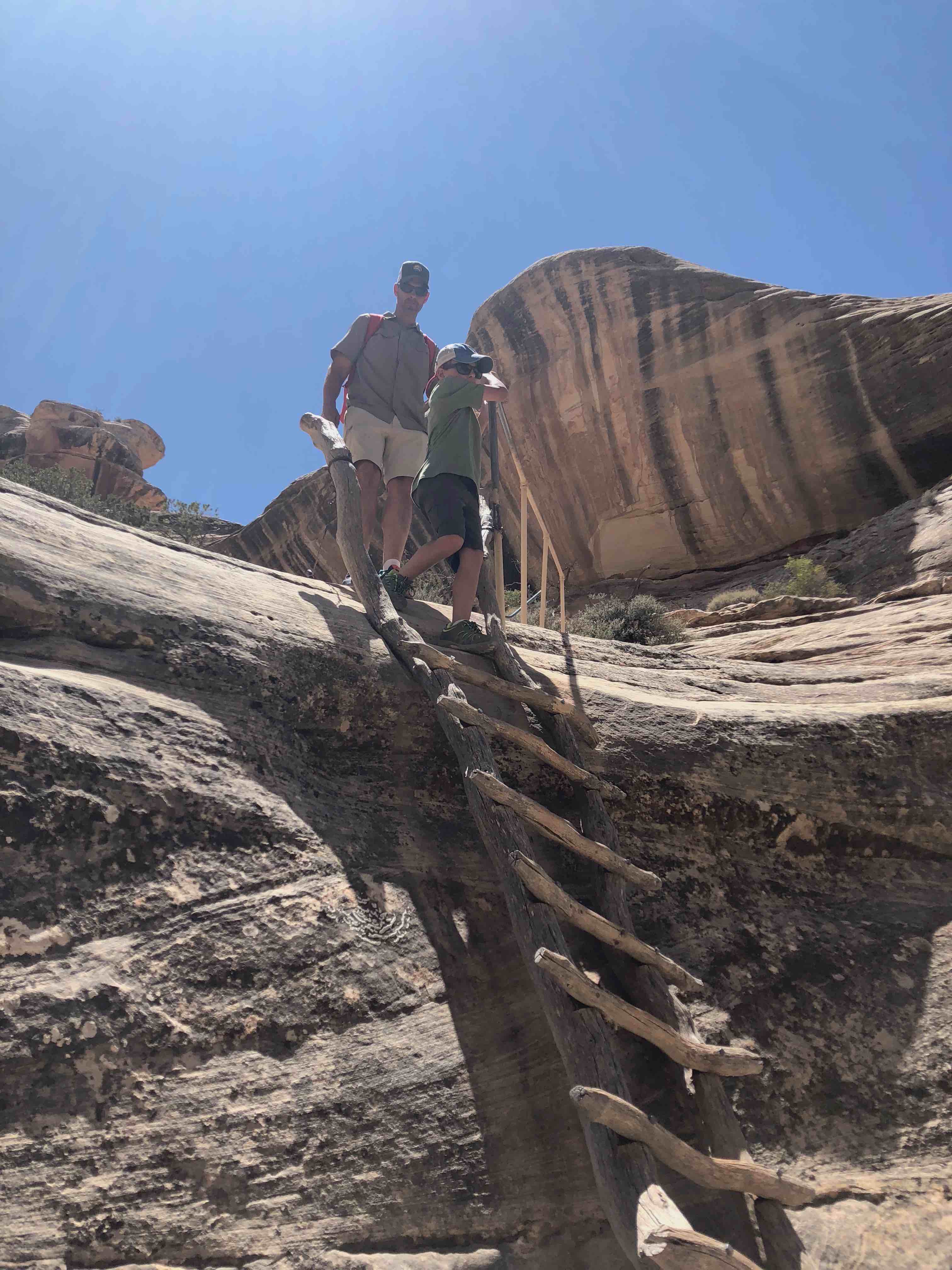
Having been put into a suplex by the Black Canyon of the Gunnison, we were out for some hiking redemption. A quick hike to the base of Sipapu Bridge in Natural Bridges National Monument is just what we needed. Plus, it broke up the drive from Canyonlands NP to Capitol Reef NP. From the rim, the trail is only 1.2 miles round trip, but descends about 1000 feet. The Sipapu is created out of Permian Sandstone, deposited ~270 MYA. There was a definite sense of history entering into the canyon. It is a quick hike, and something my 42 year old Dad-bod could handle. A nice combination of slick-rock, step-stones, and wooden ladders make for a fun adventure. At the base, we relaxed under giant cottonwoods that provided plenty of shade, while also showing evidence of flash floods that seasonally rip under Sipapu. Once the Turkey vultures started to swirl, sensing that we may be their next meal, we climbed our way back to the rim in just under 20 minutes. It was a great, unplanned stopover on our adventure.

Eli navigating one of the wooden ladders that leads to the base if Sipapu Bridge. Nice form kid!
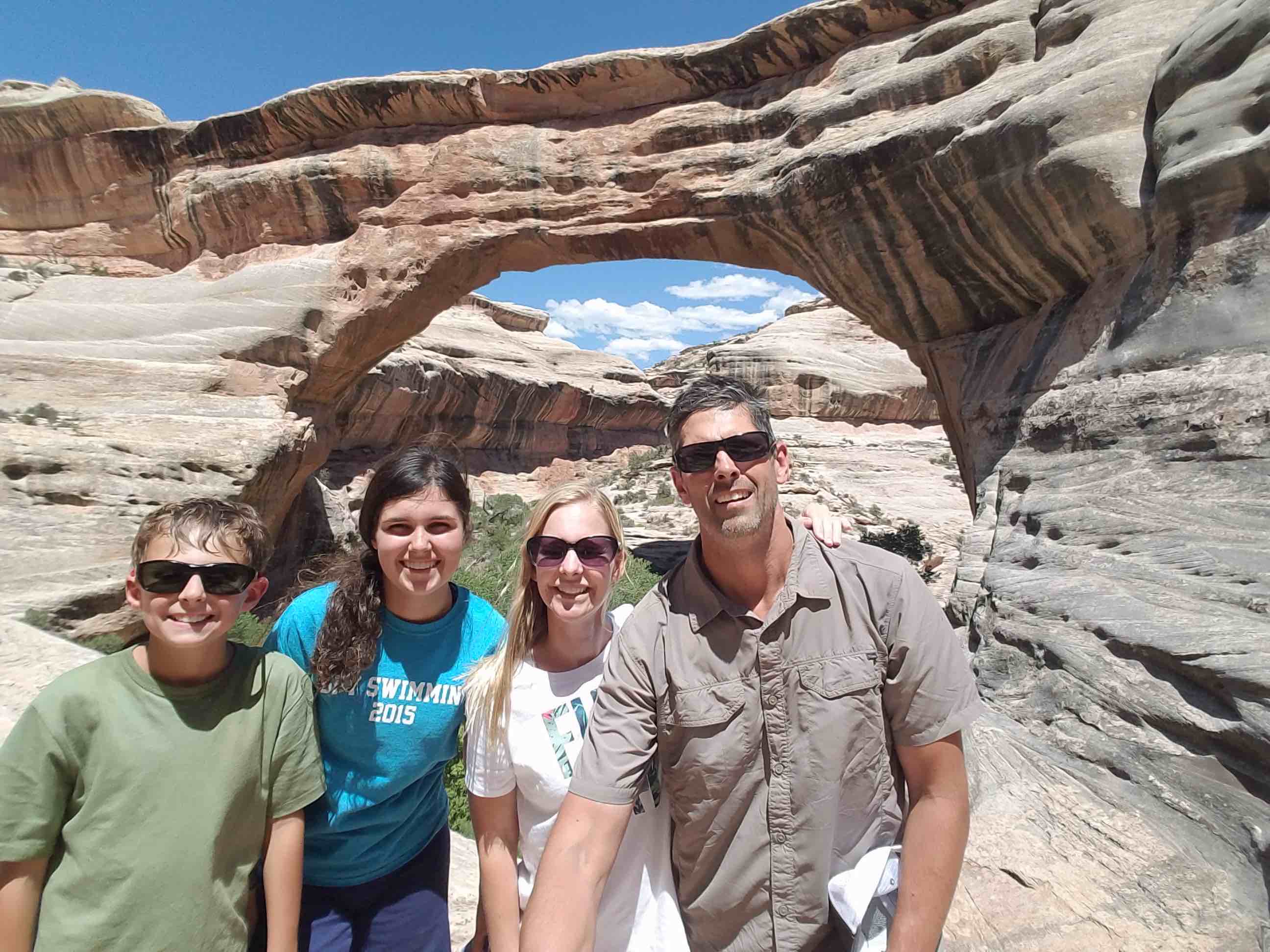
We made it to the 13th largest natural bridge in the world…and we didn’t die!
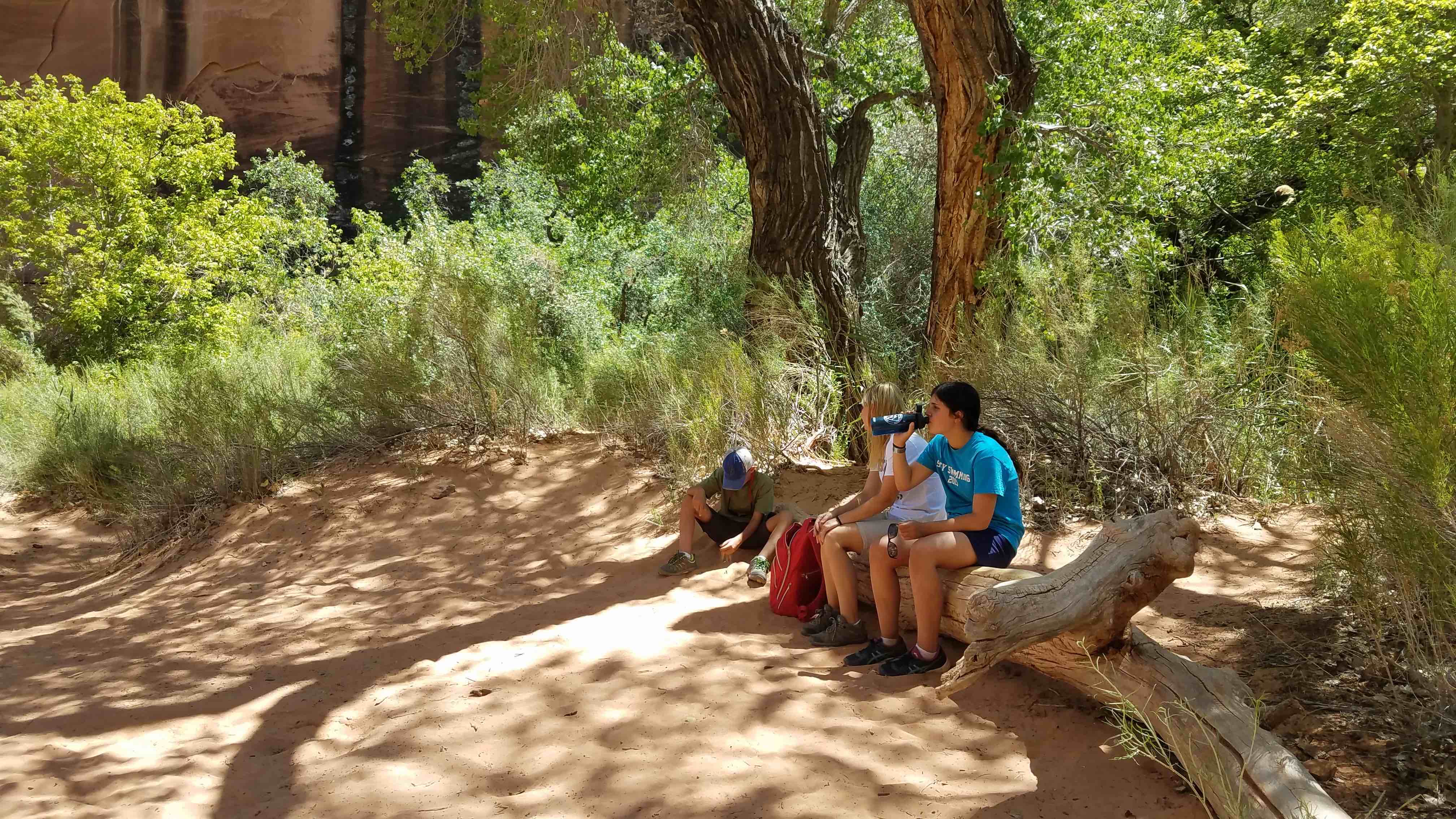
We were thankful for the Cottonwoods (both alive and dead), to provide a nice shady place to rest before our sprint out of the canyon.


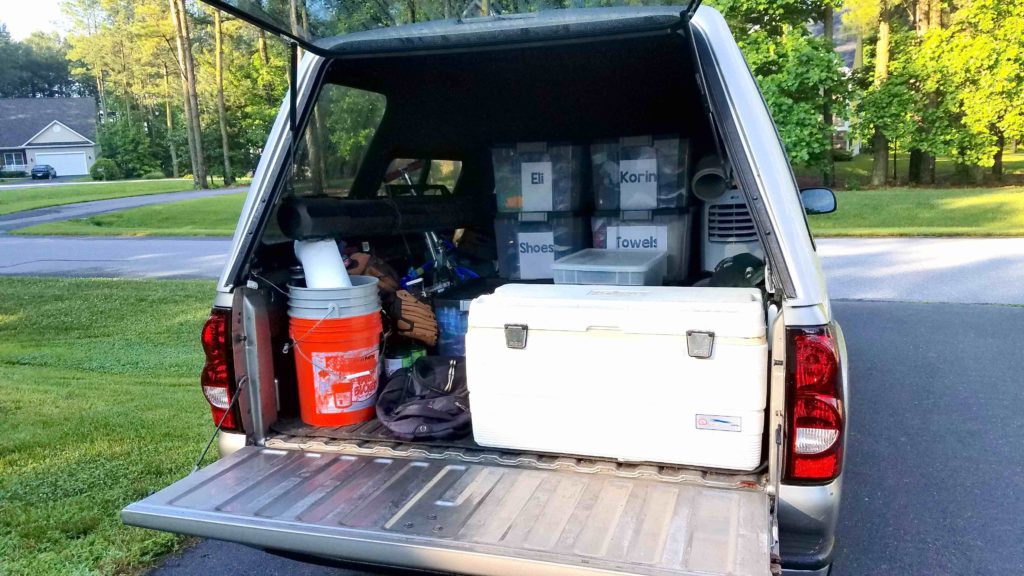
The Truck Bed (Giant Camping Man Purse)

Our GCMP, ready to rock.

One of the main things I’ve learned about cross-country camping with our rig is that the truck bed is the hub of all camping logistics. This is where we store all of our gear, food and clothes, so it is worth thinking about how it is organized. When I started cross-country camping, I thought I would spend a lot of time moving all of our gear from the back of the truck to the trailer, but that didn’t really happen. The reason why is that we don’t spend many waking hours in the trailer. The best thing to do is to have a small backpack of personal items for each person that gets put in the trailer for that night (toiletries, clothes, etc.), and the rest stays in the bed of the truck. It is way easier!  Also, these are the huge advantages to keeping all of your gear organized in the truck bed, which keeps everything dry and locked. For example, if you decide to drop the trailer and head out on a day trip, you already have everything with you. You can pull off a trail anywhere and make a great meal on the tailgate. There is no “extra” planning needed on your end to make day trips work. Think of your truck bed as your giant camping man purse. So here are a few things besides your food, camping gear, and clothes bins that I keep in my GCMP.

  1. 2-ton jack, because you never know when you have to jack something up.
  2. Jumper cables and tow cables.  Sparks and tugs can be really useful.
  3. Basic tool kit and socket set; no need to be crazy expensive on this one. Keep it simple.
  4. Assorted ratchet straps because you never know what needs tying down in a hurry.
  5. Grease gun, keep those trailer hubs lubed!
  6. Portable Air Conditioner; You’ll see…
  7. Splitting Axe; Chop that wood, make that fire. Add flannel and beard for increased toughness.
  8. First-Aid kit for all the boo-boo’s from the axe.
  9. Marine grade cooler; food poisoning will end your trip real quick!

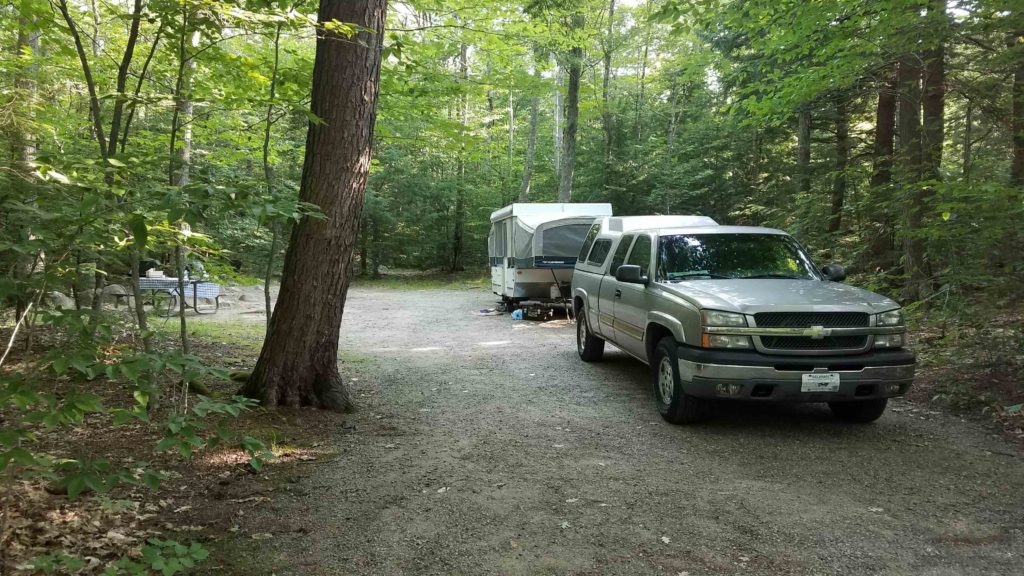
What kind of rig does a family of 4 use to do cross country camping trips?

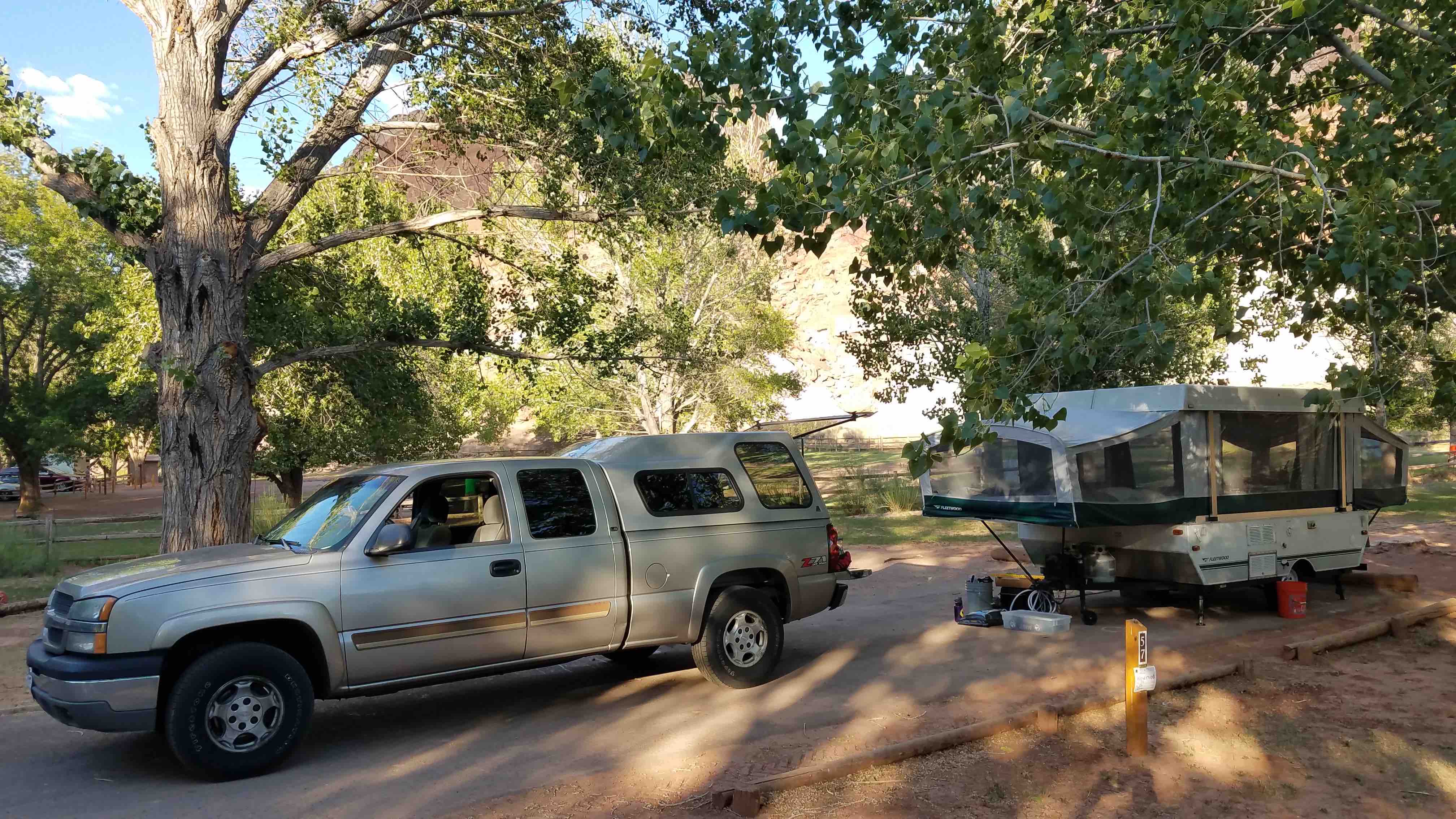
Our camping rig in Dry Creek Campground, New Hampshire

For us, it is a 2003 Chevrolet Silverado extended-cab 1500 pick-up, a Leer 122 truck cap, and a 2005 Fleetwood Sea Pine pop-up tent trailer. This set up gives us ease of use, speed, versatility, and doesn’t confine us to parking-lot camping. We can easily fit into the smaller sites in the National Park system.

We purchased the truck new in New Jersey, just before Samantha was born. I convinced myself that I needed a new pickup for “the safety of the baby.” Anybody use that one before? However, I love this truck! My only two regrets is that I didn’t get the crew cab, and that I bought it brand new, rather than gently used. Even though it is a club cab, the kiddos still fit in the back seat, provided we supply them a steady stream of road food (the saltier the better).

We also bought the Sea Pine new from Indian Valley RV in Souderton, PA after a particularly cold camping trip to Stokes State Forest, NJ. It was time to get out of the tent, especially if we were going to do this with small kids. The trailer gave us more protection from the elements, a small fridge, but no potty! Who wants to haul that around with them?