Coopers Rock State Forest; don’t drive by!

Blog post by: Matt

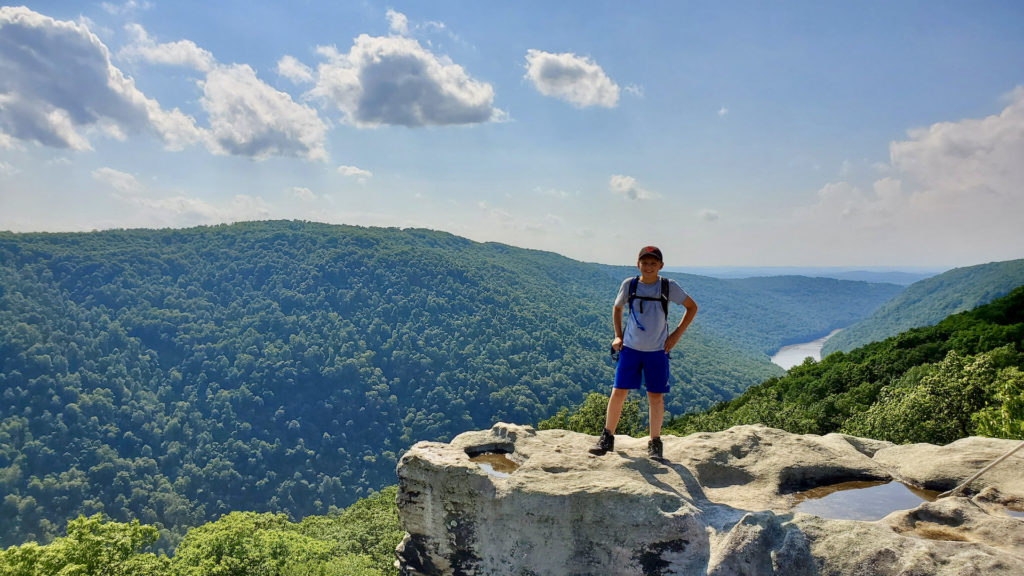
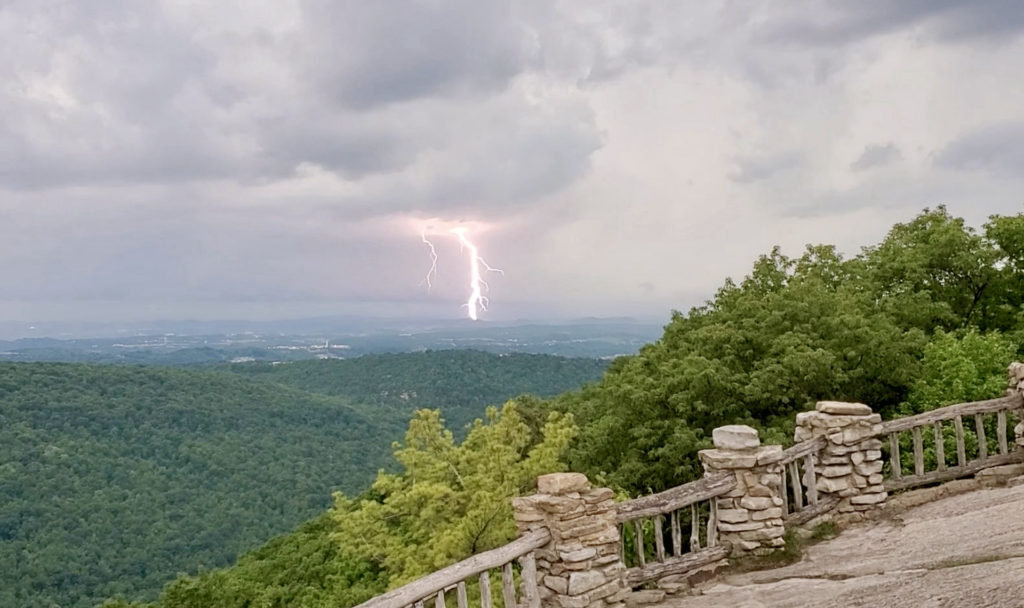
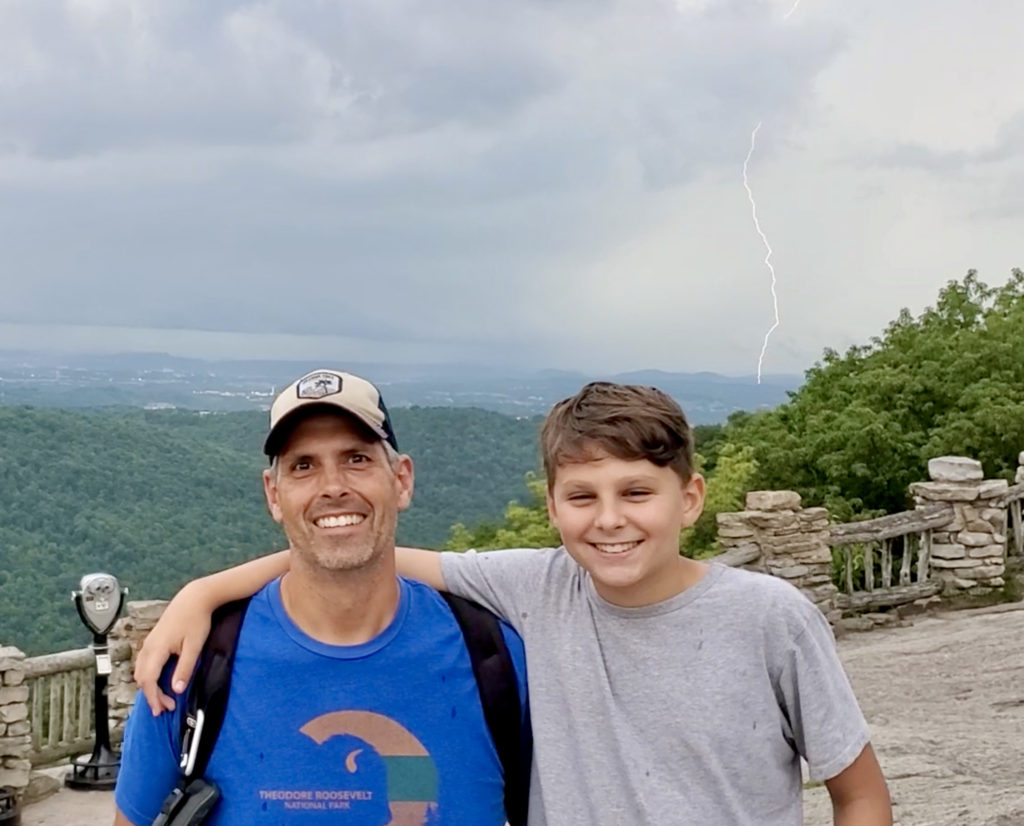
Just a short detour off of I-68 in West Virginia is Coopers Rock State Forest. I’ve passed Coopers Rock several times, and I was happy to get the chance to finally go. We stayed in McCollum Campground, where we were greeted by very friendly staff. The sites have electricity, and potable water is a short walk away, but cell service is very limited.  The campground hosts recommended taking the McCollum trail to Raven Rock trail before the strong thunderstorms set in. We hustled along the 2 mile out and back trail to Raven Rock overlook. The trail through the vernal green forest was relatively easy. Just watch out for loose rocks or you might twist an ankle. We were rewarded with sweeping views of Cheat River Gorge on a beautiful day. We headed back once we heard the roll of distant thunder. The storms still hadn’t arrived after an early dinner, so we snuck out to Coopers Rock overlook. Again we were greeted with views of Cheat River with Morgantown WV in the distance as the thunderstorms rolled in. Coopers Rock State Forest is a beautiful place for a short hike, and to stop for a night.
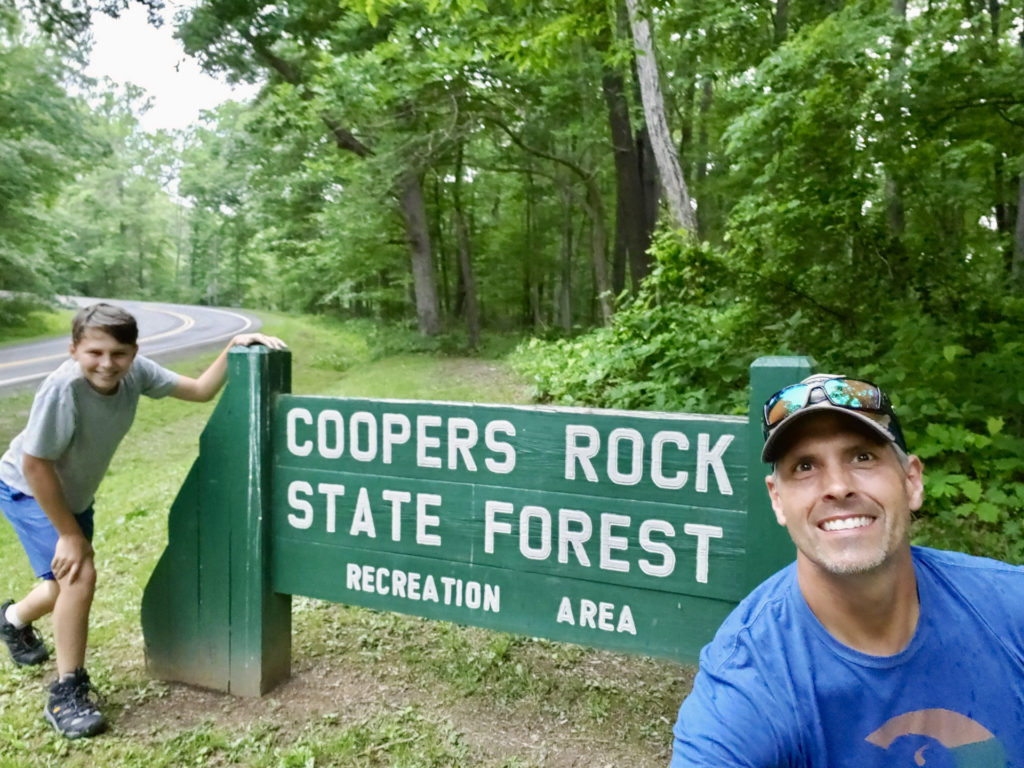
Entrance to Coopers Rock State Forest
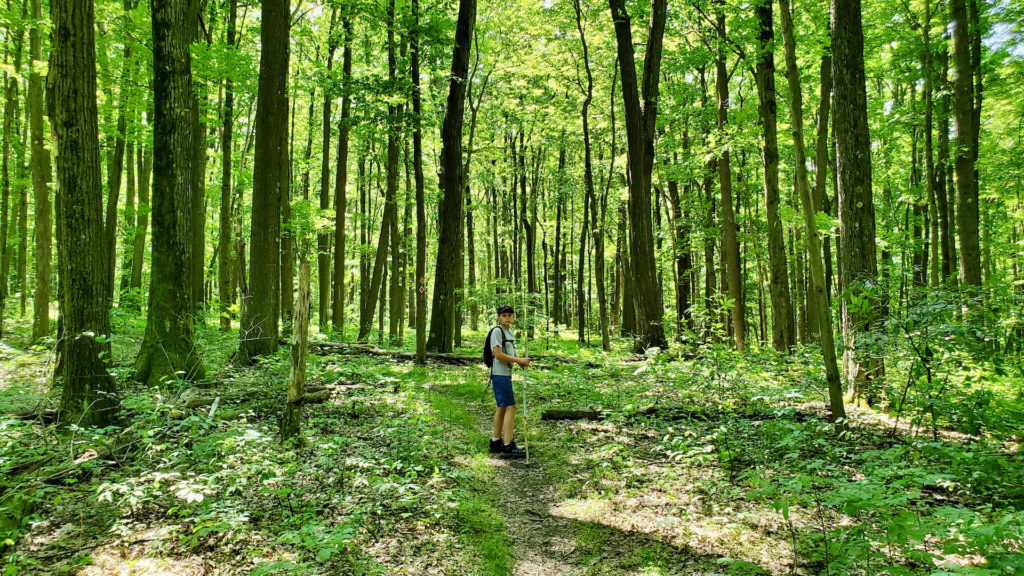
Eli on the McCallum Trail
Eli on Raven Rock Overlook in Coopers Rock State Forest
Lightning strike over Morgantown WV from Coopers Rock Overlook.
Lightning strike from Coopers Rock Overlook

Voyageurs National Park

By: Matt

Voyageurs National Park lies on the boundary waters between northern Minnesota and southern Ontario. It is named after the French Canadian trappers that used these waters for the beaver fur trade. The park itself only has 8 miles of paved roads, and all of the campsites are only accessible by water, so seeing the park by car is not possible. I thought to myself, perfect, I’ll just bring the family out by boat! Thus began another dad-venture. 

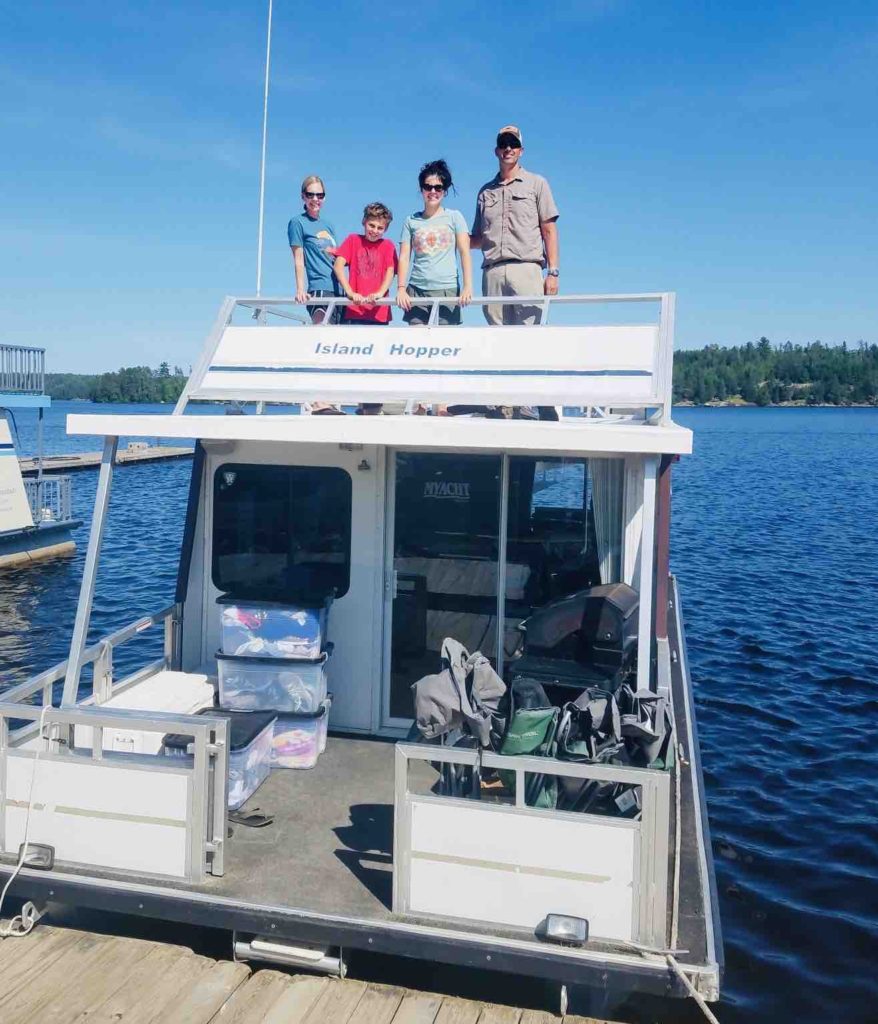
I found an outfitter than rented houseboats on Crane Lake, which is one of the lakes that connects to the waterways of Voyageurs. We arrived at the Voyagaire Lodge at about 2:30 pm to pick up “Island Hopper.” Island Hopper is a 36 foot houseboat, complete with water slide, refrigerator, microwave, BBQ, head, and shower. Samantha was very happy that she was going to have a real toilet and shower on the boat. It didn’t really matter to her that she would be showering in with lake water. Compared to the pop-up, this thing was a mansion, and everybody was excited. I guess after 4 weeks in a pop-up, expectations had been set so low that we felt like we were cruising in style! So far, the dad-venture was going to plan.

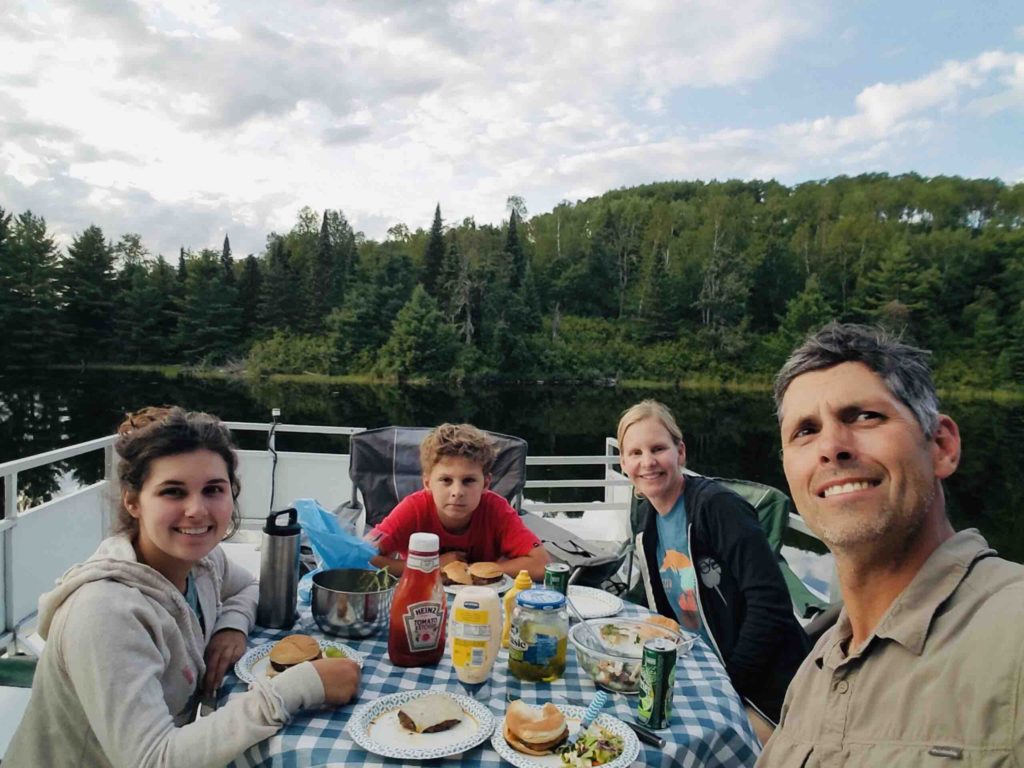
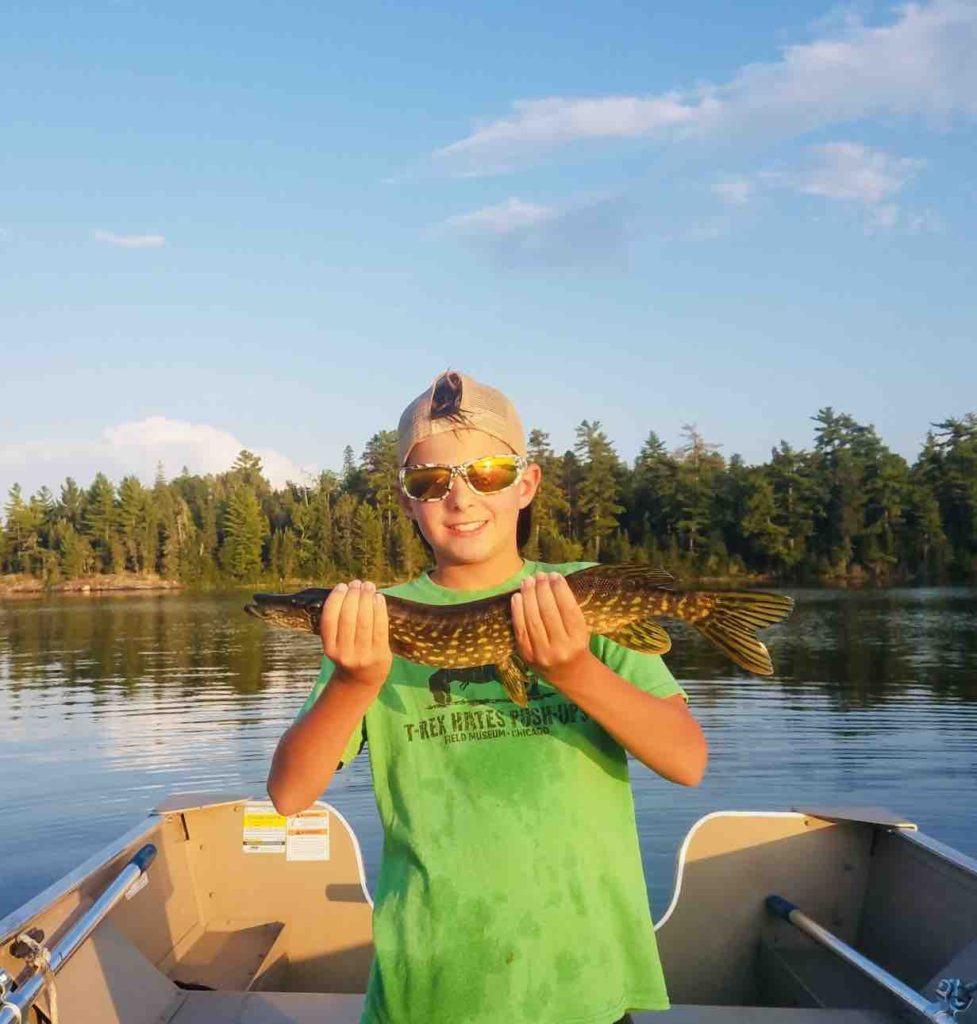
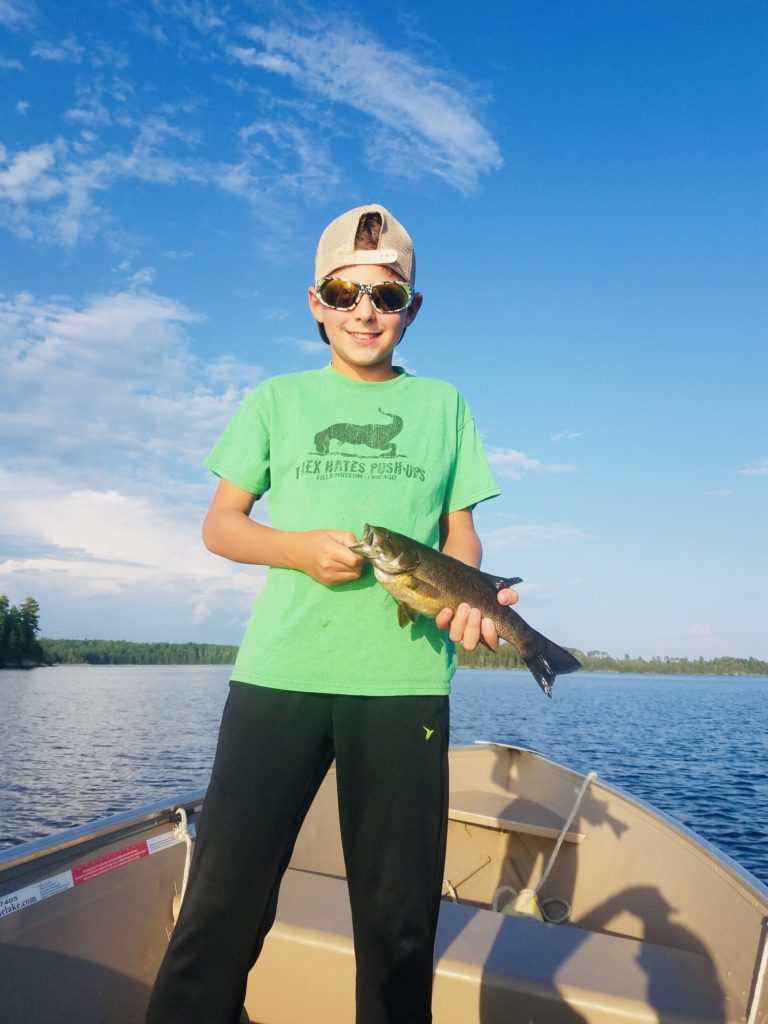
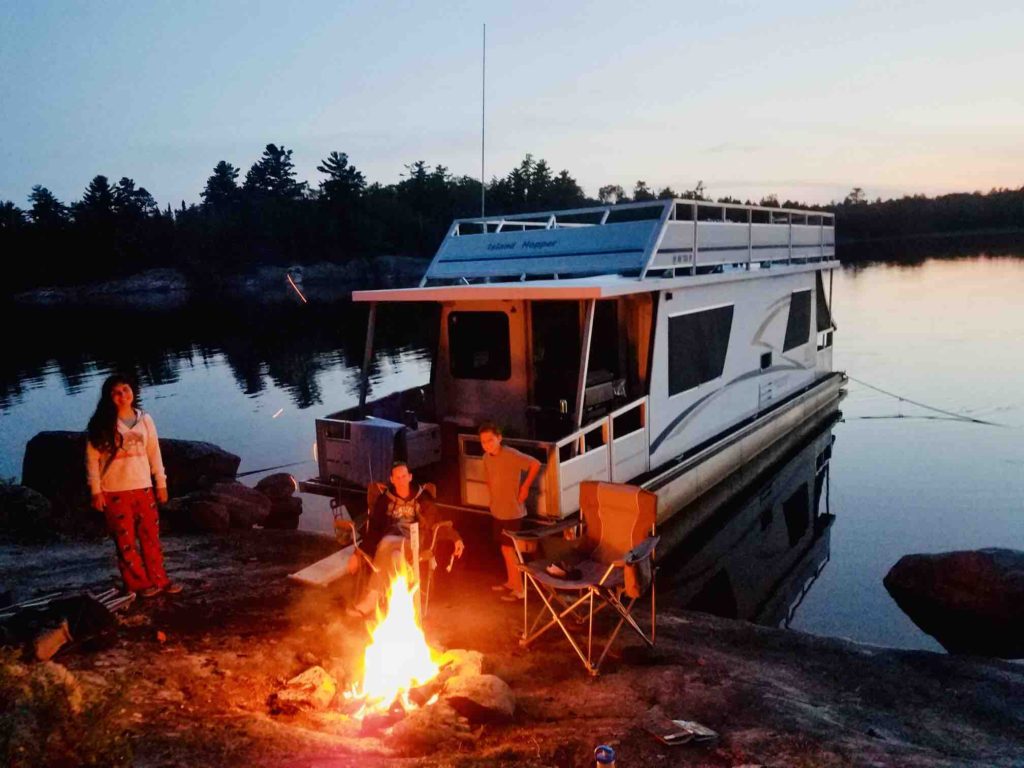
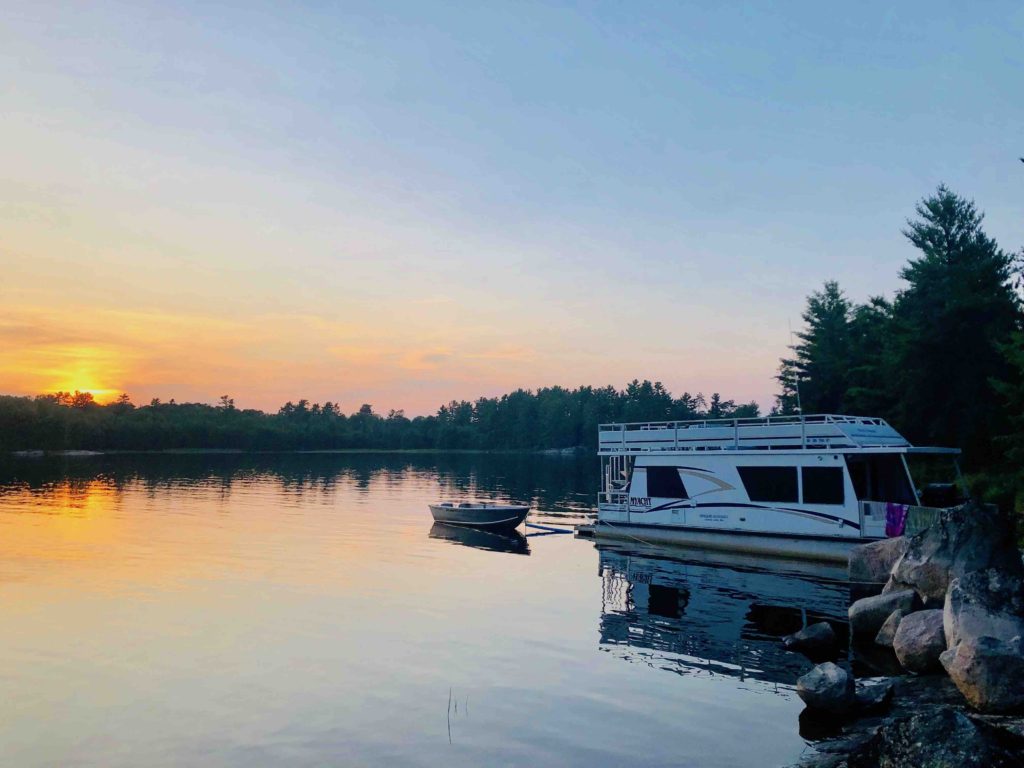
Each night, the houseboats scramble to tie up to designated houseboat campsites. Some of these are maintained by the National Park Service, while others are informal, and can only be identified by stone fire-rings on shore. Since we arrived in the afternoon, we made a short steam to the upper reaches of Grassy Bay on Sand Point Lake. We found an unofficial site perched on a granite bolder surrounded by dense Minnesota woods. The place was idyllic. Downed logs in the water, lily pads, soaring eagles above, and a warm afternoon sun. Once we tied up the boat, we grilled some hamburgers on the deck and enjoyed dinner overlooking the water. Since the sun sets so late (~9pm), Eli and I decided to try our luck at fishing from the 16 foot aluminum boat that comes with each houseboat. With a 15 hp motor, it got on a plane quickly and skimmed across the smooth water. Eli really liked driving it. In about an hour we landed 4 smallmouth bass and 1 northern pike. Not too bad for not trying very hard. We got back for sunset and hung around the fire. I couldn’t believe how nice it was! We looked forward to star-gazing as the last bit of daylight receded. That’s when it started. What seemed like at first a few stray mosquitos turned into a squadron of combat trained mosquito ninjas. The air was alive with the high-pitch whirring of blood sucking vampires. We looked toward the houseboat for refuge, but that too was coated with bugs trying to get to the lights inside the boat. We dashed in the door, only letting in a few hundred of the hoarding millions. The next hour was a full on “swat to the death” as we mercilessly exterminated all insects. After that the lake water shower was nice way to wash off the bloody mosquito carcasses.

The next morning, the bugs had vanished. We steamed north to Namakan Lake to explore the islands. We found a nice swimming hole and used the houseboat slide to its fullest potential. There were some storm clouds to our north, so we turned south again into Sand Point Lake. We had read that the more rocky campsites had fewer bugs, so we made our way to an island that was mostly granite to tie up for the night. We found a wonderful site, and swam and fished a bit more. We made a huge fire on the granite rock, completely bug free. We had a wonderful evening….until the last bit of daylight receded. We must have really made the mosquitos angry the night before, because they showed up with reinforcements. I didn’t think it was possible to fit more angry bugs in the air. These things attacked so fast that we barely had time to retreat to the boat. We swatted away for another hour, clearing out the boat, then wept silently in our pillows (really!). I actually contemplated turning in the boat a day early. The bugs are tough!
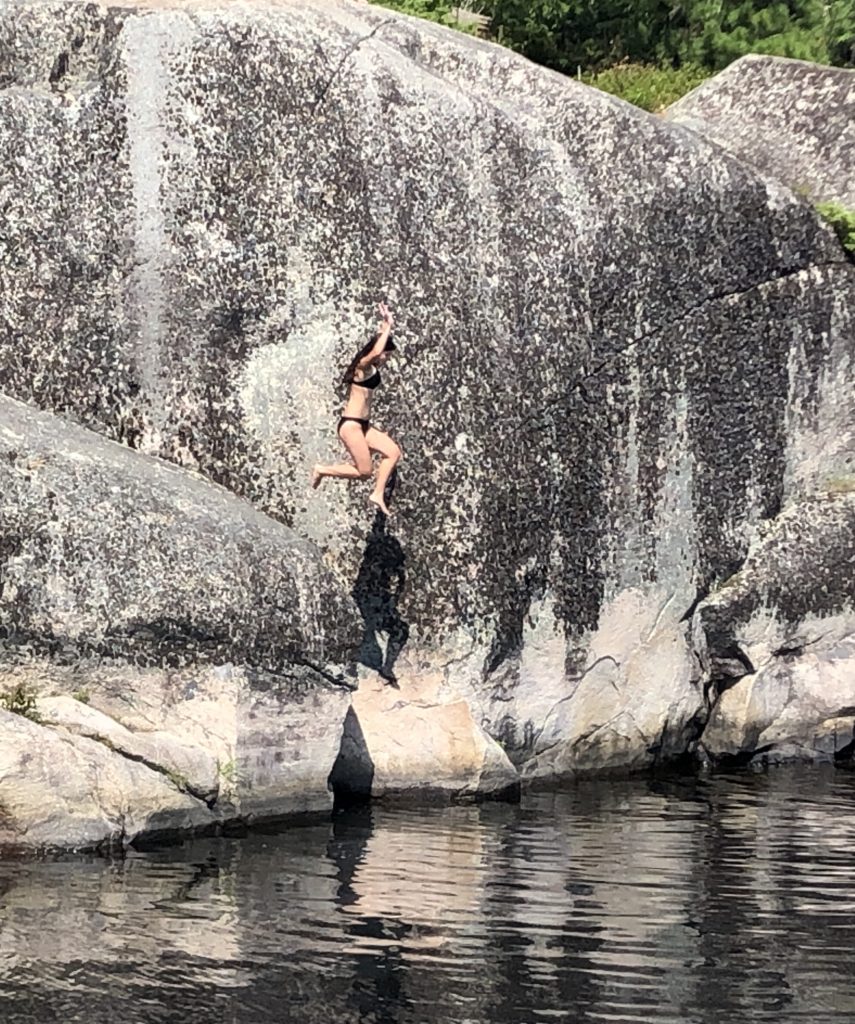
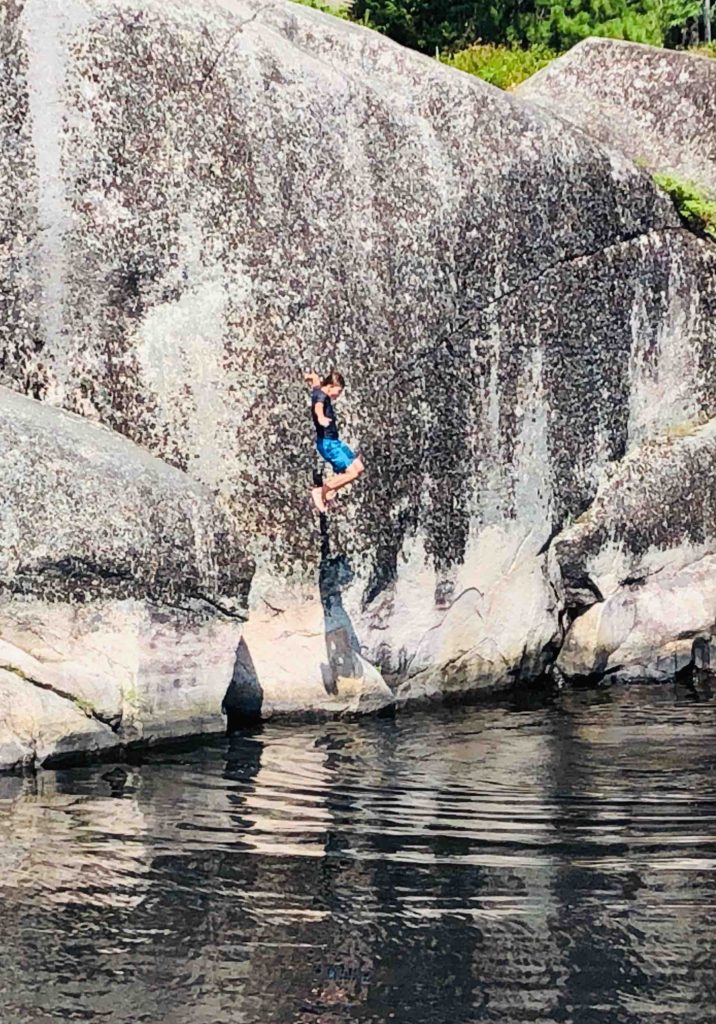
By morning, the bugs were gone again, and we saw a beaver busily working on a nearby shoreline. The day was HOT, so we decided to motor over to Burnt Island where there are places to jump off cliffs. The kids were excited about this, and they jumped off the boat, and swam over to the island. There are two cliffs to jump from, the lower is about 15 feet high and the upper is about 40 feet. Sam wasted no time jumping from 40 feet, and Eli followed. By then we had an audience of about 5 boats cheering us on. It was so refreshing on a hot day! For a finale, Eli, Sam and I a jumped off the high rock at the same time. Unfortunately, Eli jumped with his arms out, rather than tucking them to his side. He received a pretty bright raspberry on each arm that stayed until the next day. OUCH! He was a trooper though. 

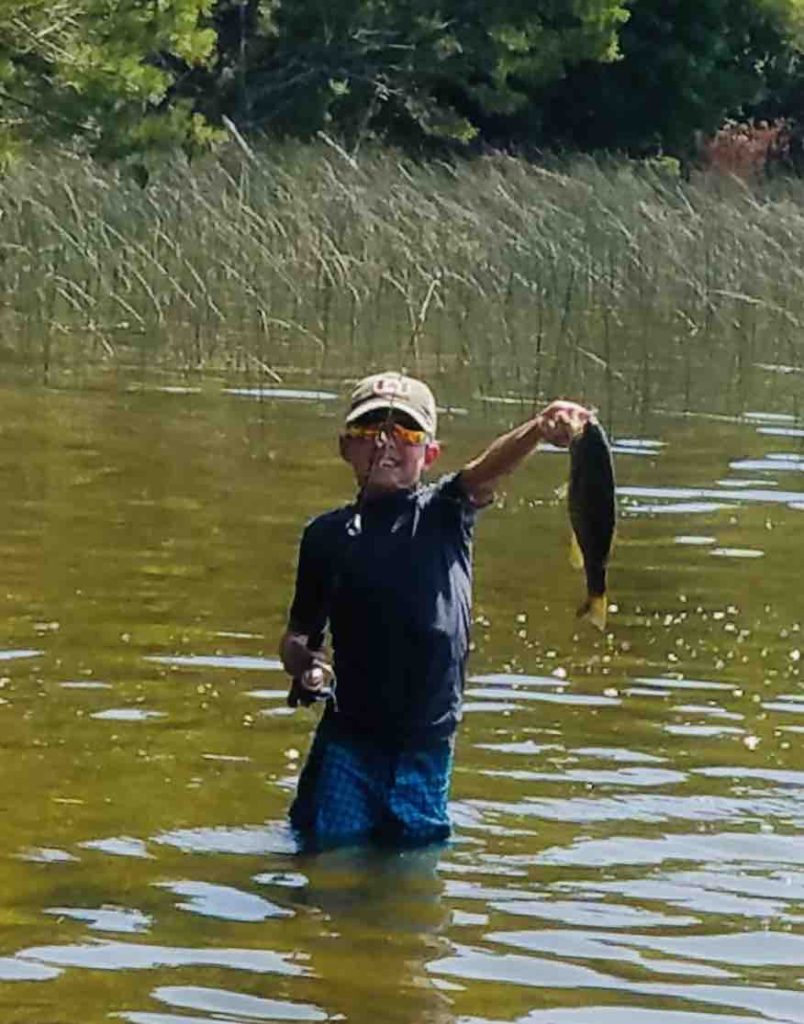
One of the best things we did was park the boat, and hike over to Mukooda Lake. There, we were treated with crystal clear water filled with fish. The kids waded out to their waist and caught dozens of panfish with a few really nice smallmouth bass mixed in. It was a great time on light tackle. We left the fish biting, and went in search of our last campsite. This time we learned our lesson. We found a beautiful campsite in Grassy Bay, swam and fished the afternoon away…but as soon as the sun went down, we stayed inside!!! Alas, we had a wonderful dinner, played cards, trivia, and mocked the mosquitos hanging on the outside of our boat. It was a good night sleep on a quiet bay, in a very beautiful national park.

The Island Hopper
Dinner on the houseboat roof
Eli with a northern pike
Eli with a smallmouth bass
Our campfire the second night
Eli with a smallmouth bass
Samantha cliff jumping
Eli cliff jumping
One of our houseboat campsites

Grasslands National Park, Canada

By: Eli

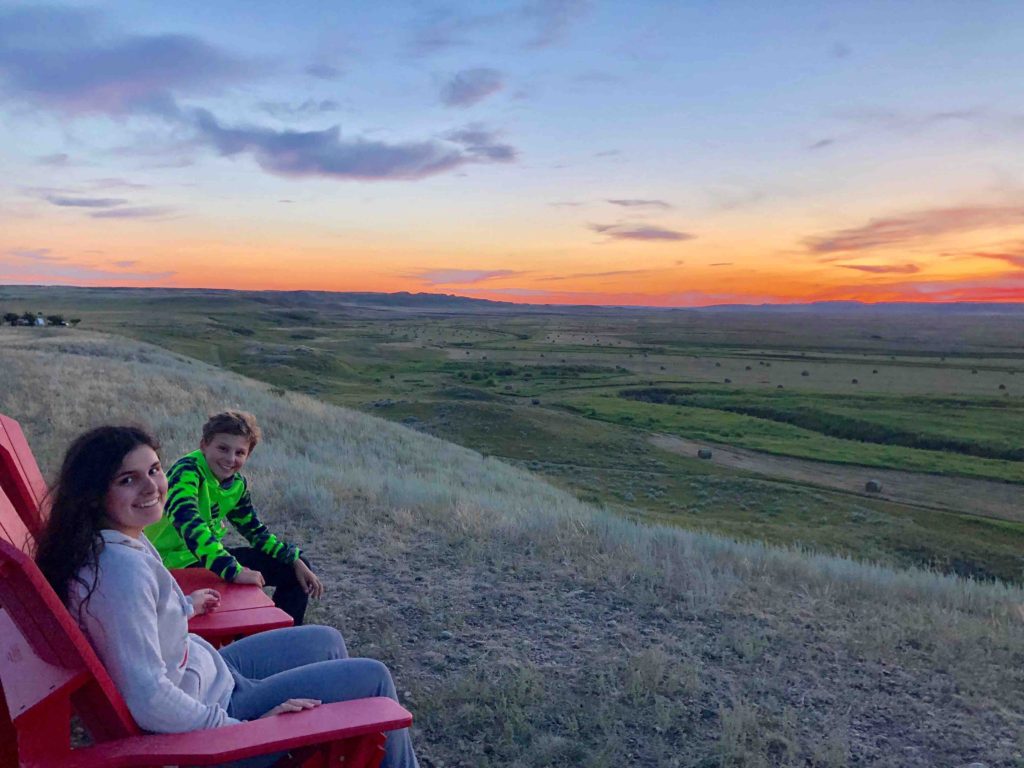
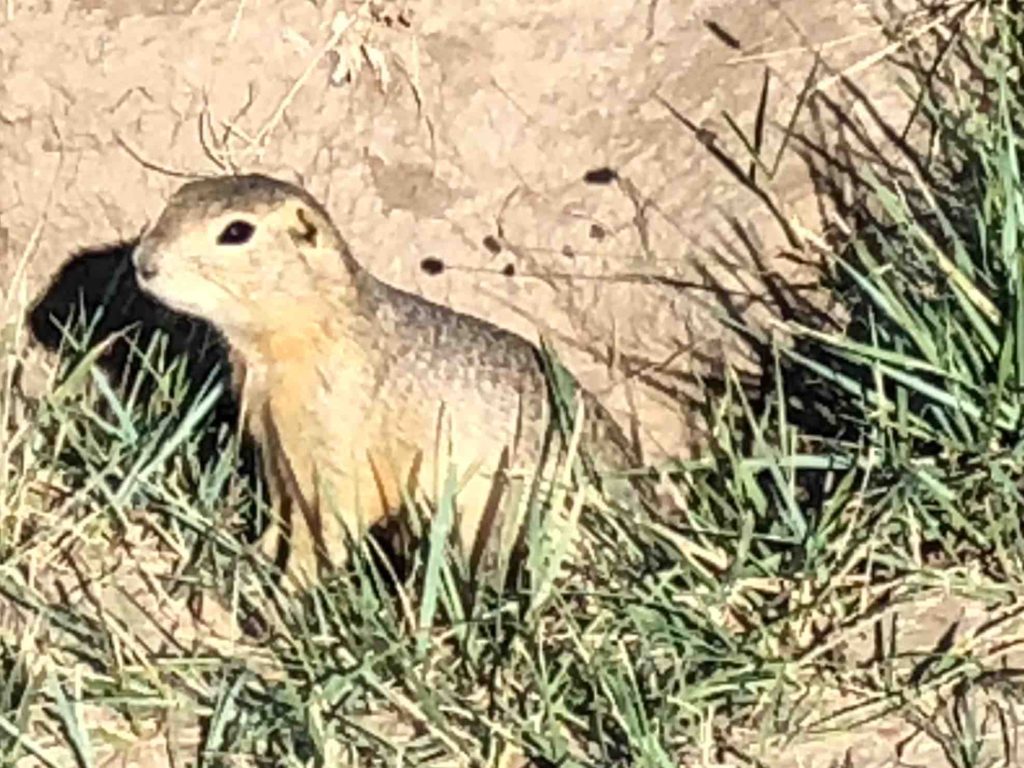
Grasslands National Park in Canada was a bonus park for us (we weren’t planning to go there). When we drove up to Grasslands National Park and I thought it was Kentucky all over again because there was so much grass. However, right after I thought that, we spotted a humongous bison! We saw some prairie dogs on our way into the park too. After we arrived at the the Frenchman Valley Campground, Sam and I decided to give the prairie dogs names: Riko, Krodor, Beelzebub and Thaddes Von Fruity. Then we ran up a hill along side our campsite and watched the sunset. It was beautiful. After dinner we started fire and roasted some marshmallows. As the sun went down, we gazed up at the stars. We could see the Milky Way. As we sat around the fire we heard coyotes howling! The next morning, we woke up and got on the road. My favorite thing about this national park was the wild life. Prairie dogs were everywhere!     

Sunset at the Grasslands
Prairie Dog
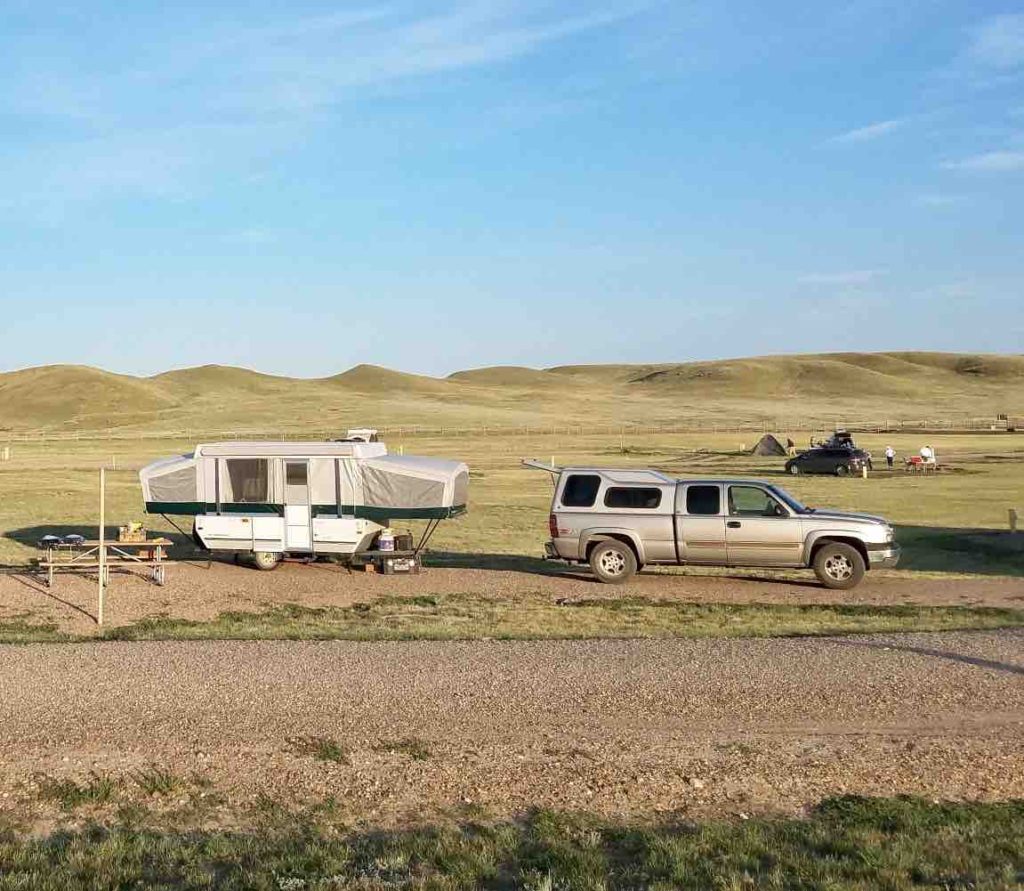
Our Grasslands National Park campsite

Glacier Part II: The Crown of the Continent

By: Sam

Getting there was not easy, getting a campsite was not easy, but without a doubt, Glacier National Park was worth all of its trials and tribulations. Months ago, (six months to be exact) we had logged on to recreation.gov in hopes of securing a coveted campsite in Many Glacier Campground. Acquiring a Many Glacier campsite is akin to getting super bowl tickets; as soon as they become available, they sell out in less than a second. It took us a few days, but thanks to Eli’s fast fingers, we reserved six nights in Many Glacier. And that was that. We all were looking forward to our arrival in Glacier, and didn’t worry at all about our stay there.

Until Theodore Roosevelt. 

If you’ve read my previous blog post from last year’s stop at Glacier (titled: Glacier, Goats, and Bears, Oh My!), you know that there is one constant factor that is both the biggest attraction and hindrance in the park: Bears. Last year, a trail that we were on was shut down mid-hike because of bear activity (it turns out that while Grizzlies can look majestic and cute from a distance, they can maul people up close.) 

This year, the bears struck again. So really, the title of this post should be Glacier Episode V: The Bears Strike Back, or something. But I digress.

Let’s go back to Theodore Roosevelt for a second. We were driving along following a herd of Bison and enjoying the scenery, when Mom realized that she had a voicemail from the National Park Service. It was a ranger explaining that because of recent threatening bear activity in Many Glacier Campground, only hard sided trailers were currently allowed. This meant that no tents, and more importantly, no pop-ups were allowed to stay in the campground. 

We all sat in stunned silence for a minute. And then we frantically started revising our plans. Cue, Option #1: We just wouldn’t go to Glacier. Veto. We couldn’t do that. We had centered our entire summer trip around our Many Glacier campground reservation, and we had been looking forward to it for half a year! Option #2: We would forfeit our reservations in Many Glacier and camp in St. Mary Campground. Veto. Staying there meant we would have to drive at least an hour to the trails we wanted to hike. Option #3: We would just have sleep in the truck for 6 nights, as we couldn’t just give up our prized campsite.

This seemed to be our best option. That is, until Dad chose The Nuclear Option and rented us a 30-foot hard-sided trailer complete with a slide out, refrigerator, oven, and toilet. 

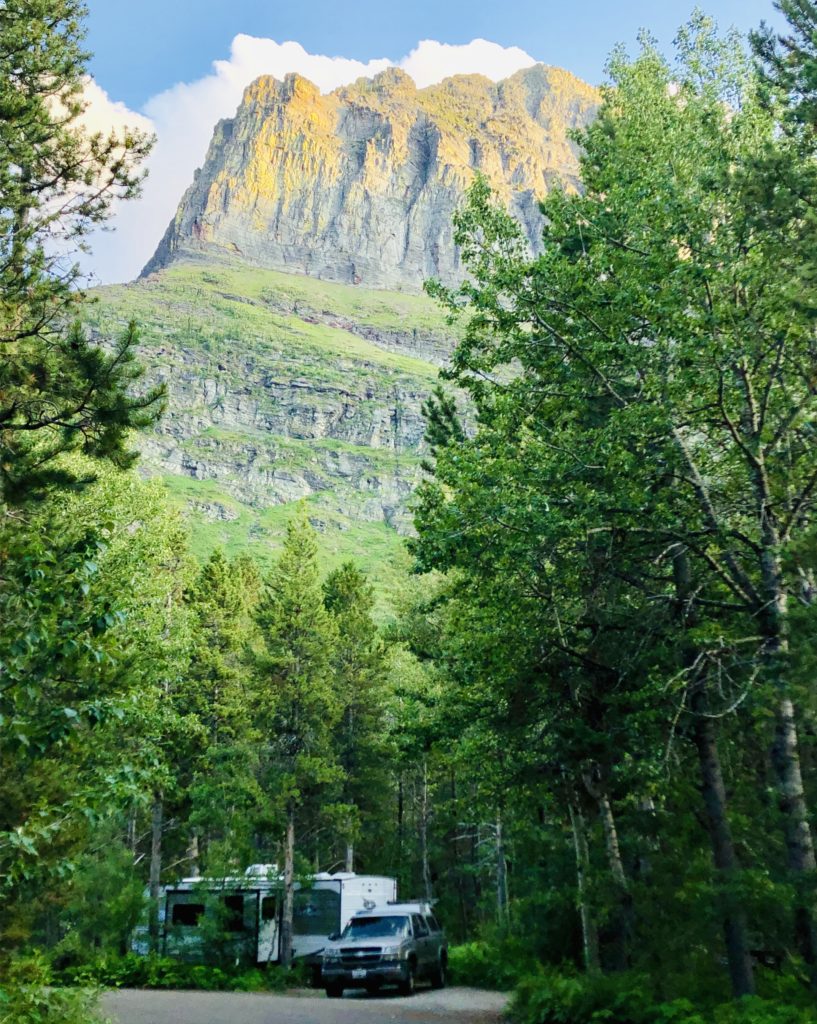
Alas, it’s true. We are no longer simple pop-up trailer campers. We have tasted the forbidden fruit of luxury RV camping. But we got to stay at Many Glacier Campground, so I guess the ends justify the means. 

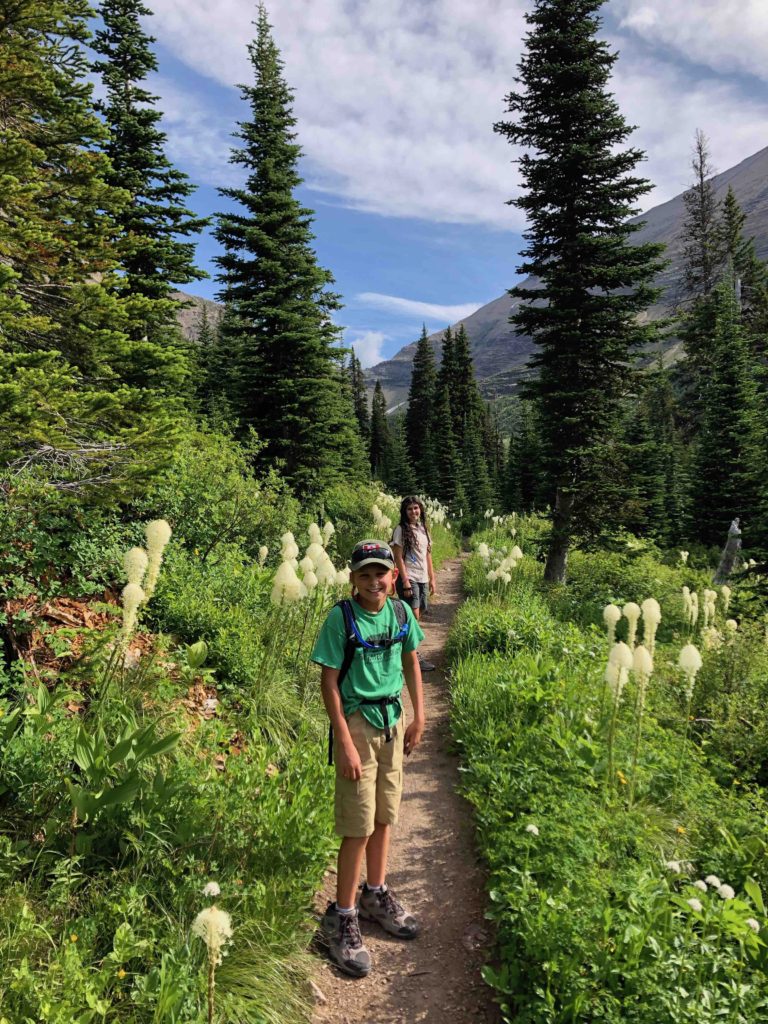
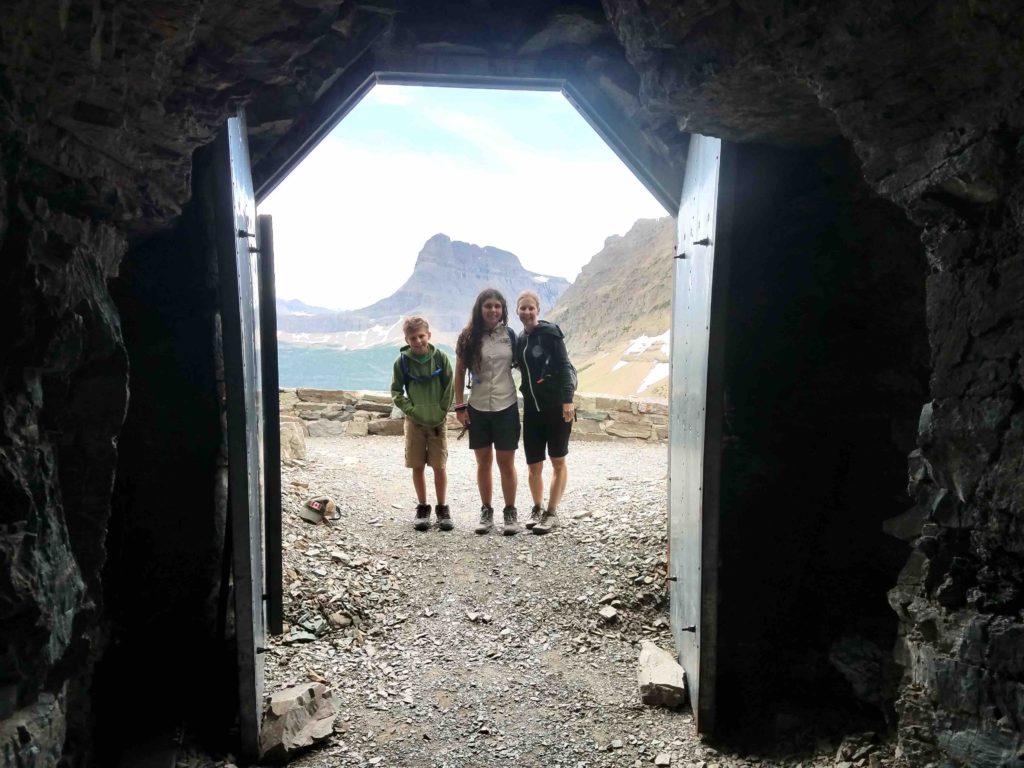
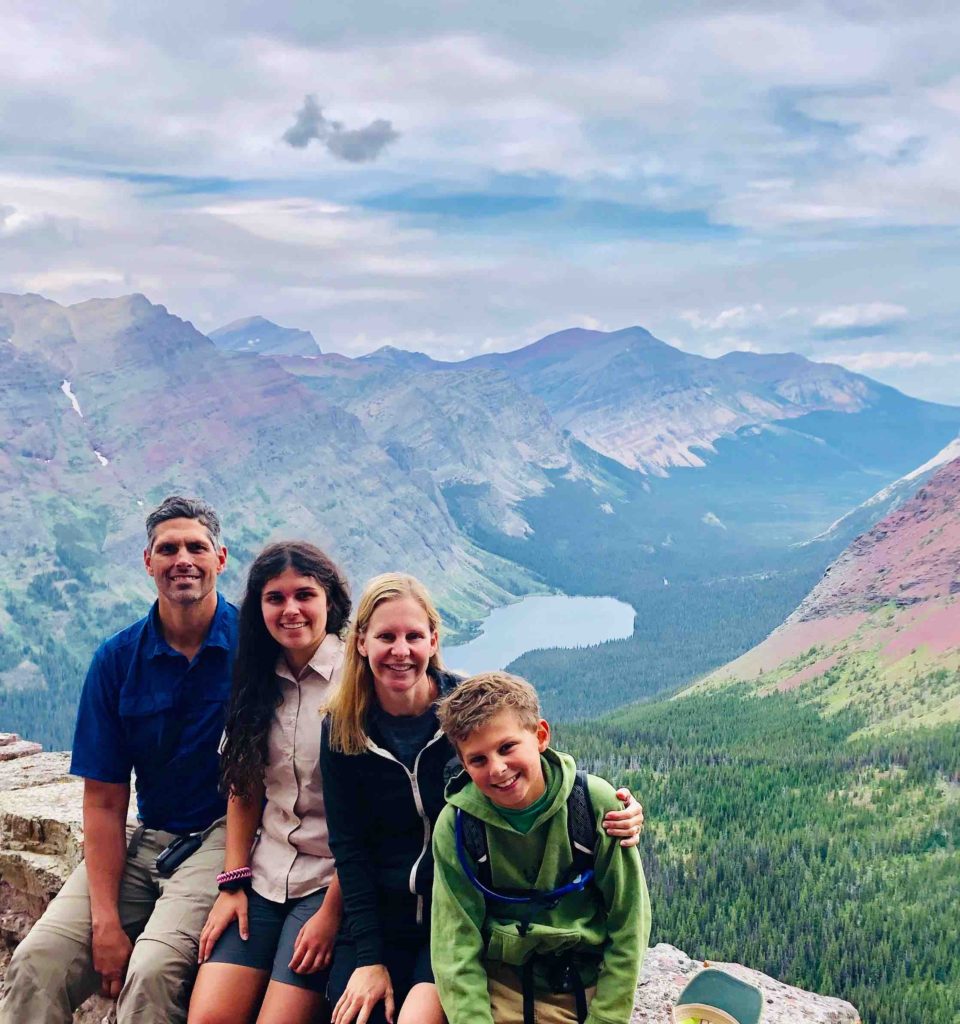
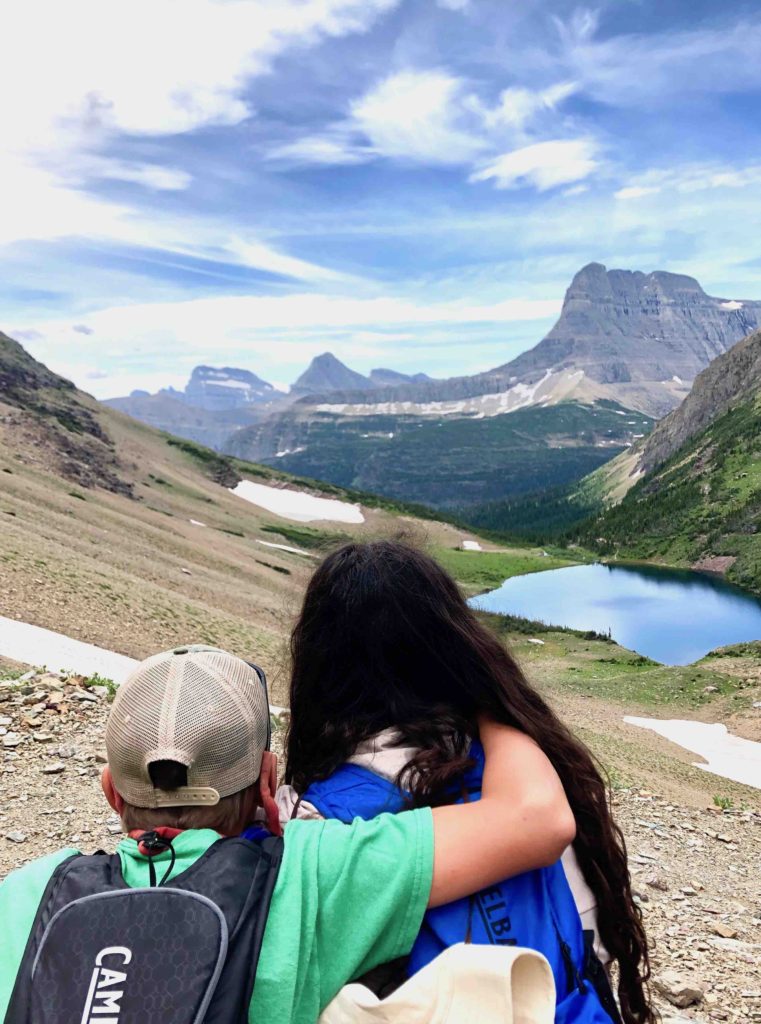
We embarked on our first hike, Ptarmigan Tunnel, early Monday morning, hoping to complete it before the bears could shut it down. Last year, this was the hike that we couldn’t do because of bear activity, and we were determined to master it, even though it was a 13-mile round trip with a 2,700-foot elevation gain. And master it we did. For three and a half hours, we trekked up the steep trail, surrounded by white flowers that we affectionately named “bear armpits” because of their musky scent. Our legs and backs ached, but we were on a mission. Plus, the views of Ptarmigan Lake below us, and the views through the tunnel looming before us were breathtaking. 

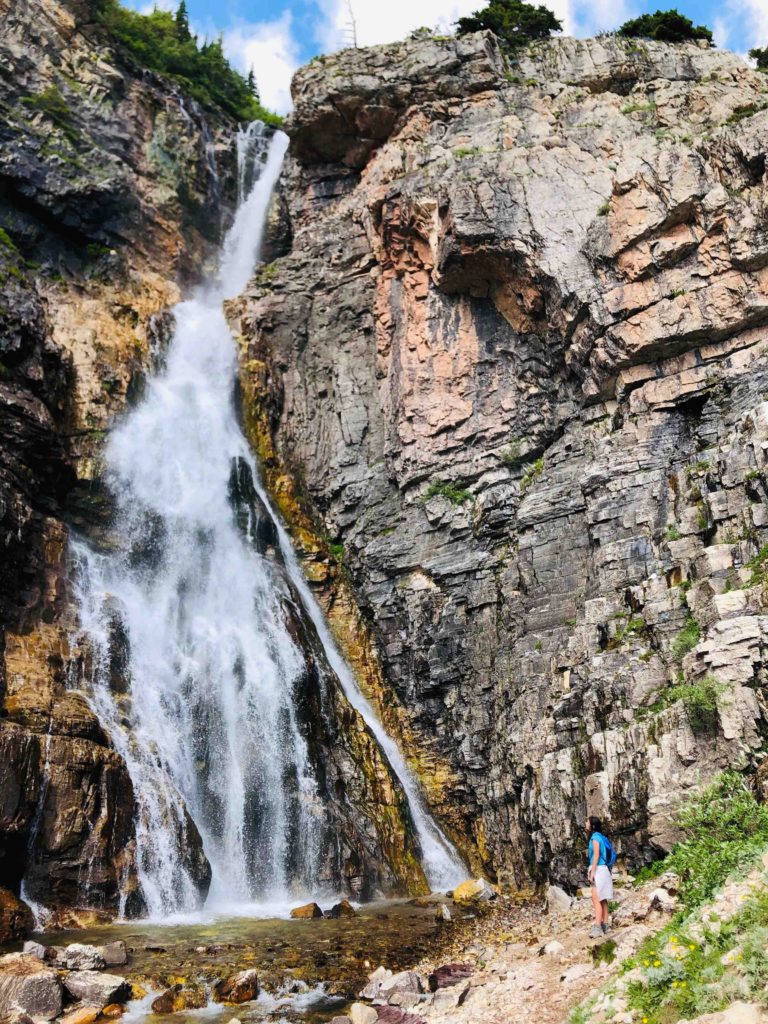
That night, our grandparents Giga and Opa arrived in Glacier, and we spent the next day catching up and playing UNO and Monopoly. It was wonderful getting to spend time with them. We only went on a short hike that day to Apikumi Falls, and although it was beautiful, it was nothing compared to our hike the next day.

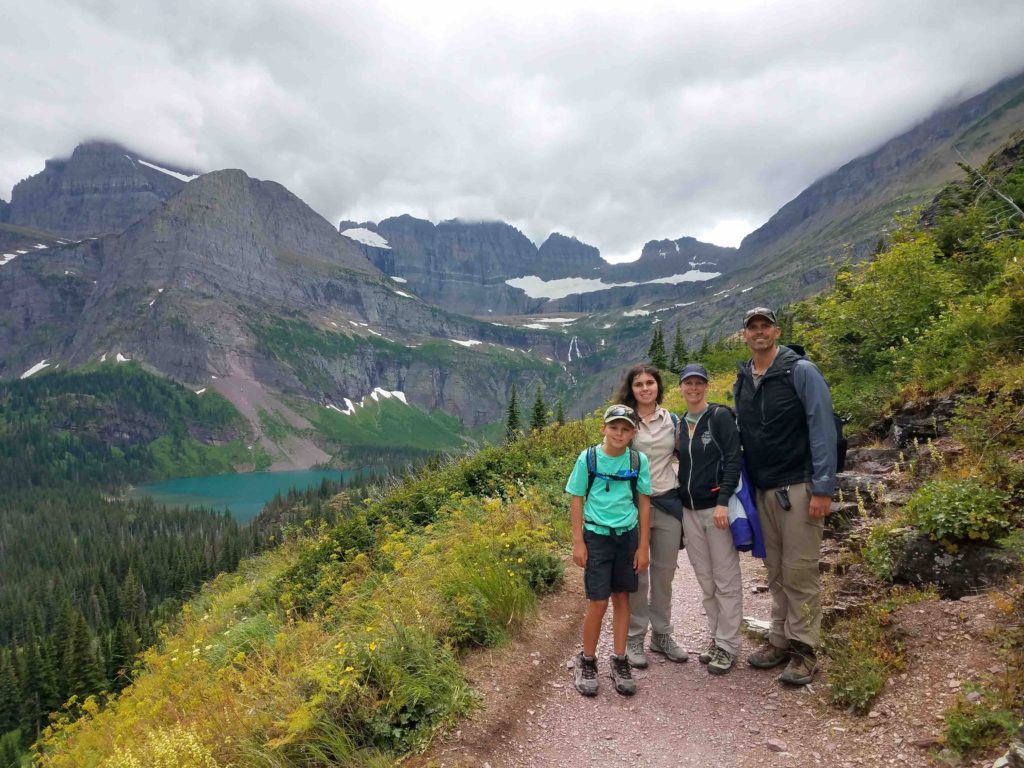
After our Sabbath hiking day, we decided to knock off another of our planned hikes: Grinnell Glacier. Although it was a ten-mile hike from our campsite, we decided to shorten it by taking a boat across Swiftcurrent Lake and Lake Josephine to the trailhead. After a pleasant boat ride with Giga and Opa, we started our march up to the glacier. The trail itself was utterly stunning, with a kaleidoscope of alpine flowers in the surrounding meadow, and with three turquoise lakes beneath us.  It was supposed to be beautiful weather, partly cloudy with a 20% of rain, and for a while it was. Until the clouds rolled in. They skulked over the mountain edge until we were completely engulfed in a dark storm. Then the sky’s swollen stomach split open, and we stood in a curtain of rain. We were two miles into our hike, with two more uphill miles till we reached the glacier, and four more miles for the return trip. But there was no way that a little bit of bad weather would slow down the Oliver family! At least, that’s what we told ourselves as it started to pour. 

However, with a healthy (or insane) dose of determination, and sturdy hiking boots, we hiked until we stood victoriously (albeit, a little soggy) at the summit. Standing next to the glacier was like entering another world. Ice floated eerily on the surface of the green glacial lake. I’m glad that I saw Grinnell Glacier, as the sheet of ice perched on the mountain is scheduled to be melted by in the next decade. That being said, if you are going to see Glacier, go now as all of its glaciers are forecasted to turn to snowfields by 2030. 

The rest of that day can be told in a single sentence: shivering, we slogged down the mountain to the boat dock, which took us to the Many Glacier Lodge, where we got hot chocolate, cozied up to a fire, and ended our freezing adventure. 

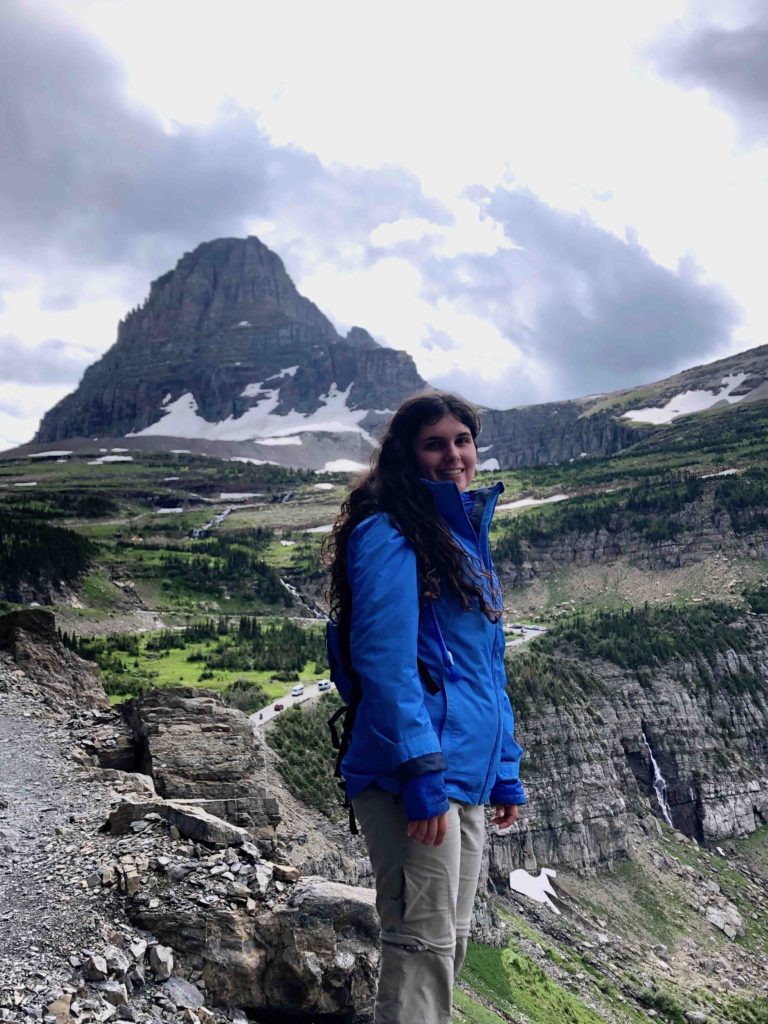
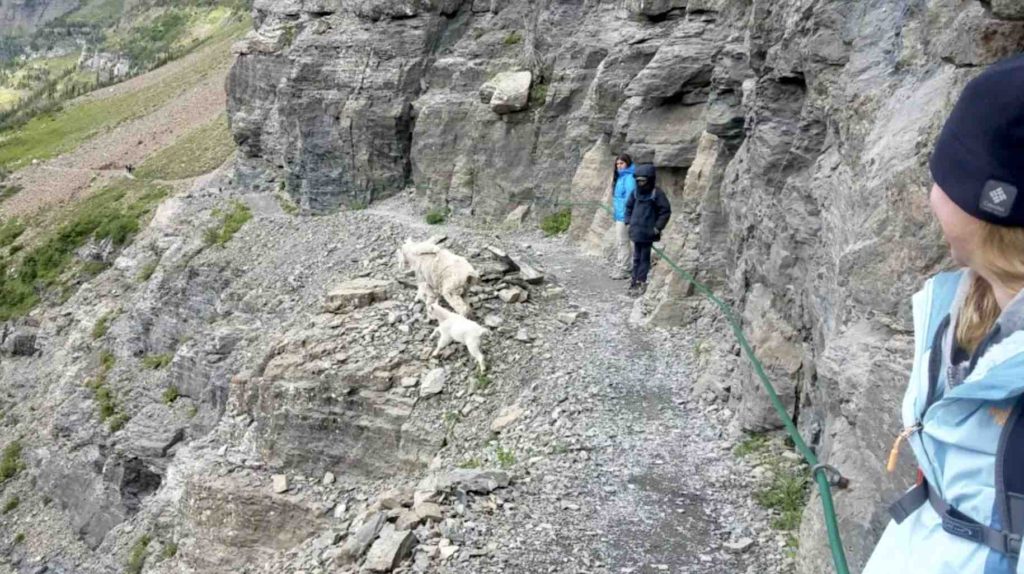
The final hikes we embarked on in Glacier was a short hike to Avalanche Lake, which brought us to a lake lined by a ridge with three waterfalls flowing from it. Eli and Dad caught cut throat trout. Mom and I ate Ritz crackers, all in all, it was a good hike. The second of the two hikes was the Highline Trail up in Logan Pass, a repeat from last summer, which I covered in last year’s blogpost (if you haven’t read Glacier, Goats, and Bears, Oh My!, now’s the time to do it.) The Highline was exactly as I remembered it, windy, wild, and bubbling to the brim with joy. We didn’t go as far as we did last year, but we went far enough to see the three waterfalls trickling down the side of the valley. The best part of the hike was the same as it was last year: the goats. Last year we saw two mountain goats, a mother and a baby right off the side of the trail. This year came with an added bonus: we actually shared the trail with a mother and her baby, and they brushed passed us on their way to the meadow. Even though we seldom repeat hikes, the Highline Trail was worth it. It is possible that the most extraordinary thing we saw in Glacier we saw on our way out of the park. We pulled over to get a closer look, at a mother Grizzly, her cub, and a random black bear, forage for food along a stream. We gazed at these three majestic predators, wary of each other (the black bear and the Grizzly kept their distances from one another), yet all coexisting in the same ecosystem. All in all, it was a great way to end our journey at Glacier National Park. I guess the bears ushered us out in the end. 

Nuclear Option in our campsite
Eli and Sam among the Bear Armpit (Bear Grass) on the Ptarmigan trail.
Korin, Sam and Eli getting ready to walk through the Ptarmigan Tunnel.
View from the Ptarmigan Tunnell
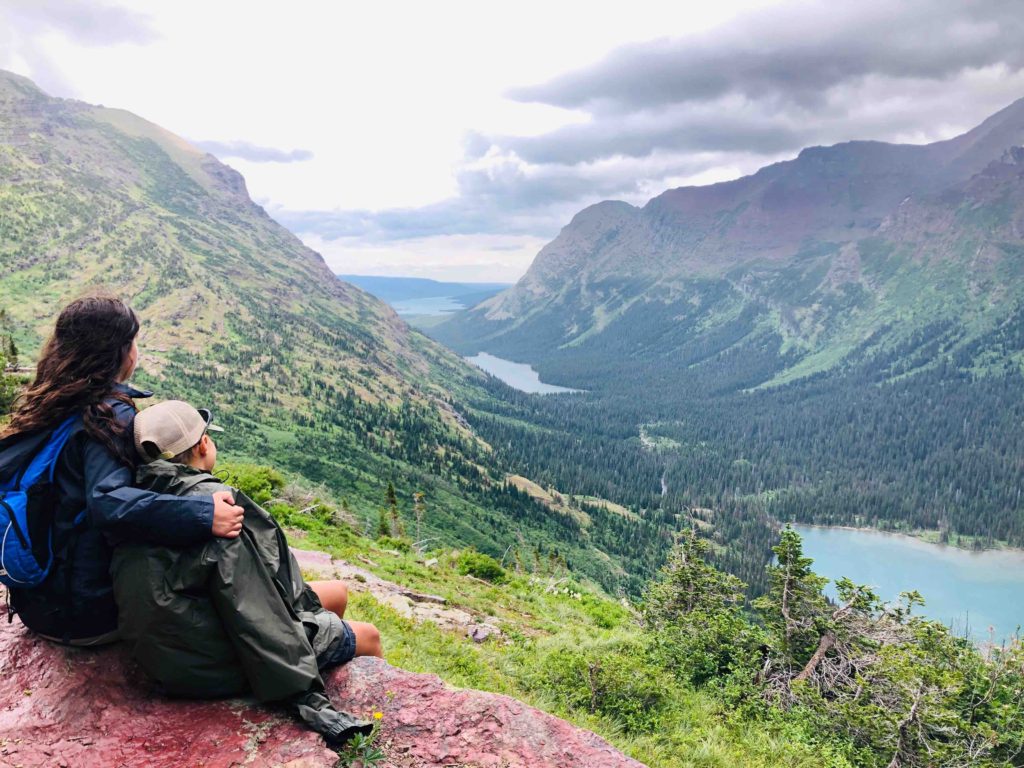
Sam and Eli looking over Ptarmigan Lake, back into Many Glacier.
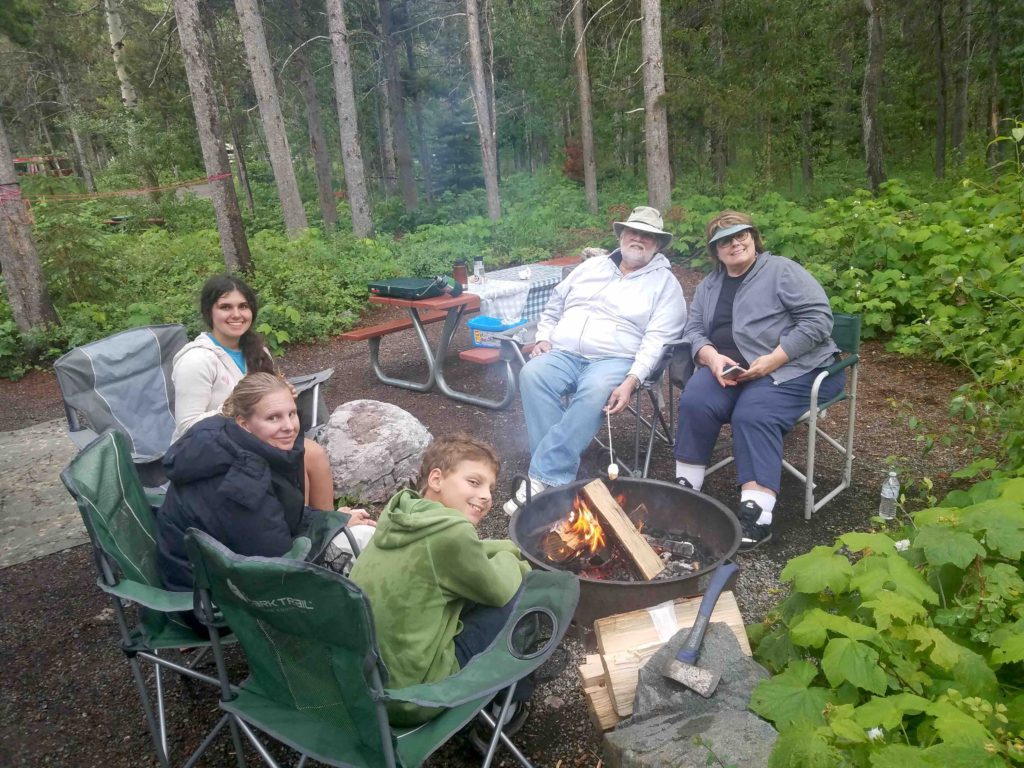
Hanging out in Many Glacier Campground
Sam checking out Apikuni Falls.
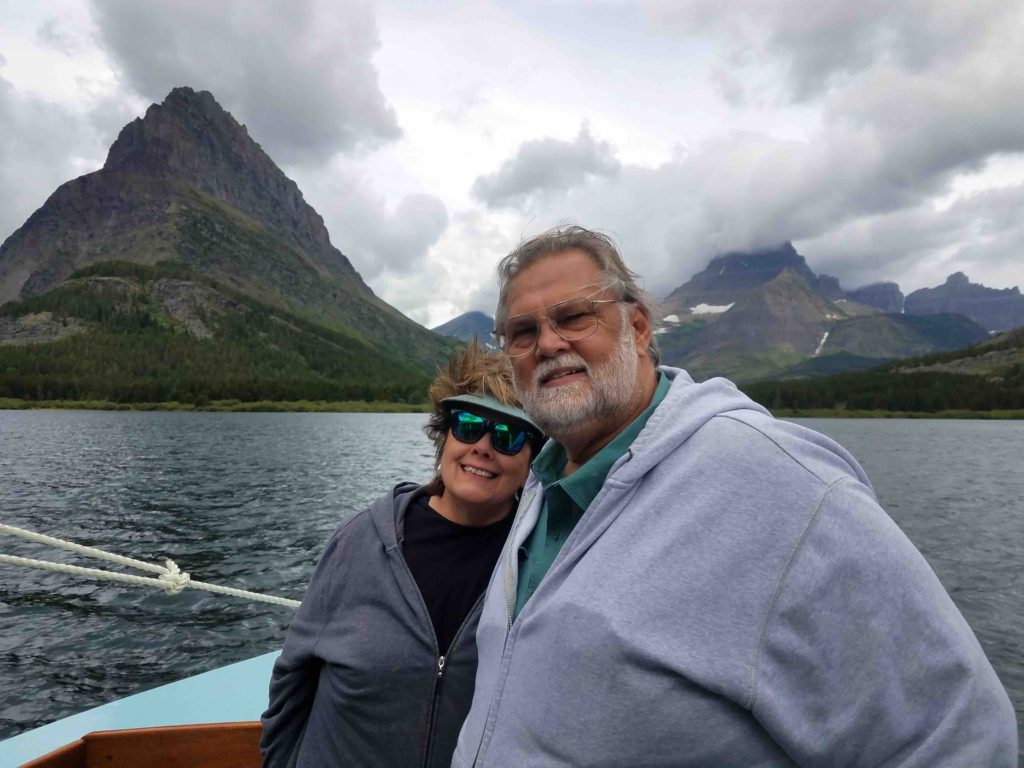
Giga and Opa (Verla and Al) on Swiftcurrent Lake
On our way to the Grinnell Glacier.
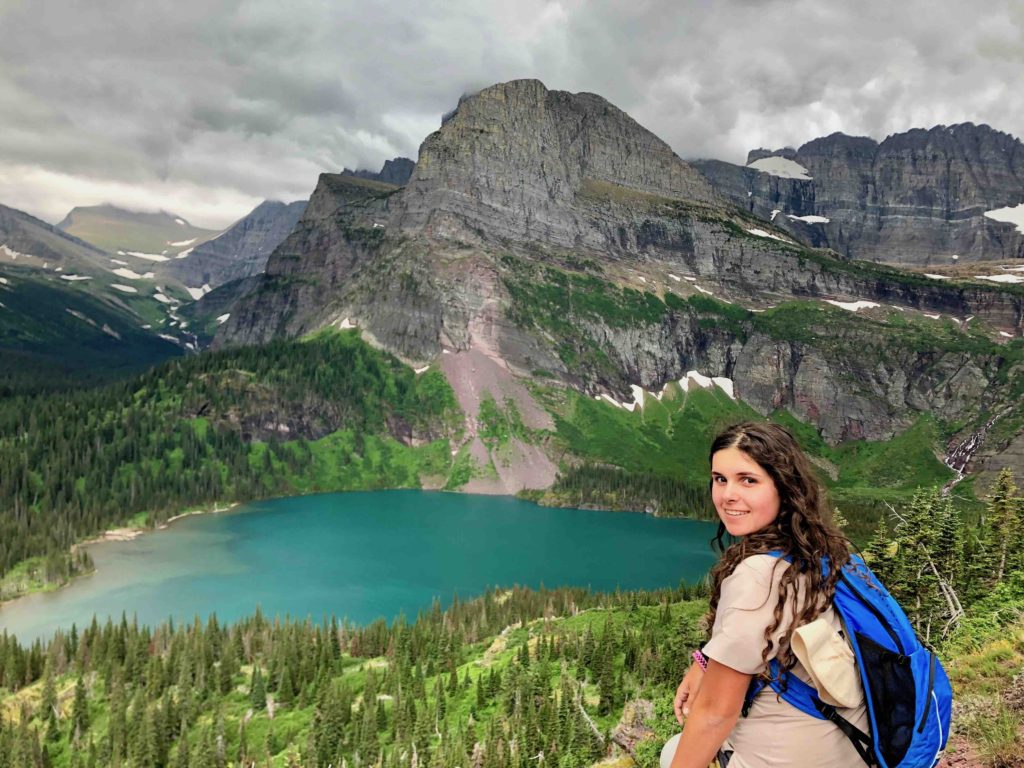
Sam and Lower Grinnell Lake.
Sam and Eli looking back on Lower Grinnell Lake and Lake Josephine.
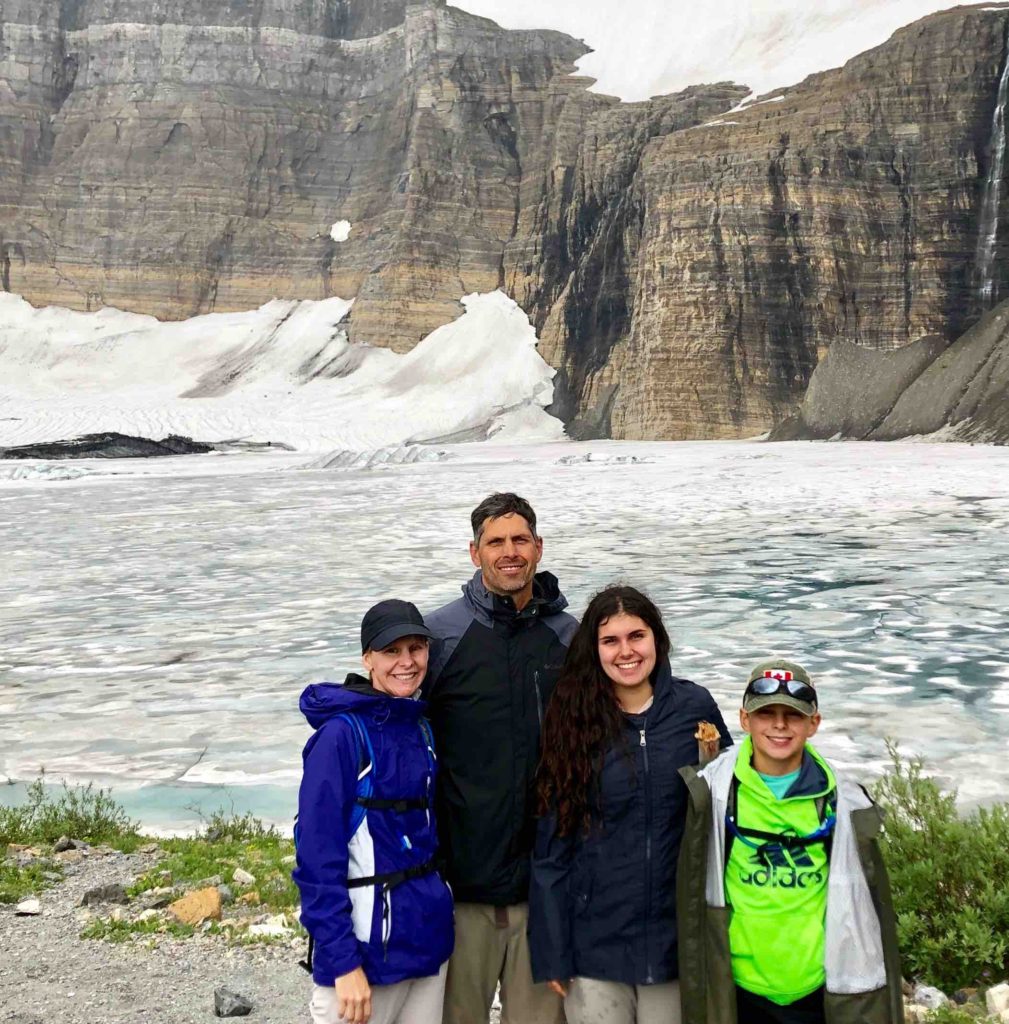
Grinnell Glacier melting into Upper Grinnell Lake.
Matt and Giga (Verla) on the Road to the Sun.
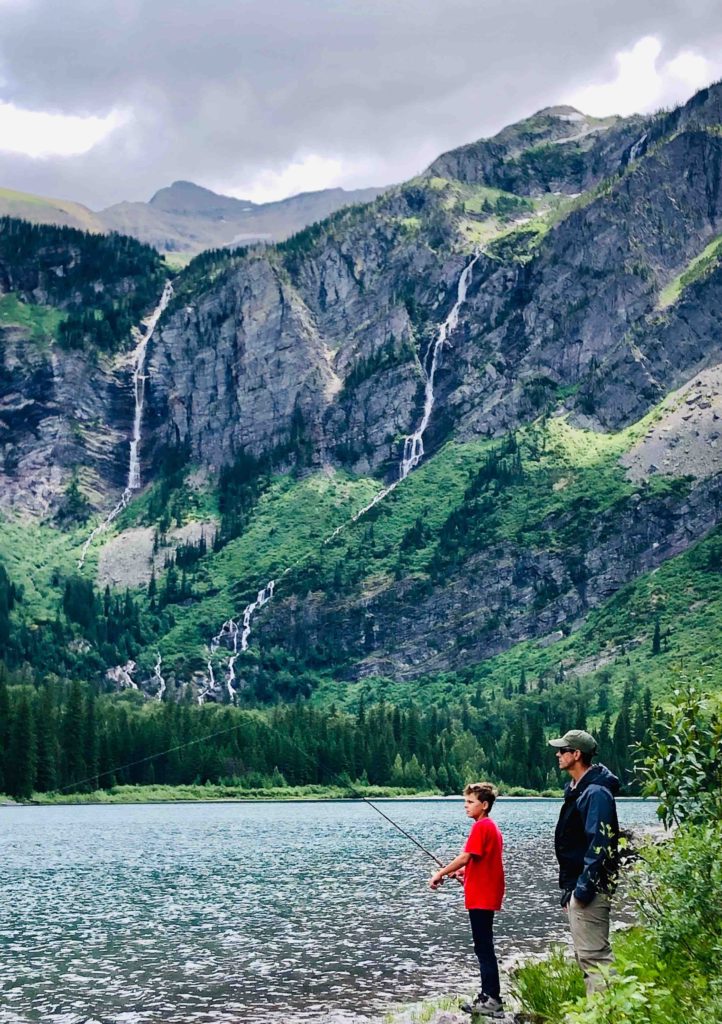
Matt and Eli fishing in Avalanche Lake.
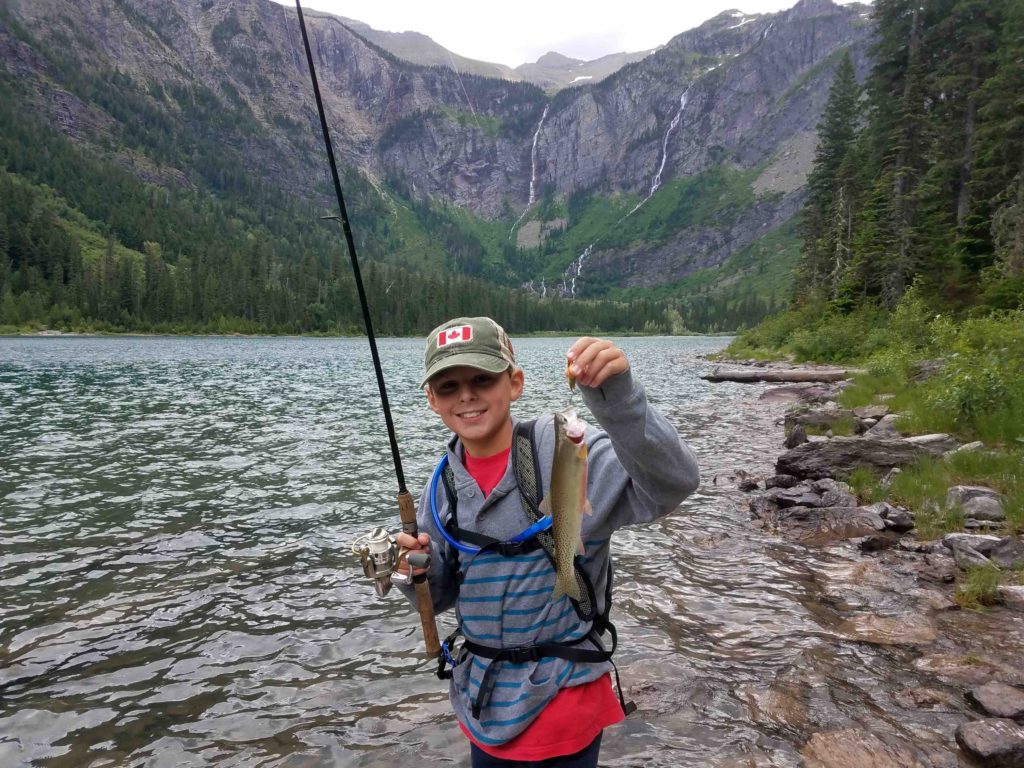
Eli catches a nice cutthroat trout at Avalanche Lake.
Sam hiking the Highline
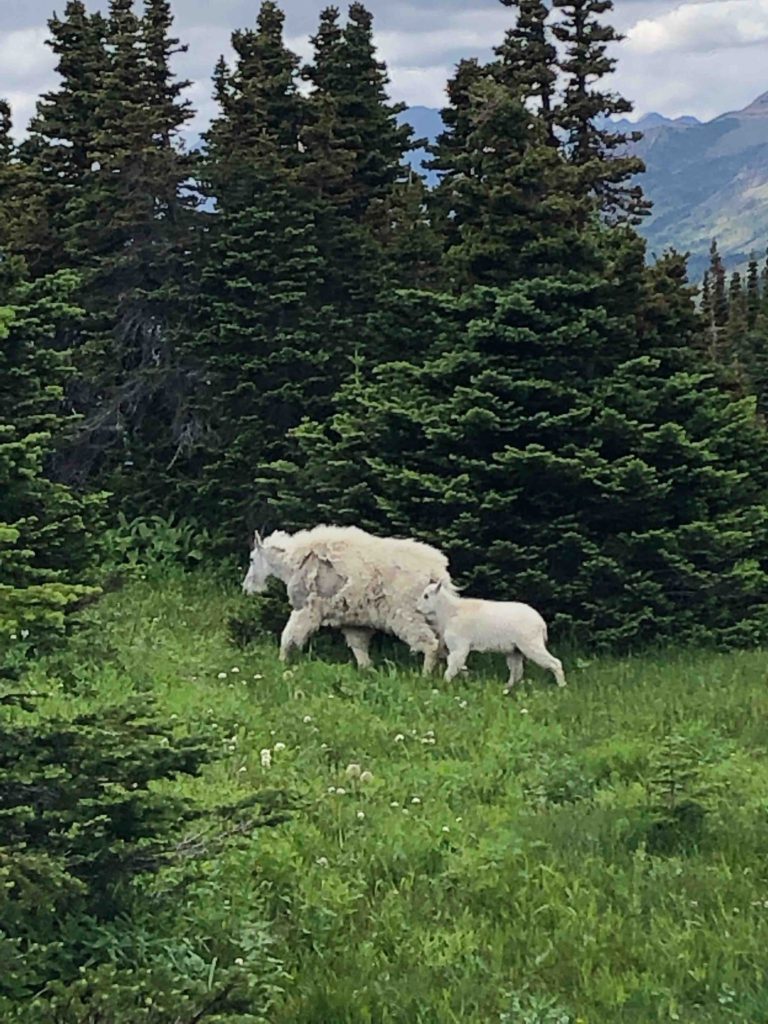
Goats! on the Highline.
Mountain goats scamper past Sam and Eli on the Highline trail as Korin looks on

Makoshika State Park

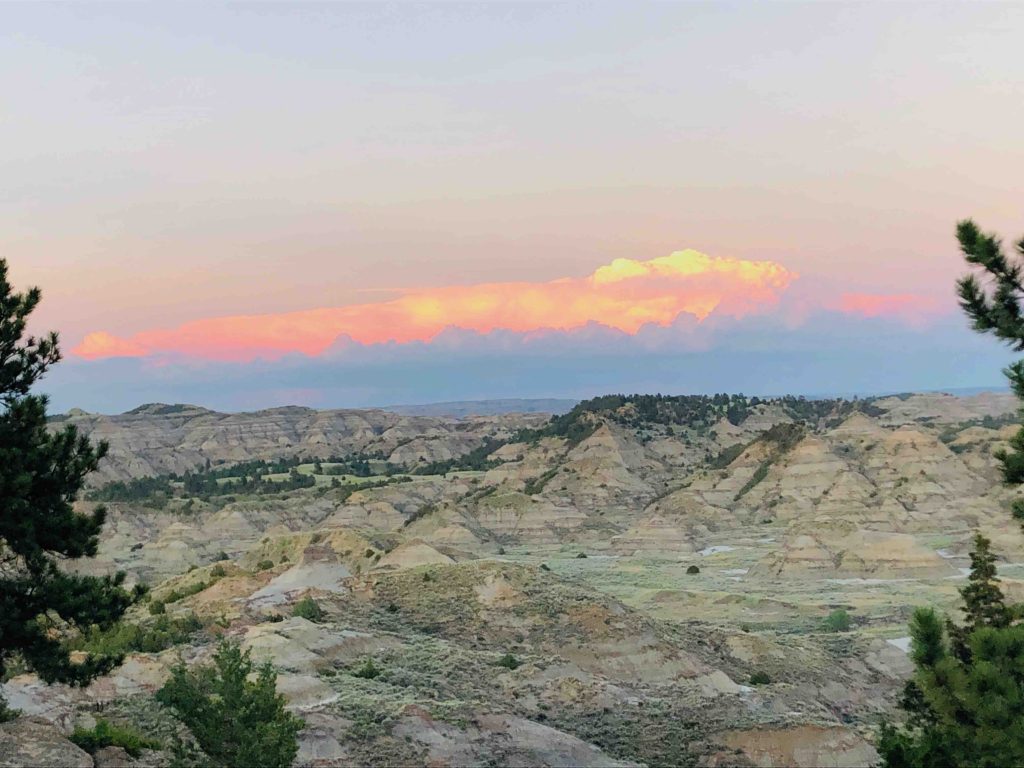
My kids call activities that I plan “dad-ventures.” My dad-ventures have had mixed results. Some are unexpected gems and others are horrible failures. So, when I suggested that we stop in the Hell Creek formation to hunt for fossils, they were skeptical.  Our base camp was Makoshika State Park, Montana. We missed pronounced it the entire time we were there. We called is mako-sheeka instead of mu-co-shi-ka which is its Native American name. Later visitors called it hell with all of the fires put out. We arrived at the campground a day earlier than expected and we thought we would have to pay to adjust our reservation. Fortunately, we met campground hosts Lori and Oscar who were very kind and helpful. They suggested that we look for a campsite in Pine Creek Campground. The road sign on the way to Pine Creek campground said “no trailers”. When I asked Oscar about that, he said that our pop-up didn’t count as a “real” trailer. I guess in some ways this is true, we had no problem pulling our camper up the 15% grade. The Pine Creek campground sits on a small spur of public land overlooking the badlands of Montana. The view from our site was amazing and is probably one of the best sites we’ve ever had. We ate spaghetti together as the sunset turning a distant thunderstorm into pinkish orange sky fire.

One of my favorite pieces of camping gear is the solar shower. If you are like me, and like to take showers, you’re going to want to buy one of these. As the sun set, our family put on swimsuits and took turns washing down with sun-heated water on the tailgate of the truck. So refreshing! As night descended, we were cozy in the trailer, getting ready for a big adventure the following day. Just before going to bed I was outside adjusting the trailer when I heard a snake rattle. Not more than two feet away was a large prairie rattlesnake under one side of our camper. The ranger at Theodore Roosevelt National Park said that prairie rattlers like to come out on cool nights to find sources of heat. For some reason, this snake chose the rocks under our trailer. From a safe distance, the kids shined their flashlights on the snake hoping the snake would find another place to go. After about 15 minutes, it was clear that the snake wasn’t going anywhere and wanted to stay under our camper. I did not think it was safe to have a rattlesnake under our camper for the night, so I dispatched it in the most humane way I could. But I don’t think we will soon forget that encounter.

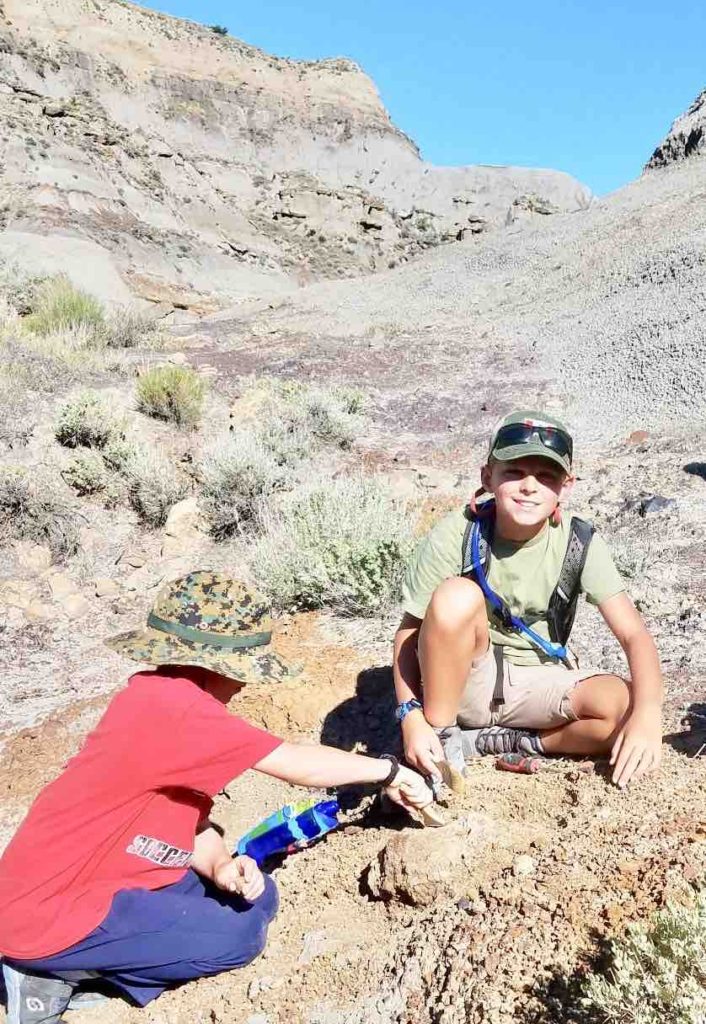
The next morning, I saw a very large buck mule deer at sunrise.  I could tell by the lack of chill in the air, that it was going to be a hot day.  I was worried that this dad-venture was going to be a bust as the children melted under the sweltering Montana sun. We met our guides, Shana and Shane at Baisch’s Dinosaur Digs in Glendive. Their family has been hunting fossils on their private ranch land since the 1950’s. They took us out on a pockmarked ranch road full of gullies and ditches. I was happy we had an off-road pick-up! The dig site was beautiful. Gray, black and orange hillsides characterized by twisting gullies looked as if they were being melted in slow motion by water. By this time the heat of the day was setting in and we had not even begun. We had no idea what to expect, but after a short hike our guides showed us just how much fossilized bone was laying on the hillsides. We found large chunks of dinosaur bone, turtle shells, petrified wood and even petrified pinecones scattered about. The kids found one large outcropping of bone which we spent about 45 minutes excavating with screwdrivers and paintbrushes. The excitement of the dinosaur fossils cancelled out the heat of the day as the kids scampered from gully to gully, finding the remains of an ancient ecosystem. We ended the day by hiking to a recent triceratops excavation. The number and the size of the bones was impressive. We got to ask some real paleontologists about their work. Samantha later confessed that she thought this dad-venture was going to fall flat. But the kids left energized by their finds and the stark beauty of the Montana badlands. This dad-venture did not disappoint.

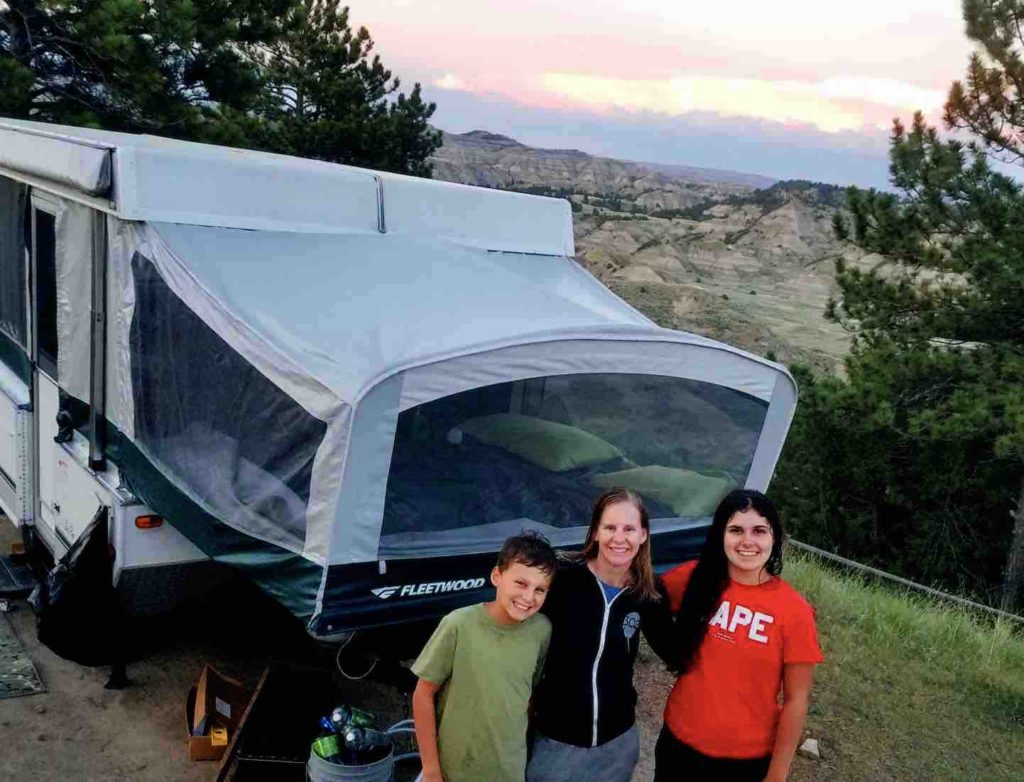
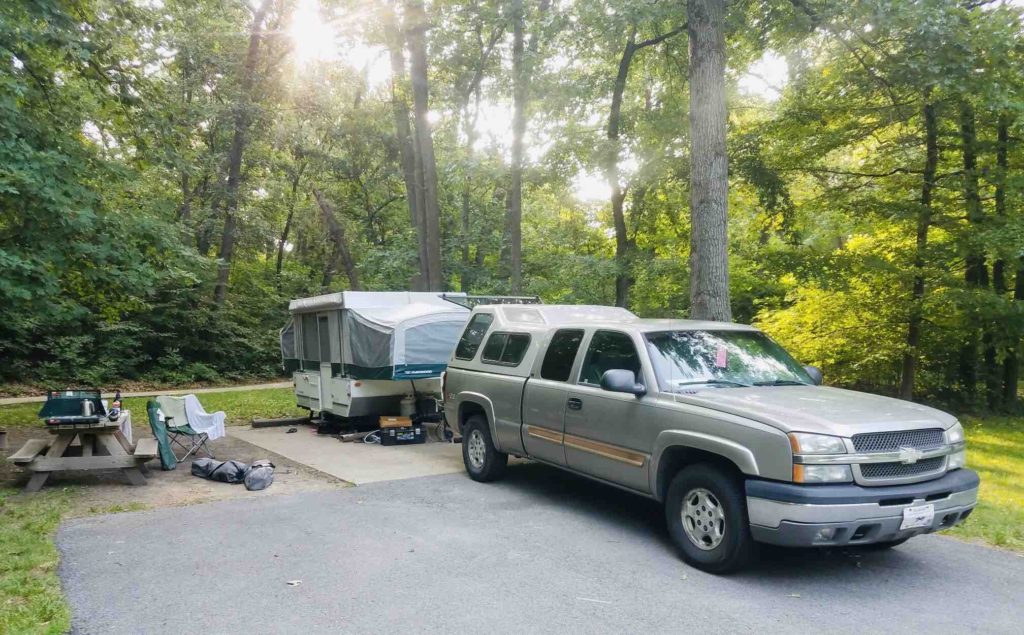
Our pop-up in Makoshika State Park
View from our campsite in Makoshika State Park
Eli unearthing an unknown dinosaur fossil in the Hell Creek formation.
Sam with the remnants of a fossilized tree.
Sam and Eli posing next to ribs from a Triceratops in the Hell Creek formation.

Indiana Sand Dunes National Park

By: Eli

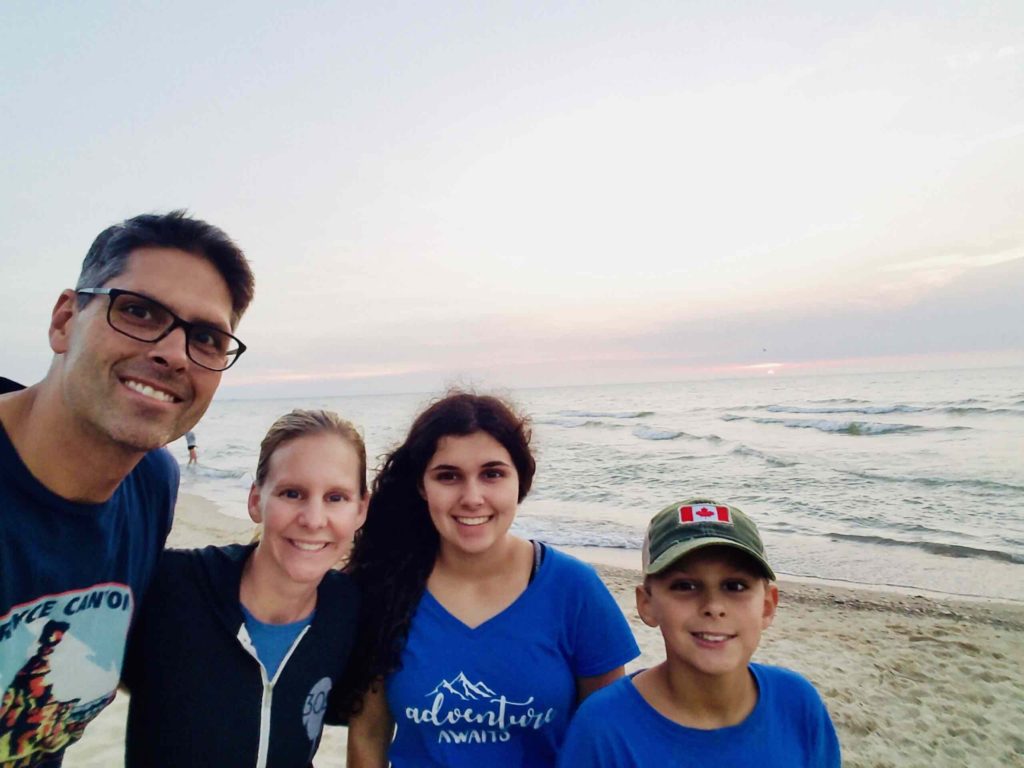
My parents took me to the newest National Park: Indiana Sand Dunes. The park was a surprise to me. When I first saw it, I thought it was just a beach but then I turned to my right side and there was a colossal mountain of sand. The sand was warm and softer than any other sand I have ever felt. After Sam and I rode our scooters to the beach from the campground, we walked up the dune. We took a selfie with Lake Michigan and the sunset in the background. Right under the sun you could see the buildings from Chicago.

Here is what I did while I was at the Indiana Sand Dunes National Park:

1. I ran down a sand dune as fast as I could and had a major wipeout. 

2. I swam in Lake Michigan. The water was very clear! 

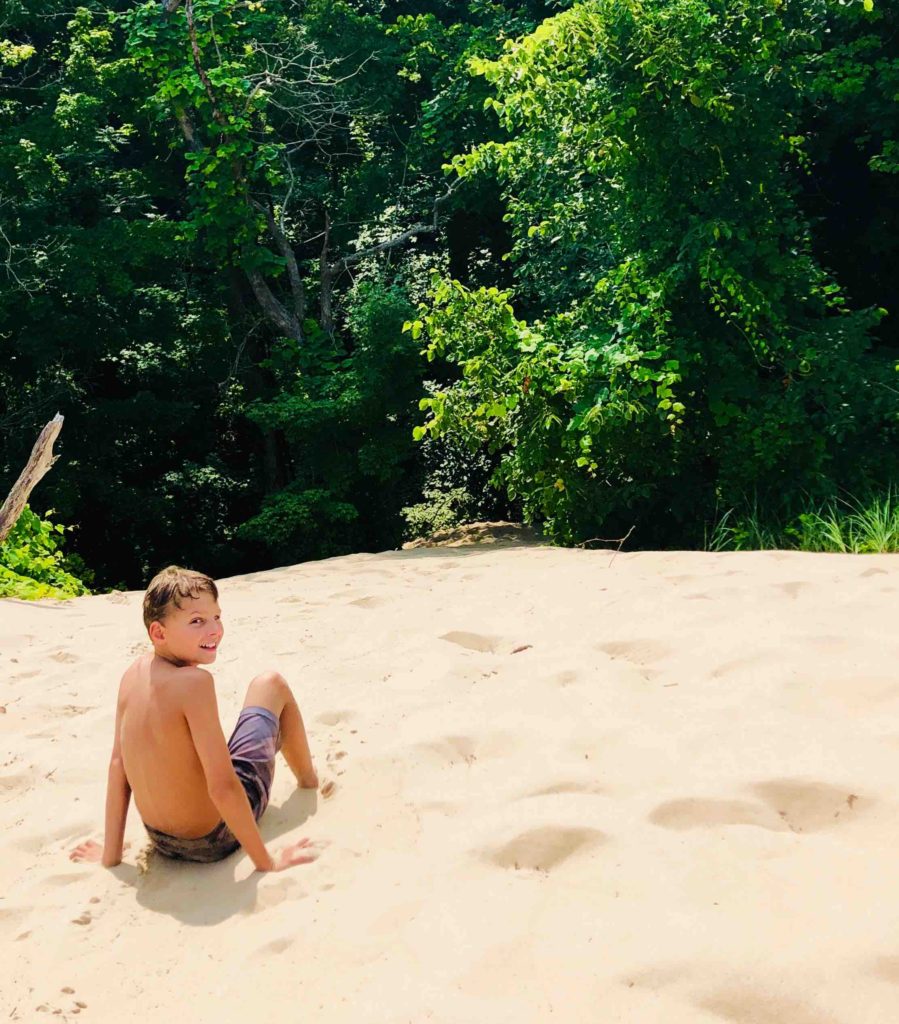
3. I went up an extremely steep sand dune and slid down. My mom and my sister were freaking out (they were having flashbacks of Gunnison), but my dad cheered me on. I climbed back up and went back down another time.

4. I went into the water and after 15 minutes I finally was able to push my dad in the water after he had thrown me into the water multiple times.

5. I celebrated my victory with a Pop-tart back at the trailer.

There were several things I enjoyed while at the park. I liked pushing my dad into the water. I also liked rolling down the sand dune with my dad and my dad rolling over me. I liked being crushed and getting a mouthful of sand, (I didn’t enjoy being crushed, but let’s look at the bright side, I definitely got the feel of the land.)

I would DEFINITELY go to this park with your kids, just make sure you go to the beach. It might not seem as good as other national parks but it is DEFINITELY one of the best parks for family fun.

Peace from the Old-Man Camper,

Eli Oliver

Indiana Dunes National Park
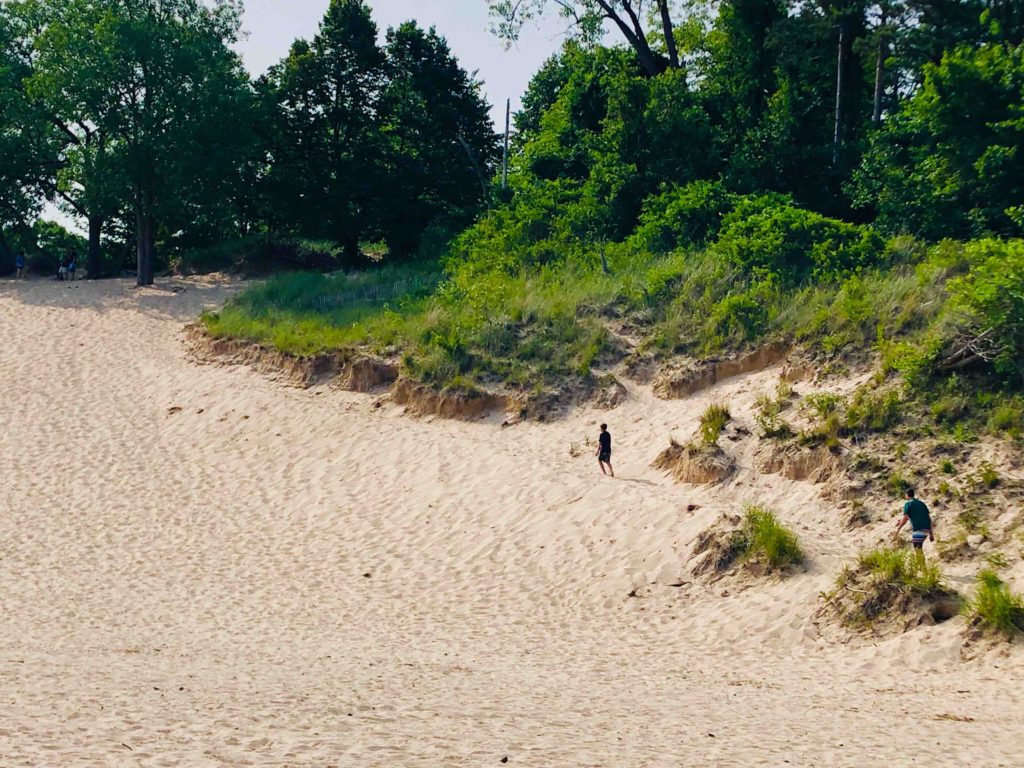
Hiking up the dunes
Getting ready to slide down the dune!
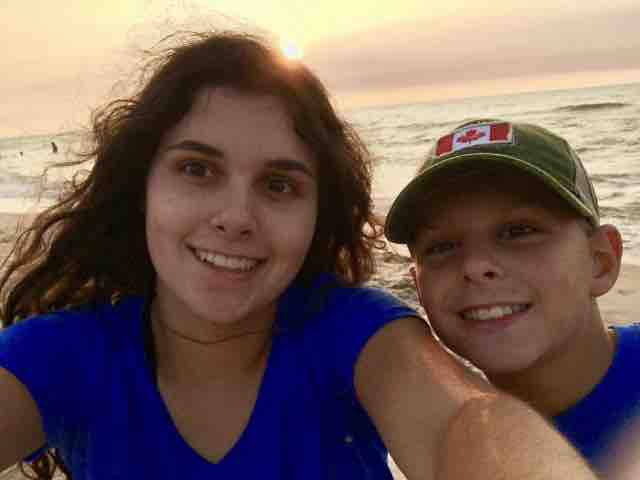
Samantha and Eli’s sunset selfie
Our campsite

Niagara Falls: Expectations Exceeded

Sam here. Let me begin by saying that our expectations for Niagara Falls were low, so low in fact, that two summers ago we cut it out of our trip and decided to go home instead. You see, we viewed it as a tourist trap, a kitsch stop, not something worth seeing. We envisioned ourselves walking through stores crammed with souvenirs and sidewalks bustling with tourists and hawkers, all of who scrambled over piles of litter toward the legendary waterfall. 

 It doesn’t sound like an ideal place to camp. Either that, or we are nature snobs. I’ll let you decide.  

            Here is what actually happened:

            We rolled into the Niagara Falls KOA at approximately 5:19 PM. We were bedraggled, sleepy, and famished, yet still enthusiastic after nine hours of travel. After setting up and eating dinner, Eli and I went to the complimentary KOA trampoline, where we met other campground children. Why is this relevant? It is my opinion the friendship between nations does not begin on the political stage, or even in a diplomat’s office. It begins at a campground playground, where kids from all over the world, who may not even speak the same language, play tag together and push each other on the swings.

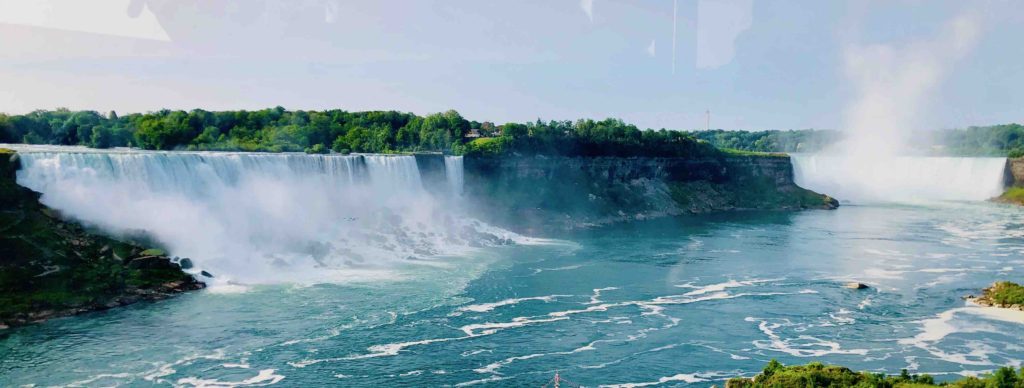
            Later that evening, we drove down to the falls to see them lit up in a splendid array of colors and to see the nightly fireworks show. Seeing Niagara Falls was a magical experience, especially for Eli. He had no idea that we were going to see the waterfall, not just some random one, although that does sound like us. Chuckling to ourselves that he didn’t know what Niagara Falls were, we decided to keep it a surprise for him. (Actually, this entire trip is a surprise for him, since he has no idea where we are going.) As for the falls, words fail to describe it, except to say that the thick torrents of white frothing water that are Niagara Falls, make every other waterfall pale in comparison. 

               Even though we had already seen the falls, we hung around the next morning since we had one last activity to cross off our list before we packed up: a boat tour. Like everything else about Niagara, our expectations were low, and we were checking our watches as we took the Hornblower Cruises Funicular to our boat the Niagara Thunder. Our only inkling that this would be memorable were the red plastic rain ponchos the crew handed to us. 

            And memorable it was.

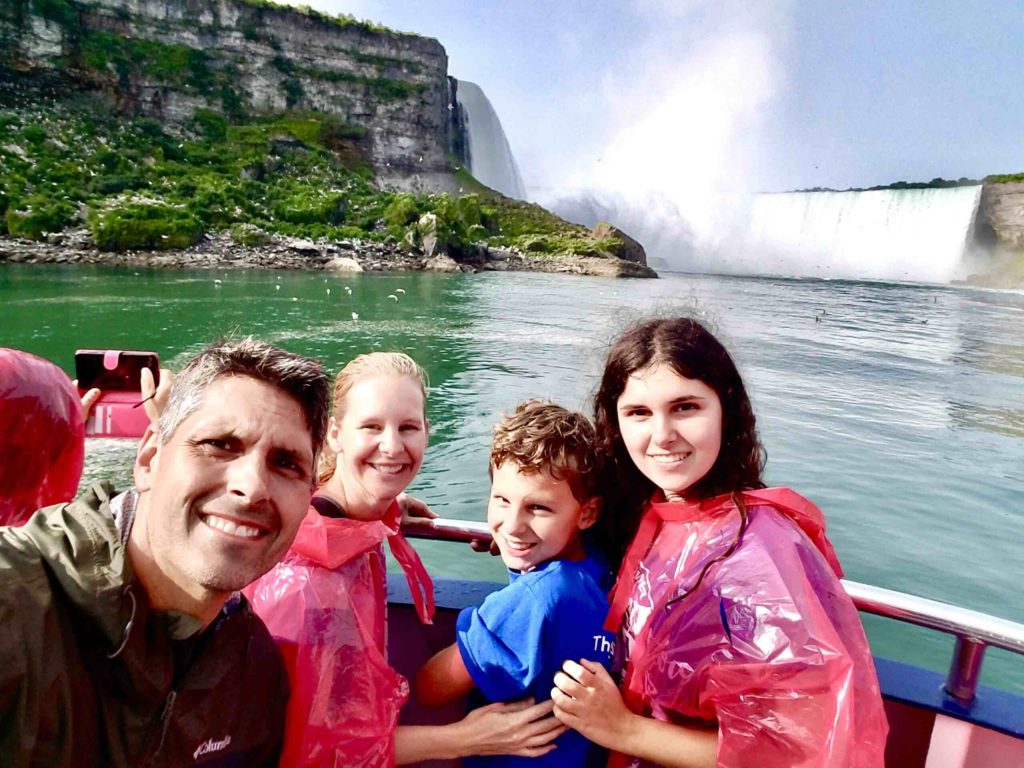
            Getting up close to Niagara Falls was like nothing we had never experienced before. In fact, this stop on our trip did nothing but exceed our expectations. As we sailed closer to the mighty waterfall, its churning mist glided toward us and gave us the showers we needed. Eli had decided not to wear the rain poncho and in no time at all, he was drenched to the bone. Even Dad’s special quick-dry pants and rain slicker did not stop the droplets from penetrating into his skin. We were wet, squished by the crowd, and deliriously happy. We couldn’t stop laughing, so much so that we probably sounded hysterical. It was just that, being surrounded by the churning silver and blue water and mist of the ever-flowing waterfall, filled us to the brim with a fizzy, glittery feeling of joy and wonder, swirling within us as the water moved within Niagara Falls. Dad says that that feeling is called being high on nature. I say that it’s just truly feeling alive. 

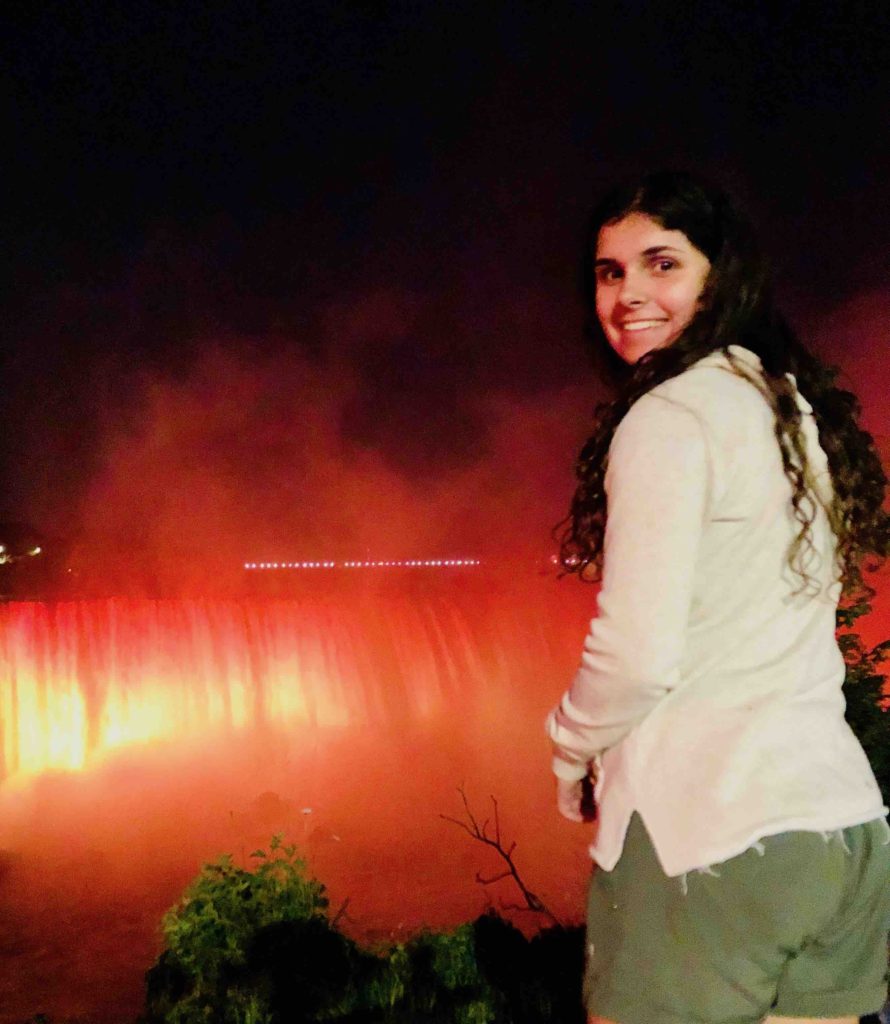
Niagara Falls lit up orange
Waiting for the fireworks!
Niagara Falls 2019
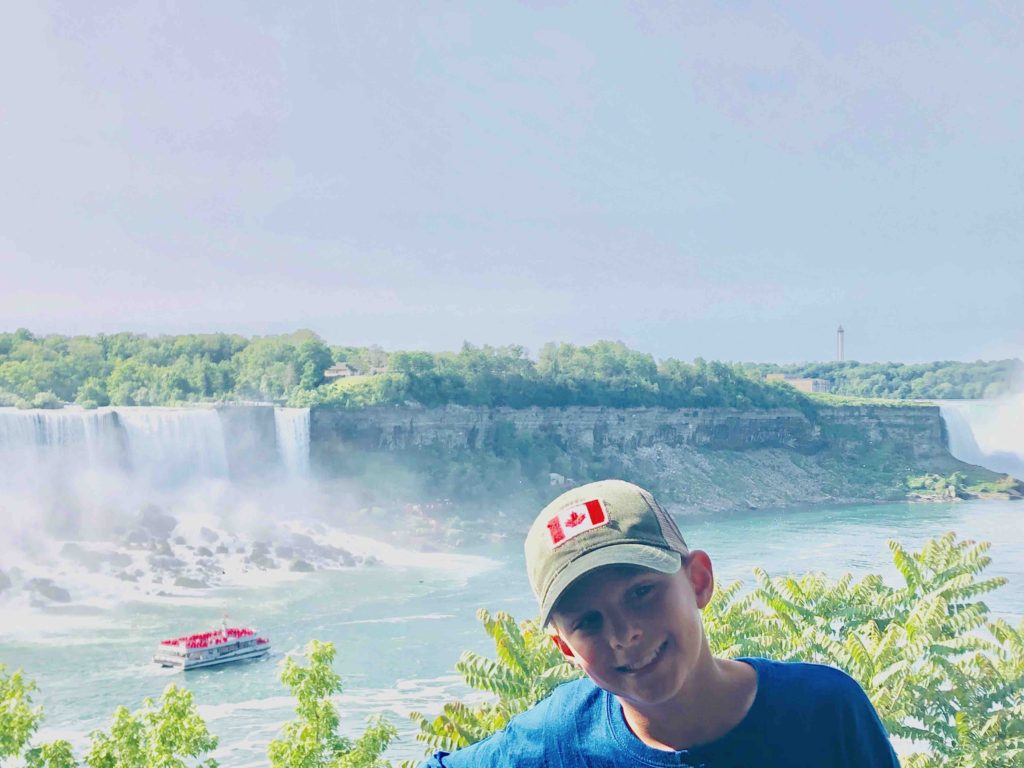
Eli in front of the falls
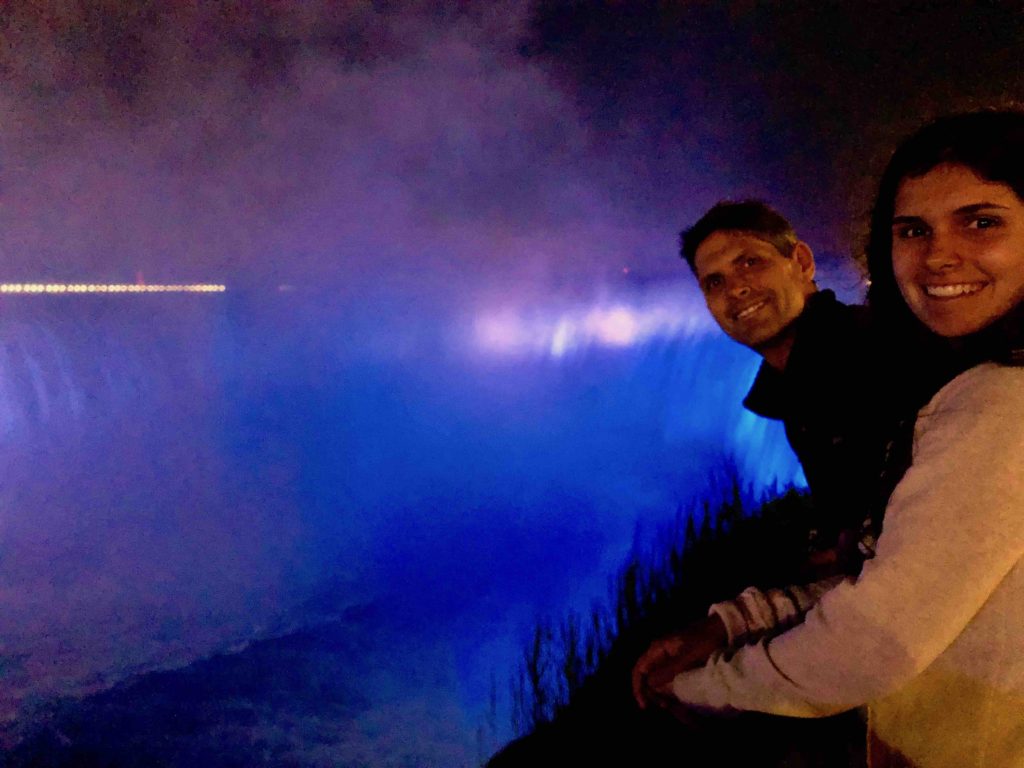
Our family in front of the falls

The Bighorn

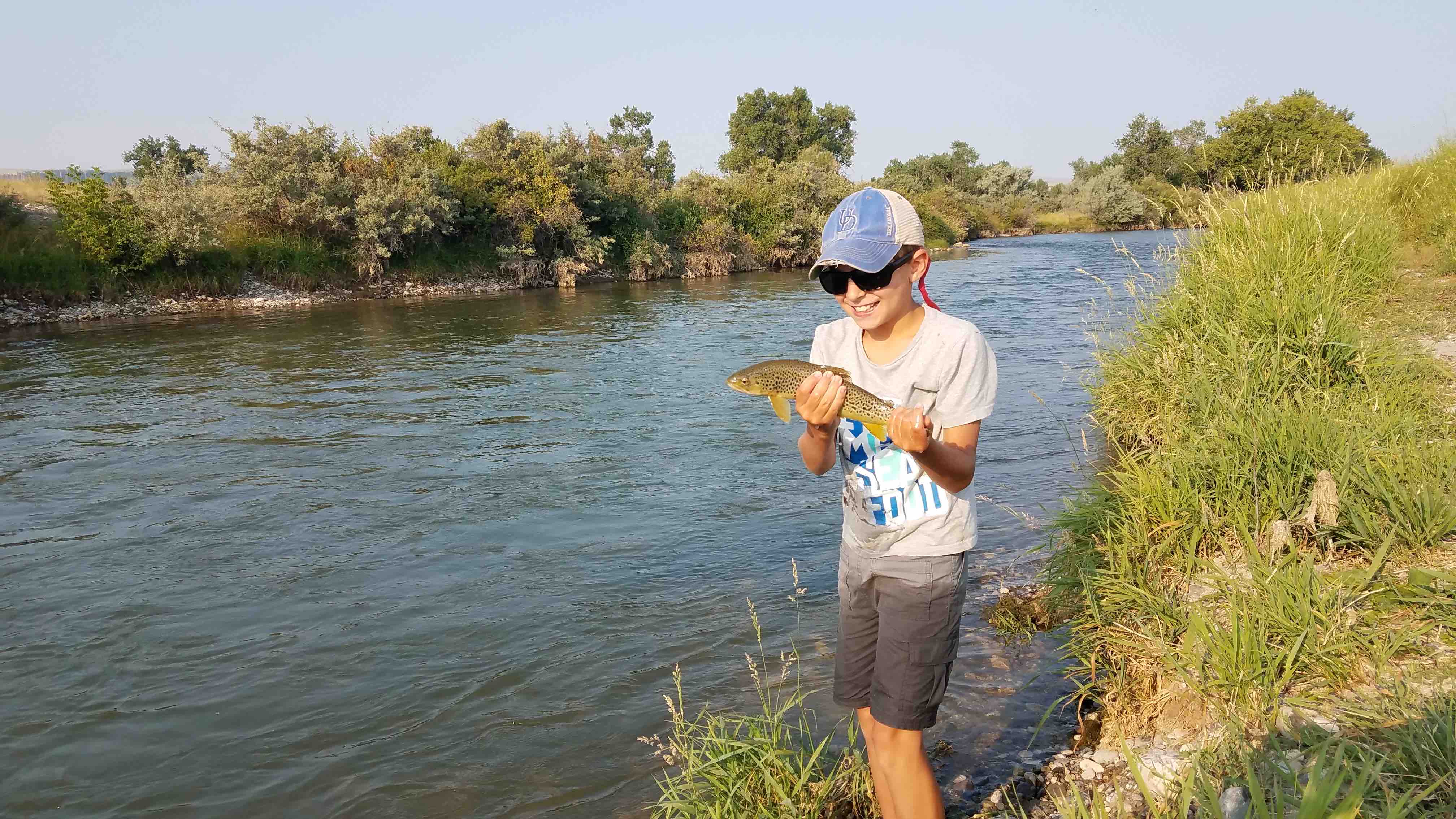
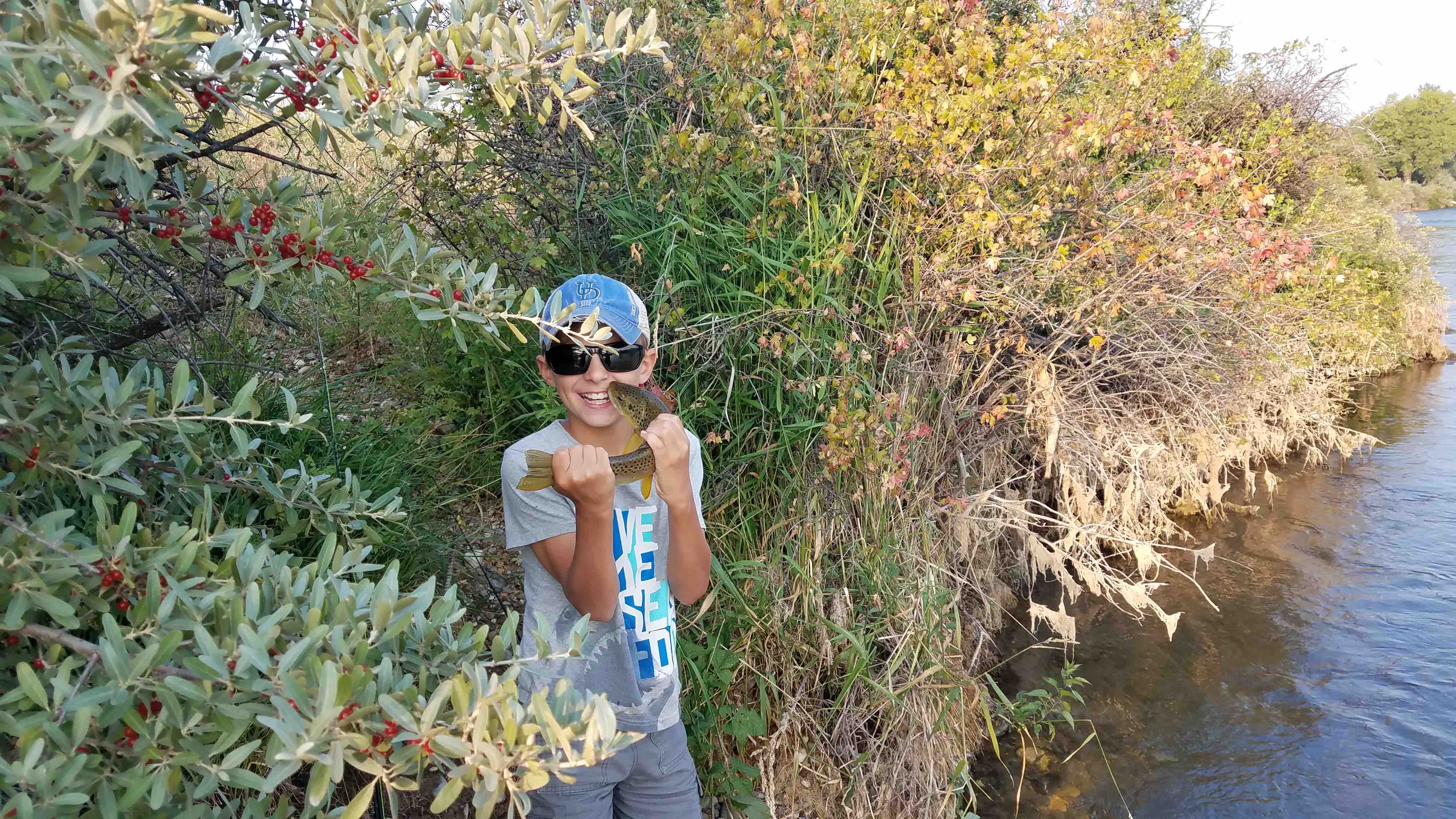
Most of the destinations we picked for this trip were ones that Korin and I had dreamed of visiting. I lobbied to visit the Bighorn River in eastern Montana because of a great trout fishing experience I had with my brother-in-law two years ago. The Bighorn River, just below the Yellowtail Dam in the Crow Reservation is one of the great trophy trout rivers in the lower 48. I wanted to recreate the experience I had for Eli, who is just getting into fishing. Unfortunately for us, the fishing was a bit slow by Bighorn standards. By any other standard though, we did great. Eli landed several trout, two of which were (Rainbow and Brown) in the 20 inch range (didn’t get pics of these monsters of those because we were wading the river). At one point, Eli was casting his classic rooster tail spinner into a nice pool and called me over because he thought he was stuck on a rock. I told him to whip the rod a few times and it should come loose. No dice. So, I walked over, took the rod and his “rock” started swimming away. Eli took over again, and walked down the bank to land (and release) a large whiplashed brown trout!

To escape the heat of afternoon, we took a ride up to the Yellowtail Dam Visitor Center which is run by the National Park Service. Wow, what a step back in time! It was clean and informative, but it hadn’t been updated since the dam was built in 1968. The vintage dam construction movie was as interesting because it shown a huge spotlight on what was important and valued in the 60’s. Societal “progress” was measured by the volume of concrete that could be placed in a single day by cigar smoking men with “strong hands cunning minds” to impound the wild Bighorn river to create a huge lake in Bighorn Canyon. How times have changed in just one generation. Today, the electricity and water generated by the Yellowtail Dam is sold by the Crow Nation. The dam is also largely responsible for the great trout fishery downstream. It is the cool tailwaters released from the dam that allow these trout to thrive in the heat of summer.

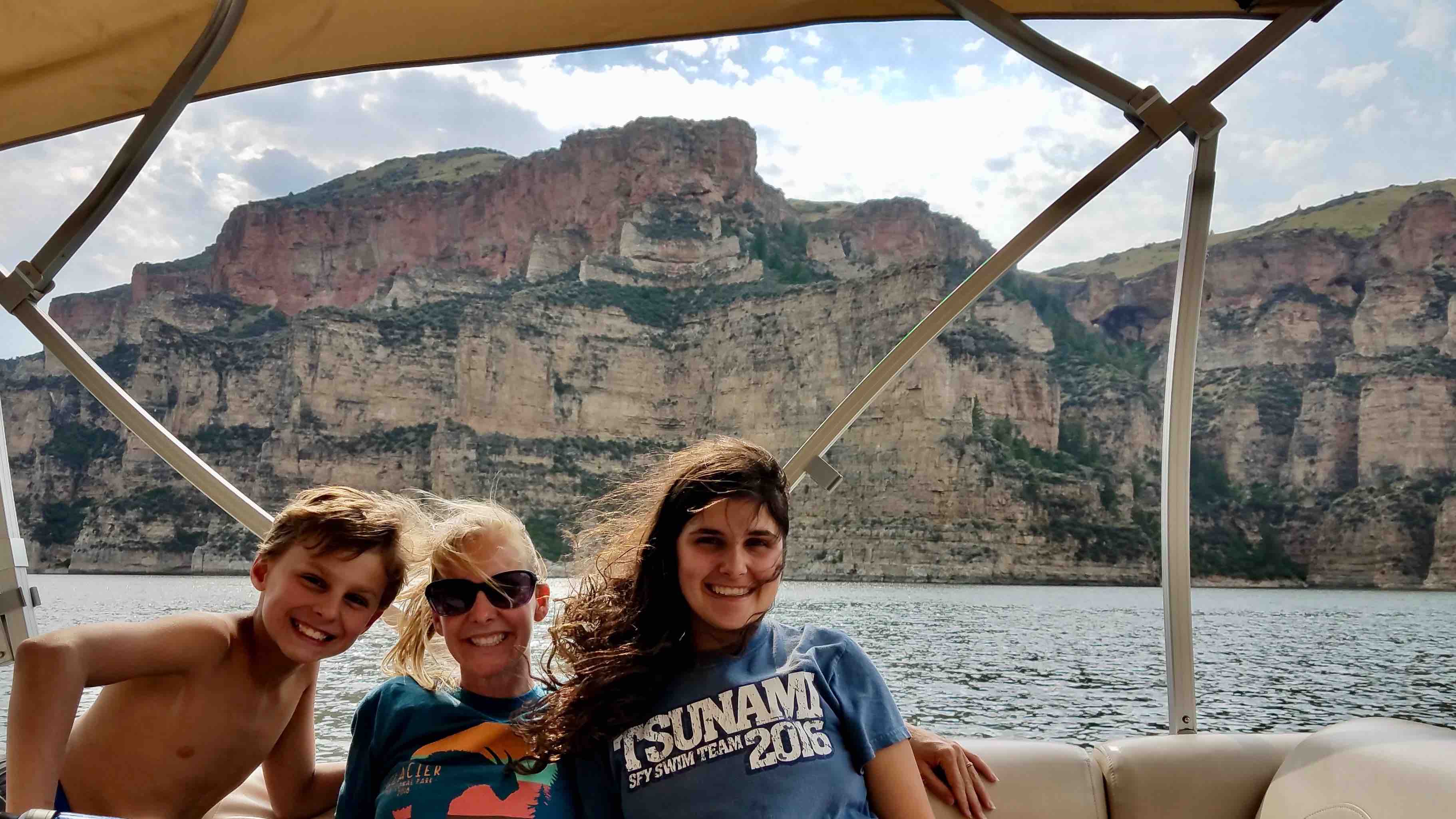
While at the visitor center, we overheard a local mention that Bighorn Lake was Montana’s best kept secret. Curious, we took the 10 mile drive to Ok-A-Beh marina, where, the landscape changed from gently sloping grassy hills to red-rock canyon cliffs up to 1000 feet high. It was a splendid surprise. Most of the canyon can only be seen from the lake, so we rented a pontoon boat. We rounded the marina, and were stunned by contrast of deep green ponderosa pines clinging to red rock, while our boat glided effortlessly along the glassy surface of Bighorn Lake. Because it is on the Crow reservation, there are no structures on the lake. It is a pristine landscape. We explored the Black Canyon portion of the lake by boat, which was much easier than exploring the Black Canyon of the Gunnison by foot! And, with a stroke of luck, the smallmouth bass were biting. We had fun landing these little fighters with the canyon walls towering above our boat. We agreed if we had to do the visit again, we would have devoted at least another day to exploring the Bighorn Canyon. We look forward to coming back!

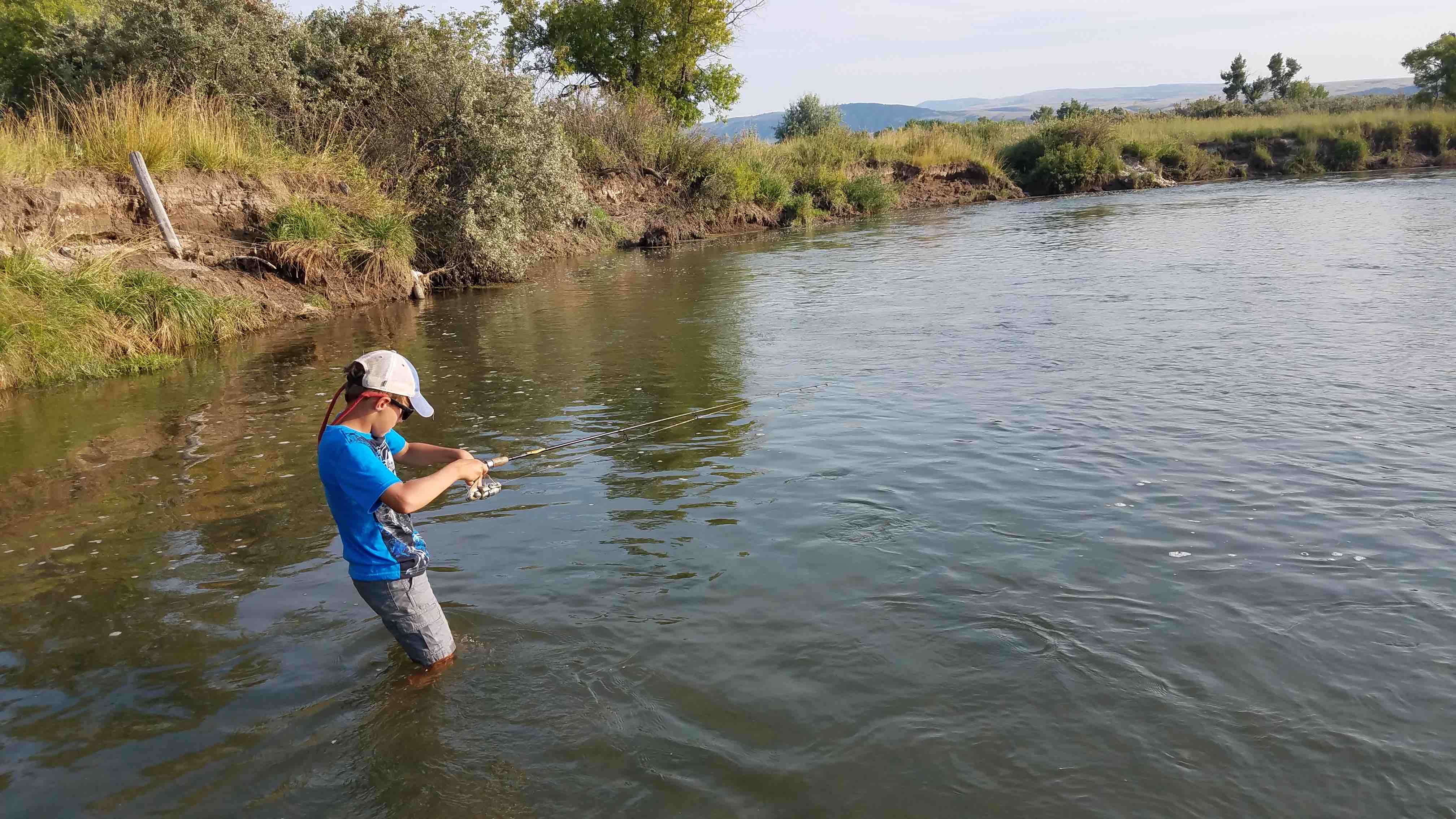
Eli fishing on the Bighorn River.

Eli with a nice brown trout.

A brown trout gives Eli an unexpected kiss before being released.

Sam and Eli take in the views of the Black Canyon arm of the Bighorn Canyon.

Eli, Sam and Korin cruising through the Bighorn Canyon.

Matt and Eli cast for smallmouth bass in Bighorn Canyon Lake.

North Cascades National Park: American Alps

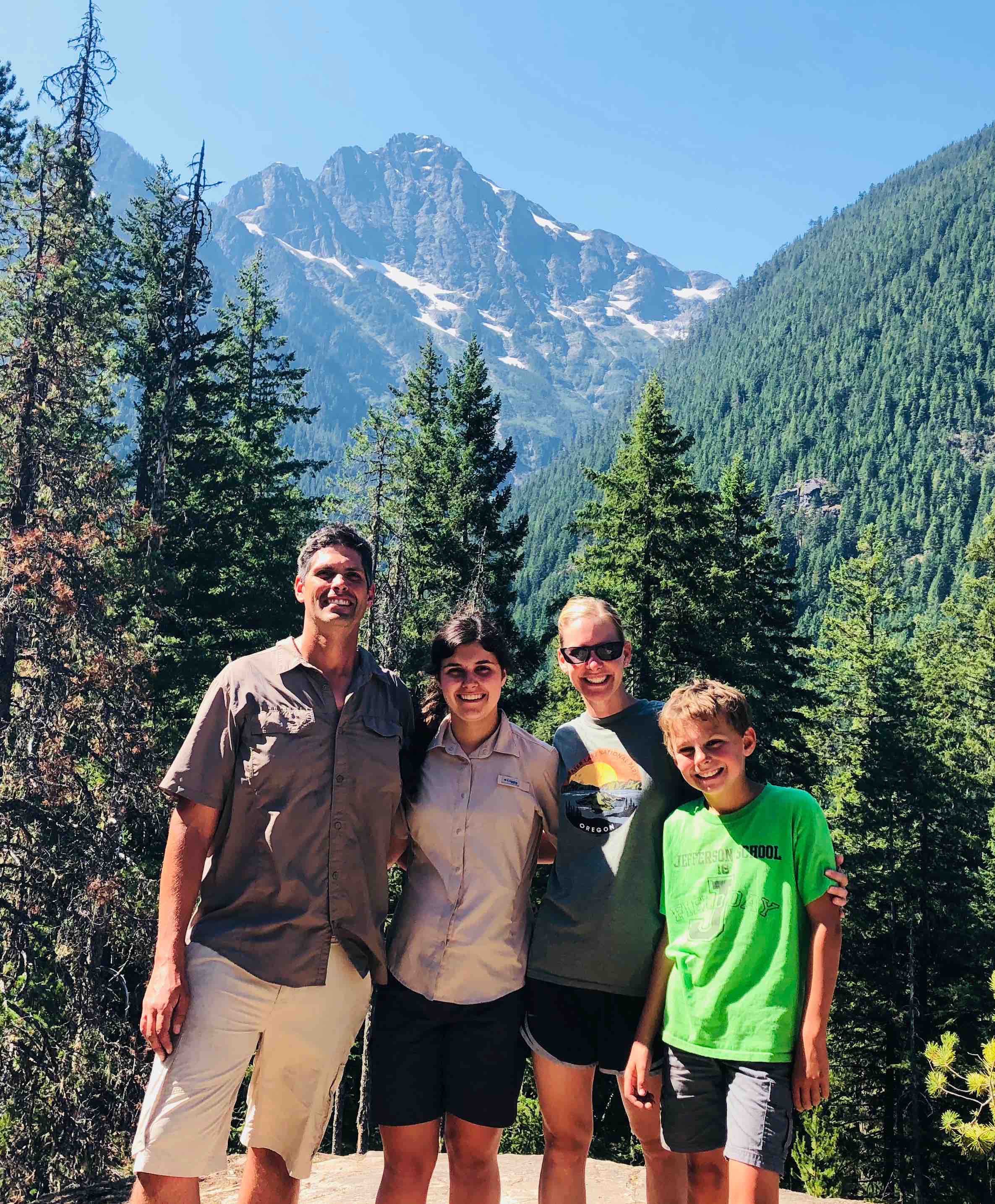
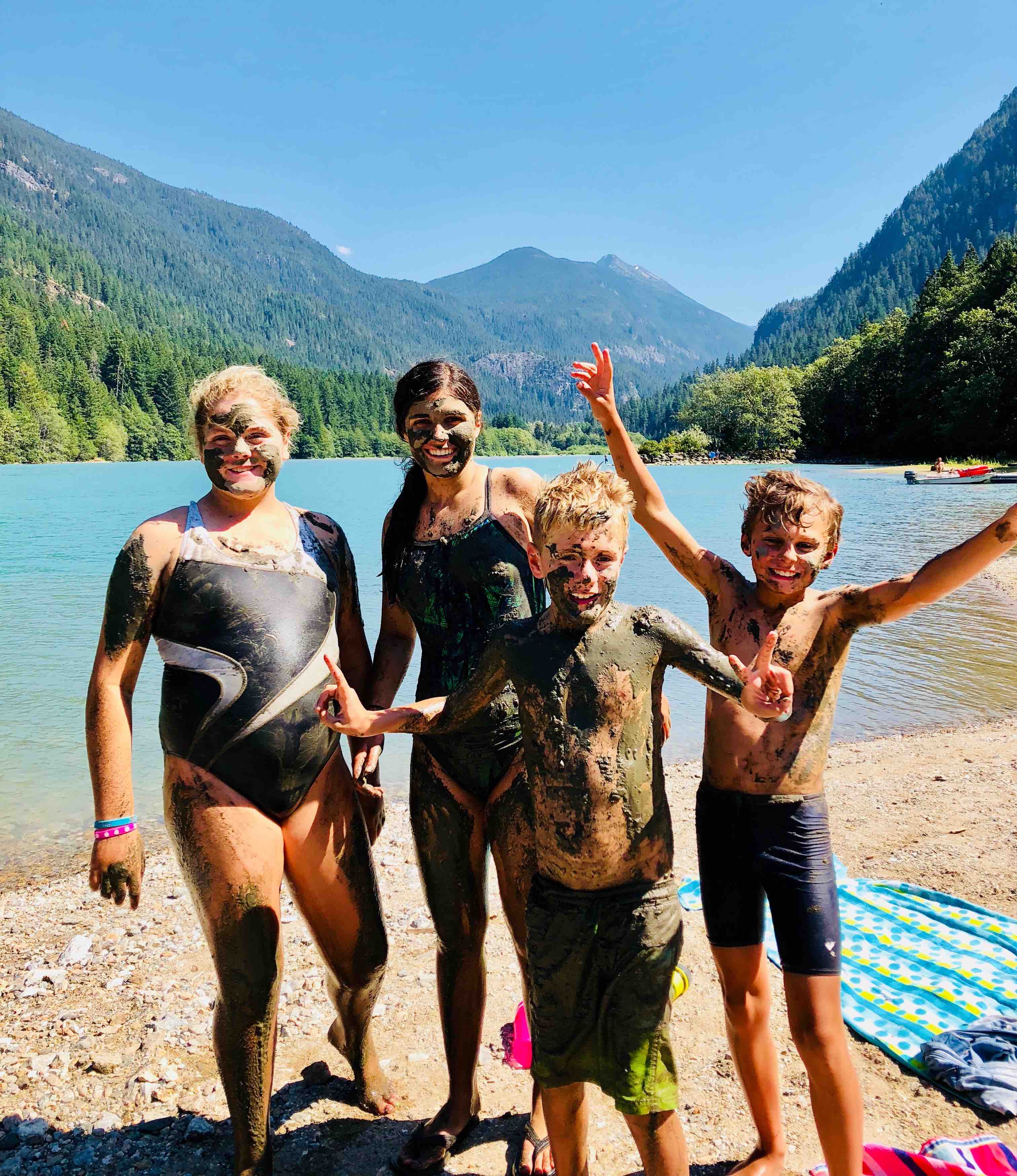
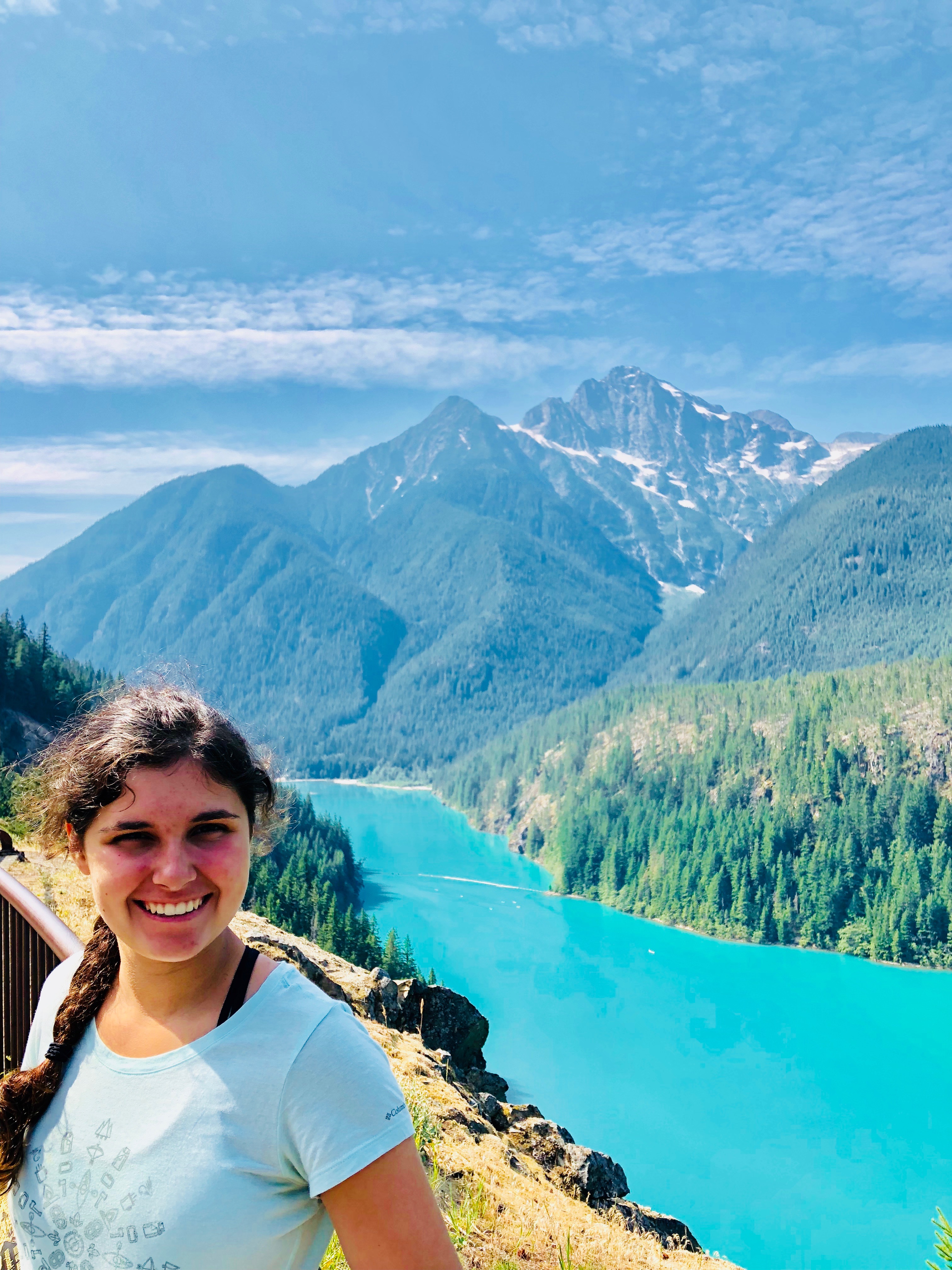
In almost every national park we’ve visited, you will find old photos and stories, telling the tale of the discovery, exploitation, and protection of the land. I usually leave these displays trying to imagine what it would be like to visit the park without traffic, campgrounds, and visitor centers. What makes North Cascades National Park unique is that 99% of the park is still wilderness. Only along highway 20 will you see three hydroelectric dams along the Skagit River forming Gorge, Diablo, and Ross Lake owned by Seattle City and Light. At first, this brought to mind the infamous Hetch Hetchy impoundment that riled John Muir. However the teal color of these lakes against these hanging glaciers on Alp-like peaks create an impressive landscape. We were joined in Colonial Campground on the shore of Diablo Lake by my sister Amber, brother-in-law Jon, their daughter Katie, and son Josh. The weather was much warmer than expected, so we were thankful for the ample shade in the campground. We hiked the 4 mile round trip Thunder Knob trail which gave stunning overlooks of Diablo Lake and Colonial Peak. Unfortunately, Eli, who is very allergic to dairy products, accidentally ate a granola bar with milk in it when we were about 2 miles from camp. When he was younger, any ingestion of milk meant he broke out in hives all over his body, became lethargic, and needed injection from an Epi-pen. We prayed, and watched him closely as we hiked back toward the campground. Thankfully, he only got a few hives on his chin, and managed to push through with no major reaction. He was a real trooper! With temperatures peaking around 90 F, we decided to swim in Diablo Lake. Diablo is formed by the tail waters of Ross Lake, so it is very cold (~45-50 F). It was an exercise in extremes; jump in the lake for as long as you could still feel your limbs, then bake on the hot shoreline. Repeat until dinner time. After a while, the kids got into an epic mud fight which passed the warm afternoon. Their only complaint is that they needed to spend some serious time in the chilly lake getting the mud out of their hair! After the hike, swimming, and dinner, the boys went fishing for a bit, but quickly returned to the campfire where we were treated to S’mores, and a wonderful variety show orchestrated by the kids. All in all it was a great visit to North Cascades, and we hope to return one day to explore more.
Braving the Thunder Knob!!

View of Colonial Peak with hanging glaciers along the Thunder Knob Trail

Kids go full blown mud fight on the shores of Diablo Lake.

The combination of Diablo Lake and Colonial Peak is almost as beautiful as my daughter.

Jon and Josh take in the beauty of Sourdough Mountain along Diablo Lake.

Olympic National Park

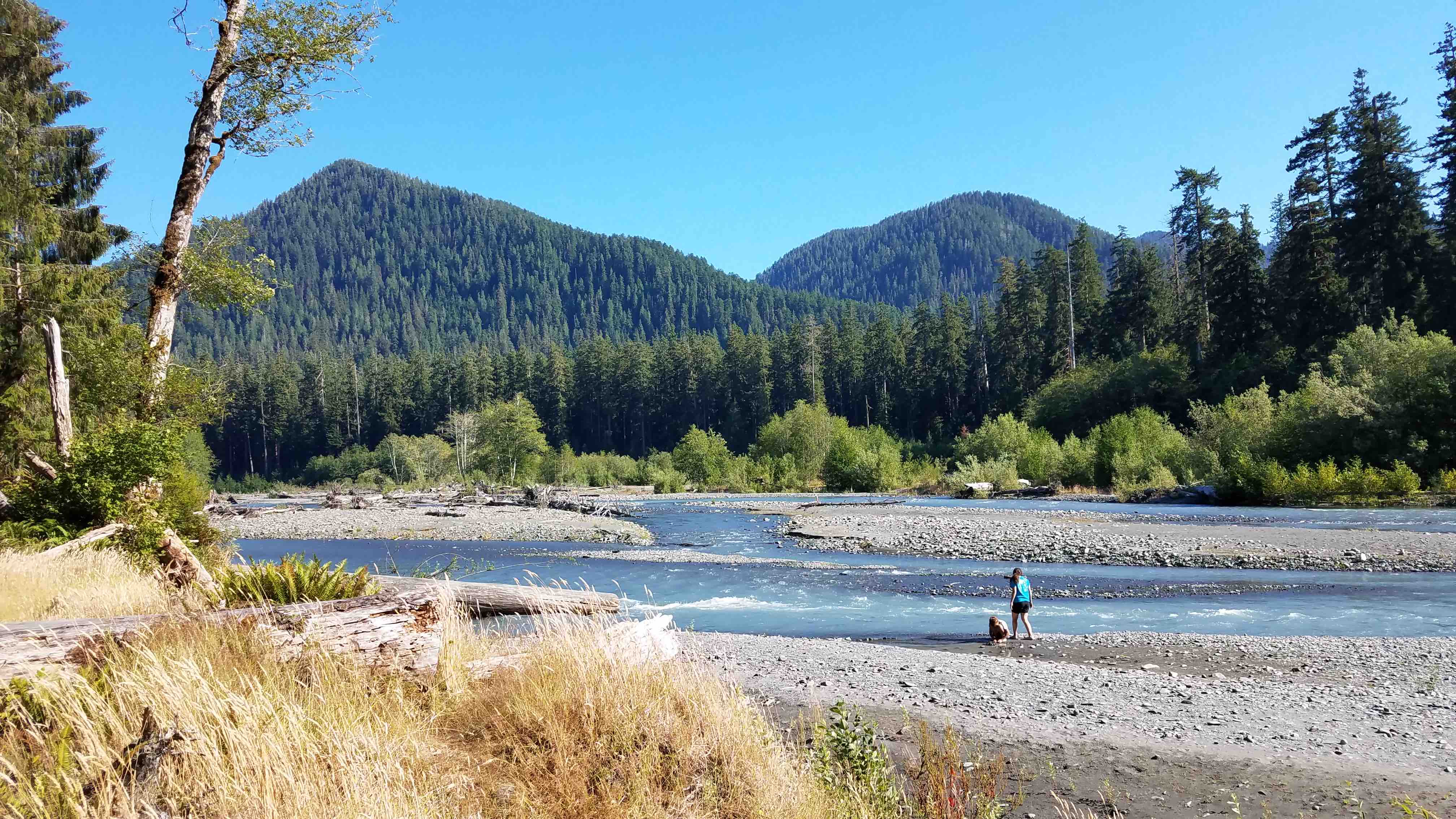
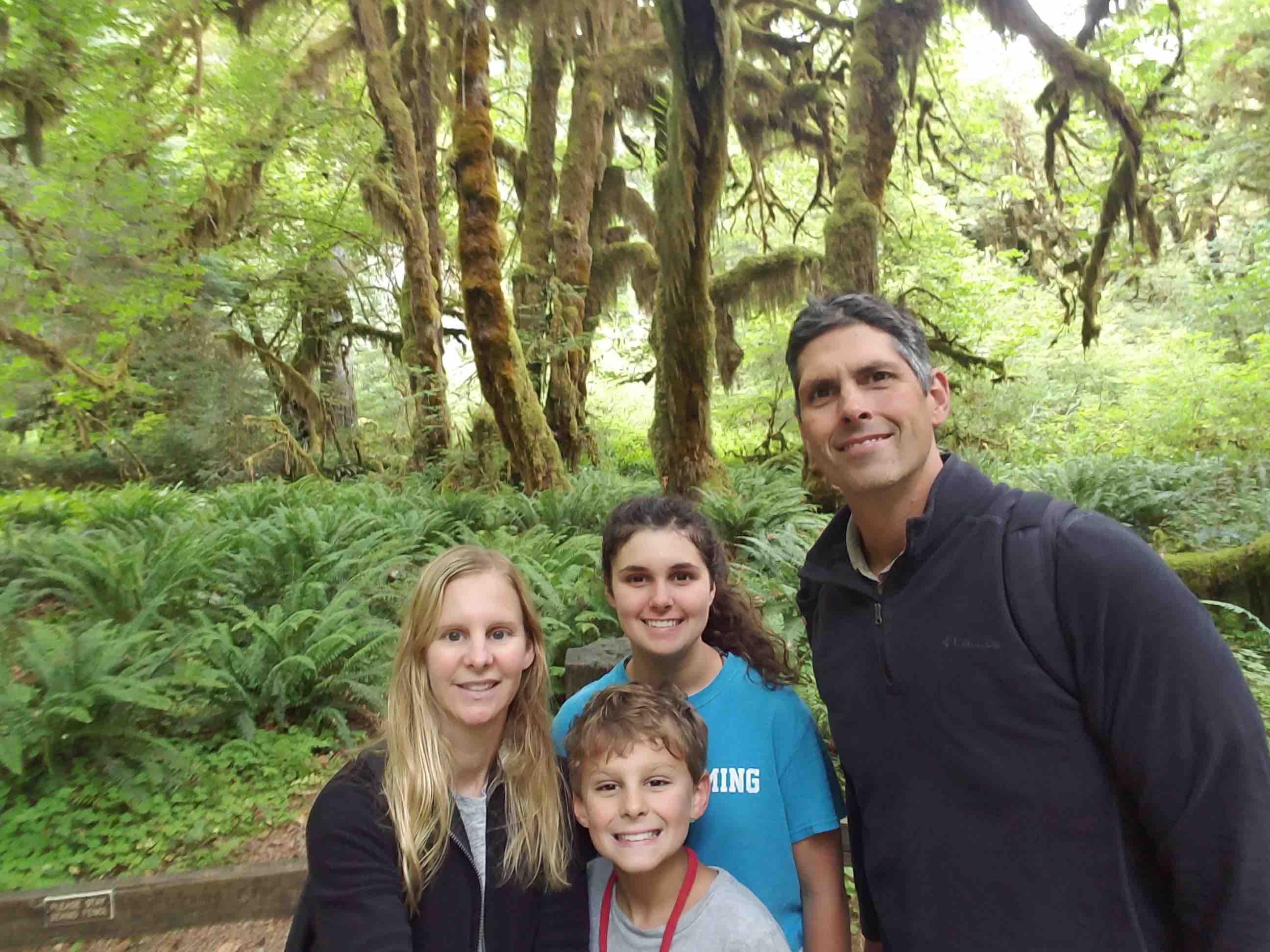
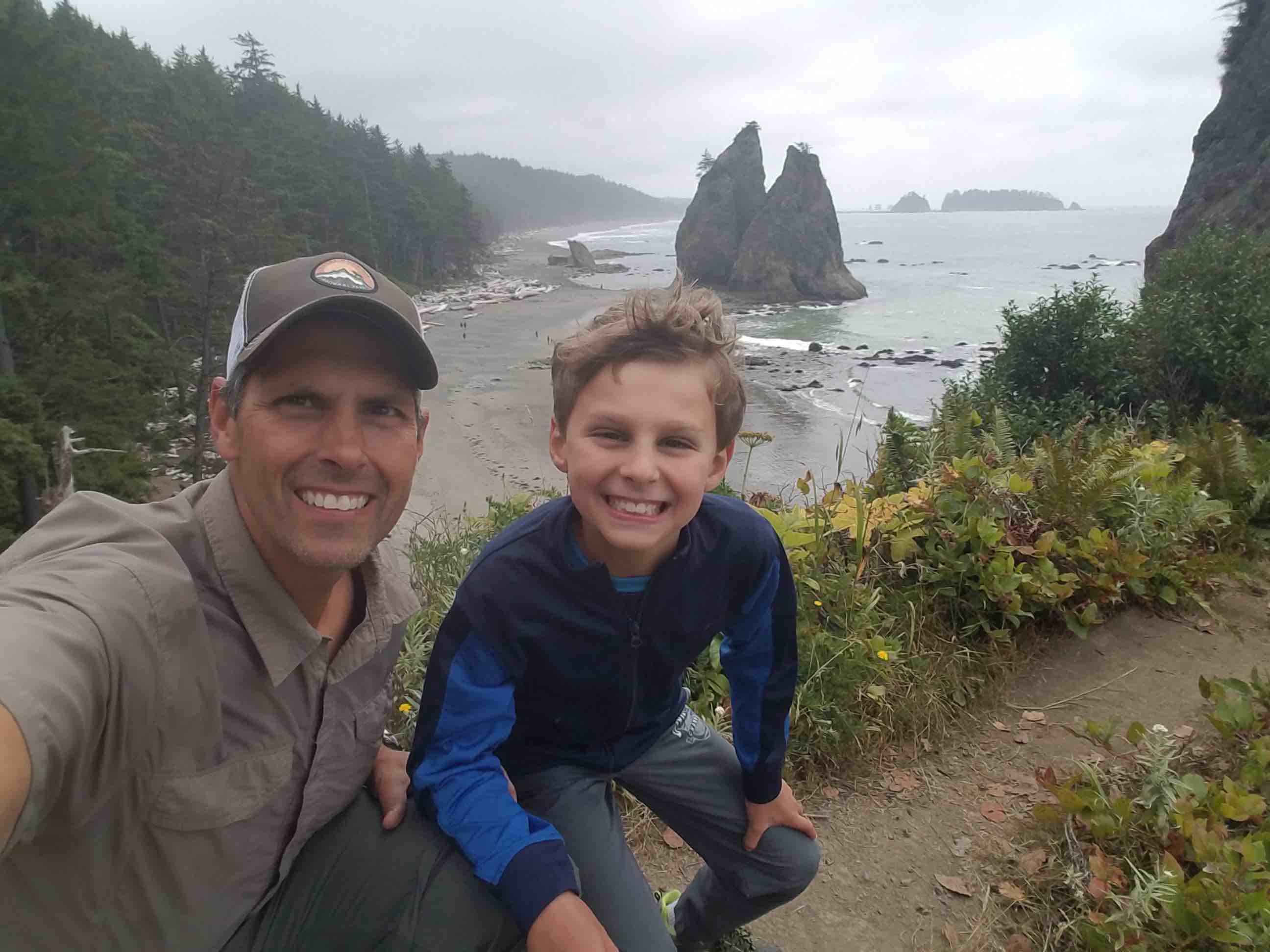
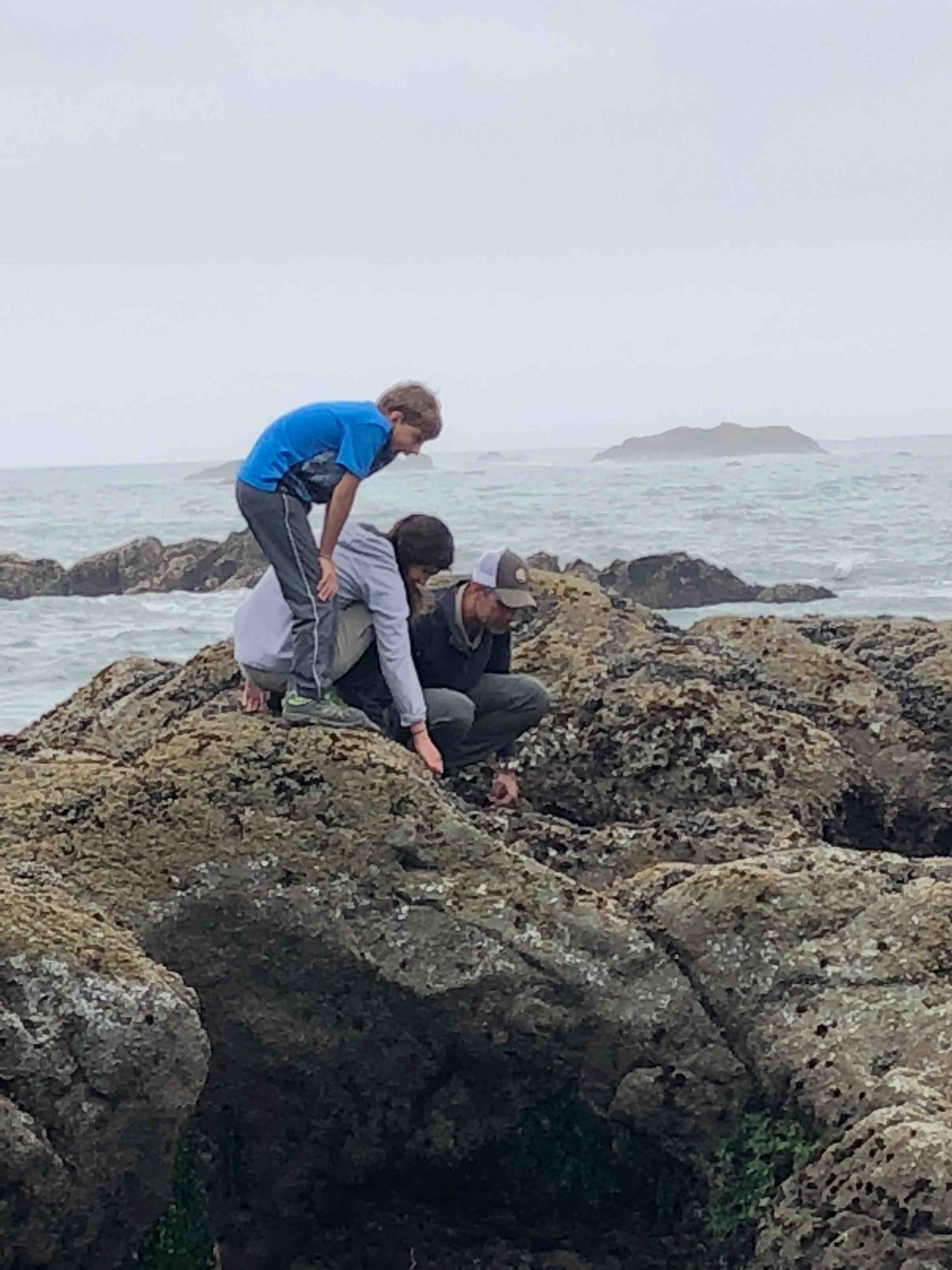
Have you ever had the experience of eating so many appetizers, that you don’t enjoy your main dish as much as you thought you would? The dish is great, but it should have come out earlier in the evening. That was our experience at Olympic National Park. When you have been surrounded by beauty in every national park, after a while it isn’t as impressive anymore. Our first campsite was in the Hoh River Rainforest. We hiked the Hall of Mosses and Hoh River Trail. We were blessed with crystal blue skies, so we didn’t need our rain jackets. The forest was gorgeous, but after just visiting the Redwoods and Crater Lake, it was tough to get the kids motivated. There was plenty of wildlife; deer, elk, bald eagles, however, the children preferred to relax at the campground, and playing along the banks of the Hoh River. We needed a change of scenery. Luckily, and Olympic NP had just the thing; Rialto Beach. Our sunny skies gave way to a thick marine layer, which made its prominent rock promontories all the more imposing. A 1.5-mile hike north from Rialto Beach brought us to some very impressive tide pools. We timed our visit with low tide and were not disappointed. Our attention turned away from the utopian Hoh River rainforest toward the cranky and cramped sub-tidal fauna of the Pacific. Life in tide pools can be tough, predators abound, and food is scarce. One tide pool held our attention for more than an hour. There were hermit crabs on one side, finger sized cabezon fish on the other, separated by a row of hungry sea anemones. The stage was set for a tide pool tantrum. I cracked open one of the abundant California mussels and dropped it into the pool. The tide pool sprang to life in a miniature game of “steal the bacon”. It was a hurricane of activity as each creature viciously fought the others for food. It was fish vs fish, then crab vs fish as all the creatures shredded the mussel to bits. At one point, two hermit crabs were fighting over a piece of mussel, when one of them accidentally backed into the tentacles of a waiting sea anemone. The kids shrieked with satisfaction as the crab was rapidly engulfed by its turquoise tentacles. More! More!, the children cried, enthralled by their newfound mini version of the Hunger Games. It was only when we cracked enough mussels that the crabs and fish were not hungry anymore, that the kids decided that it was time to go. We looked out over the acres of other pools, each one now seeming to us as its own Coliseum, each struggling to survive the rhythm of the Pacific tides.
Kids playing in the Ho River next to our campsite

Gawk at the mosses

Rialto Beach

Tide pool watching